

TL;DR:
- Fake engagement inflates influencer metrics with bought followers and bot activity, wasting brand budgets.
- Manual and automated checks identify suspicious follower spikes, generic comments, and engagement inconsistency.
How to quickly spot fake engagement in influencer marketing
Fake engagement is purchased or artificially generated activity — bought followers, bot likes, comment pods — that inflates an influencer’s metrics without reflecting genuine audience interest. The influencer marketing industry loses billions annually to this fraud, and any brand running campaigns without a detection process is statistically likely to be wasting a portion of its budget.
The core red flags to check immediately:
- Sudden follower spikes without a viral post or press mention to explain them
- Low comment-to-follower ratio: an account with 500,000 followers and 11 comments per post has an audience that is either disengaged or not real, per Emplifi’s guidance
- Generic or repetitive comments: strings of “Amazing!” or emoji-only responses signal bot farms or engagement pods
- Engagement that does not scale with follower count: likes and saves should move within a normal band for the creator’s niche
- Audience location mismatch: a creator targeting UK buyers but with followers concentrated in unrelated regions is a common purchased-follower signal
No single metric is conclusive. Combining at least three signals gives you a reliable picture.
How to run a manual comment and follower audit
Manual audits remain the most direct way to verify authenticity for a small shortlist of creators.

Auditing comments: Sample the last 20–30 comments across three to five posts. Genuine comments reference specific content, ask follow-up questions, or spark conversation. Comment quality is the hardest engagement metric to fake convincingly at scale, because generating believable text requires either expensive human labour or AI that reads oddly when examined closely.
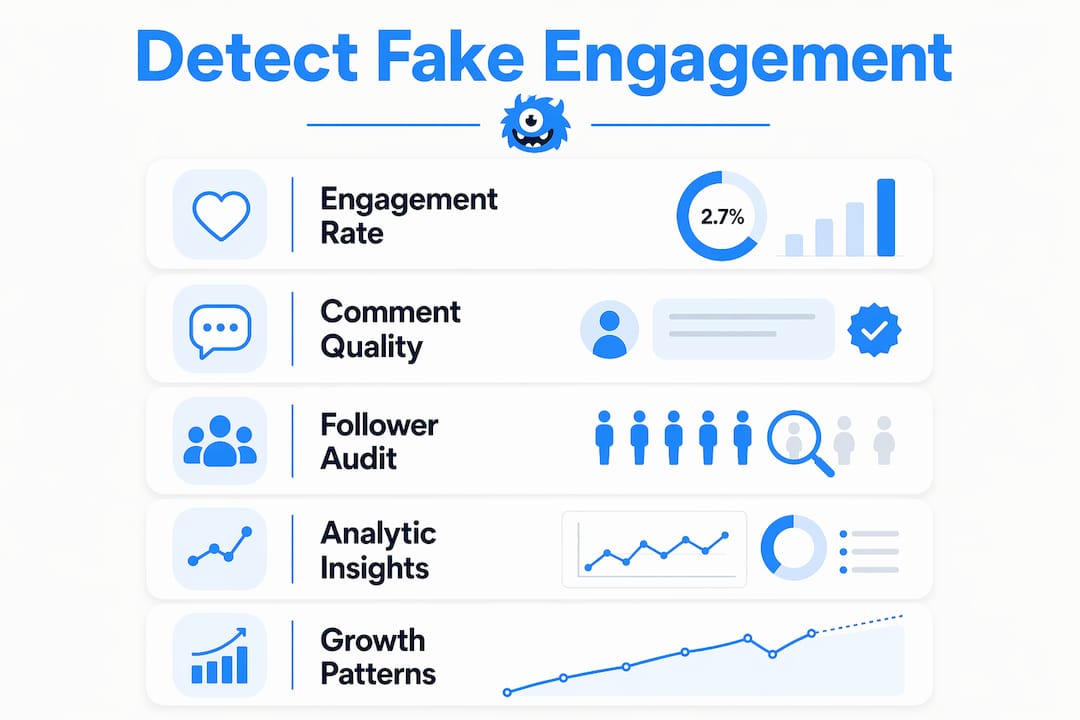
Auditing followers: Open 30–50 recent followers and check for profile pictures, posting history, and bios. A cluster of accounts with no photo, random usernames, and zero posts is a near-certain bot signature, as twtData’s research confirms for X specifically.
Spotting engagement pods: Track commenter overlap across 10–20 posts. Healthy accounts show a mix of recurring fans and new commenters. Pod-compromised accounts show the same 15–30 accounts dominating every post, often within the first 10–15 minutes of publication.
Requesting native analytics: Ask the creator for a screenshot of their platform analytics showing audience geography and demographics. Genuine creators provide this quickly; refusal is a strong fraud indicator. Be aware that static screenshots can be manipulated, so treat them as one signal rather than proof.
Platform nuances matter too. On Instagram, low story views relative to follower count suggest inactive or fake followers. On X, following-to-follower ratio discrepancies and high impressions with almost no interactions expose bot audiences. On TikTok, very high view counts with negligible comments or shares point to view-bot activity.
Pro Tip: Genuine engagement fluctuates naturally with content type and posting time. If an account shows suspiciously consistent engagement across every post regardless of topic, that uniformity is itself a red flag.
What do healthy engagement benchmarks actually look like?
Knowing what normal looks like is half the battle. According to Tomoson’s influencer fraud overview, a healthy engagement rate for micro-influencers sits between 2% and 5%. Below 0.5% suggests fake followers inflating the denominator; rates dramatically above the expected range for a tier can indicate artificial boosting of the numerator.
For X, twtData’s data puts a healthy engagement rate at 1%–5%. Accounts consistently below 0.5% likely carry significant fake follower weight. On fake follower percentage, the same source sets 0–5% as excellent, 5–15% as normal for active accounts, and anything above 30% as a strong indicator of purchased followers at some point.
A healthy account typically sits between 2% and 10% low-quality followers. Above 15% warrants investigation; above 25% usually indicates purchased followers or significant bot activity.
Which tools help you detect fake engagement automatically?
Manual checks work for five creators. They collapse at five hundred. Automated tools fill that gap by analysing signals at network scale, catching fraud patterns invisible to manual review.
Perkifi cross-references five signals simultaneously: empty-profile ratio, growth spike patterns, comment linguistic patterns, geographic mismatch, and engagement-to-reach ratio. It returns a single authenticity score so you can compare creators directly. Its multi-signal model is more accurate than tools relying on engagement rate alone, which mathematically disadvantages large legitimate accounts.
Emplifi Fuel operates across a scored creator graph, flagging accounts with purchased or bot-inflated follower bases before a brief is sent. Network-level analysis surfaces engagement pods that pass a human glance entirely.
Social Blade provides free follower growth history charts. It does not estimate fake follower percentages, but the visual growth curve alone reveals suspicious spikes clearly.
For a quick free first pass on Instagram, calculating engagement rate across 5–12 posts and comparing against tier benchmarks catches the most obvious anomalies before you invest time in deeper review. Understanding influencer marketing ROI requires this kind of layered vetting as a baseline.
What real cases reveal about fake engagement detection
The patterns that audits uncover tend to follow predictable scripts. A creator with 200,000 followers and a 0.3% engagement rate is almost certainly carrying significant fake follower weight suppressing the rate. Conversely, a 500,000-follower account showing 8% engagement is suspicious in the opposite direction; organic accounts at that tier rarely sustain rates that high without an unusually tight community.
Hybrid fraud is now the most deceptive type: a creator with mostly real followers who occasionally boosts metrics with engagement pods or low-cost comment bots. Perkifi identifies this through post-by-post anomaly scoring, catching the irregular spikes that a baseline engagement rate would never reveal.
The fake follower warning signs that matter most in practice are the ones that appear in combination: a spike in followers, followed by flat engagement, followed by generic comments from accounts with no posting history. Any one of those alone is ambiguous. All three together is a clear pattern.
How fake engagement damages ROI and brand reputation
Every pound paid to a fraudulent creator is capital deployed against an audience that will never convert. The reach number looks real on a report; the sales never arrive. Beyond the direct budget loss, there is a subtler cost: audience data gets corrupted. If a bot farm in one region inflates your geographic analytics, every targeting decision downstream is built on false ground.
Brand reputation takes a hit too. Associating with a creator whose audience is largely fake can attract negative press once the fraud surfaces, and it does surface, often publicly. The authentic engagement versus fake followers distinction is not academic; it determines whether a campaign generates actual customers or just a number on a dashboard.
How to verify influencer authenticity before you commit
A structured pre-partnership checklist protects budget before any product ships or payment clears.
- Calculate engagement rate across 5–12 recent posts and compare against platform benchmarks for that follower tier.
- Review comments on three to five posts for specificity, relevance, and commenter profile quality.
- Check follower growth history for unexplained spikes over a 6–12 month window.
- Sample 30–50 follower profiles for completeness and activity.
- Request native platform analytics to verify audience geography.
- Run the creator through at least one automated tool for a scored authenticity assessment.
- Start with a small test campaign using tracked links or promo codes before scaling spend.
Contract terms matter too. Include deliverable-based payment structures and a clause defining genuine audience as a condition of final payment. That shifts the incentive: a creator with a fraudulent audience cannot meet the terms.
For brands building a longer-term roster, measuring social media growth progress with consistent metrics across campaigns makes fraud easier to spot over time, because the baseline for what genuine performance looks like becomes clearer with each verified partnership.
Greediersocialmedia: real growth without the guesswork
Greediersocialmedia has been helping UK businesses and creators build genuine social media presence since 2013, supporting over a million users without ever requiring account passwords. The difference from chasing inflated numbers is concrete: real followers who actually see your content, real likes that signal to platform algorithms, and real views that translate into brand authority rather than hollow metrics.
For brands that have just audited an influencer shortlist and found it wanting, Greediersocialmedia offers a direct alternative: authentic engagement growth built on verified, real interactions across Instagram, Facebook, and beyond. No long-term contracts, no password handover, and customer support that responds fast when you need it.
Visit Greediersocialmedia to explore social media growth services built specifically for UK businesses that want traction, not theatre.
Key takeaways
Spotting fake engagement requires combining at least three independent signals: engagement rate, comment quality, and follower growth history.
| Point | Details |
|---|---|
| Engagement rate benchmarks | Healthy micro-influencer rates sit between 2% and 5%; below 0.5% signals fake followers. |
| Comment quality is key | Genuine comments reference specific content; generic phrases and emoji-only replies indicate bots. |
| Follower audit threshold | Accounts above 25% low-quality followers likely have purchased followers or significant bot activity. |
| Hybrid fraud is hardest to catch | Real accounts boosting metrics intermittently with pods require post-by-post anomaly scoring to detect. |
| Greediersocialmedia | Offers real followers, likes, and views for UK clients with no password required, backed by experience since 2013. |
FAQ
What is the fastest way to spot fake engagement?
Check engagement rate against platform benchmarks for that follower tier, then scan recent comments for generic phrases or emoji-only responses. If both signals are off, treat the account as high-risk.
How many fake followers is too many?
A healthy account sits between 2% and 10% low-quality followers. Above 25% usually indicates purchased followers or significant bot activity.
Can engagement pods fool manual audits?
Yes. Pods use real accounts, so individual comments can look legitimate. Tracking commenter overlap across 10–20 posts reveals the same cluster appearing repeatedly, which is the tell that manual post-by-post review misses.
Which platforms are hardest to audit manually?
TikTok is the most complex because non-follower views form a large share of reach, making follower-based engagement rate calculations less reliable. X is easier to audit via impressions-to-engagement ratios, where high impressions with almost no interactions expose passive or fake audiences clearly.
Does Greediersocialmedia help with authentic engagement?
Yes. Greediersocialmedia has specialised in real follower and engagement growth for UK clients since 2013, delivering verified interactions without requiring account passwords.