
TL;DR:
- Social media is now the central platform for brands to build trust, establish identity, and convert audiences. Authentic engagement, social listening, and human-generated content significantly increase brand loyalty and revenue, especially for small businesses. Consistent, genuine interaction and community-building are essential for long-term growth and competitive advantage.
Social media is the primary channel through which modern brands establish identity, build trust, and convert audiences into loyal customers. The role of social media in branding has shifted from a supplementary marketing tool to the central mechanism by which consumers judge whether a business is worth their attention and money. Research from Emplifi, Sprout Social, and Deloitte Digital confirms that authenticity, responsiveness, and community are now the three pillars of brand equity online. For small business owners and content creators, understanding this shift is not optional. It is the difference between a brand that grows and one that stagnates.
How social media shapes brand trust and identity
Brand trust is the single most measurable outcome of a well-executed social media presence, and the numbers behind it are striking. According to Emplifi’s April 2026 consumer report, 93% of consumers say authentic brand engagement builds trust, 85% are willing to pay more for brands they trust, and over half would stop buying from a brand after an inauthentic experience. That last figure deserves attention. A single poorly judged post or a tone-deaf response to a complaint can cost you customers who were already spending money with you.

The mechanism behind this is straightforward. Consumers assess trust in real time during social interactions, not just when they read your website copy. Every comment reply, every story post, and every sponsored update is a micro-moment in which your brand either reinforces or erodes its credibility. Brand trust mediates the relationship between social media marketing and purchase intention, particularly among Gen Z consumers, meaning trust is not just a soft metric. It directly predicts whether someone buys.
Operationalising authenticity requires more than good intentions. It means building response playbooks that keep your tone consistent whether you are replying to a glowing review or a frustrated complaint. It means choosing content that reflects your actual values rather than chasing trends that have nothing to do with your brand. The importance of social media presence for small businesses lies precisely here: you cannot afford to be inconsistent when every interaction is public and permanent.
Here is what authentic social branding looks like in practice:
- Responding to comments and direct messages within 24 hours, using a consistent brand voice rather than generic scripts
- Publishing content that reflects real opinions, behind-the-scenes moments, or genuine customer stories rather than polished promotional material
- Acknowledging mistakes publicly and correcting them with transparency, which builds more trust than pretending errors never happened
- Using user-generated content (UGC) and verified reviews as proof elements, since UGC and reviews build credibility and drive willingness to pay more
Pro Tip: Build a simple response playbook with three to five tone guidelines and approved phrases for common scenarios. This keeps your brand voice consistent even when different team members are managing your accounts.
What do social-first brands actually do differently?
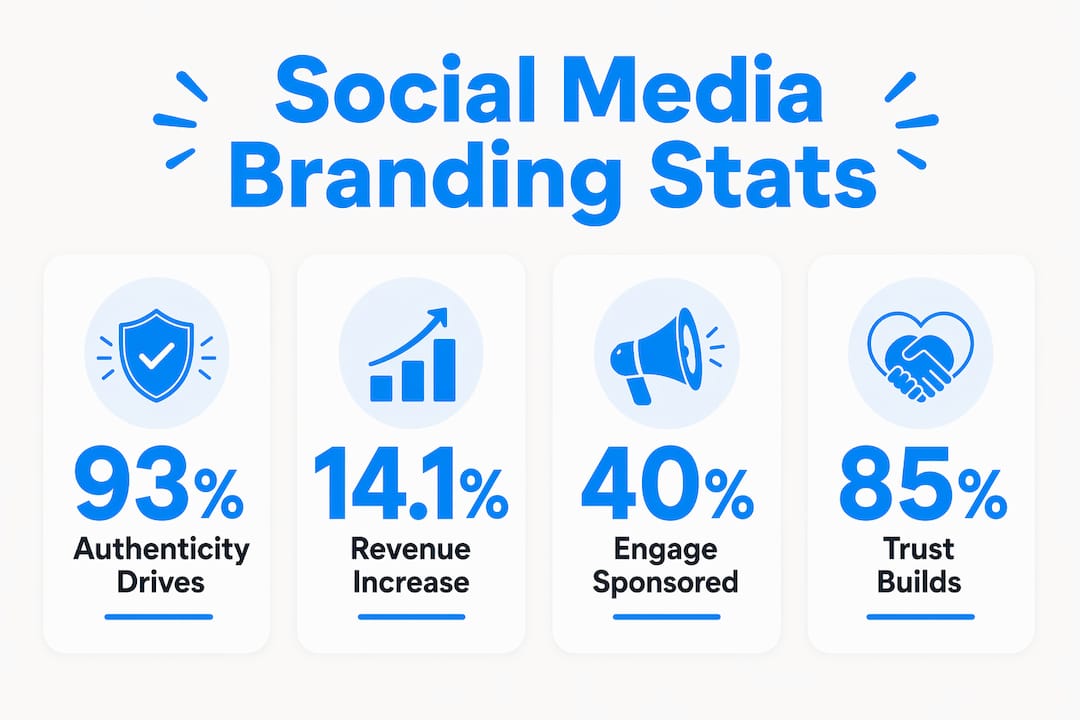
A social-first brand treats social media as a source of business intelligence, not just a broadcast channel. The gap between brands that understand this and those that do not is measurable. Only 31% of consumers say companies effectively listen and act on social feedback. That means nearly seven in ten consumers feel ignored by the brands they follow. For a small business, this is an opportunity rather than a problem, because closing that gap is achievable without a large marketing budget.
Social-first brands follow a specific operating model. Here is how they structure it:
- Listen before posting. They use social listening tools to monitor brand mentions, competitor conversations, and category trends before deciding what content to create. This means their posts answer real questions rather than guessing at what the audience wants.
- Act on feedback within 48 to 72 hours. A rapid social listening and decision loop prevents what Sprout Social calls “credibility debt,” the accumulated damage from being seen as unresponsive over time.
- Integrate social intelligence into product and service decisions. Customer complaints about packaging, delivery, or product quality that surface on Instagram or Facebook are treated as operational data, not just PR problems.
- Measure beyond likes. They track trust-related metrics such as sentiment scores, response rates, and repeat engagement rather than vanity metrics alone.
“Social-first brands leverage social listening and participation to build stronger communities and foster loyalty, ensuring engagement is backed by action to maintain credibility.” — Sprout Social, 2026
The revenue impact of this approach is not marginal. Social-first brands see an average revenue increase of 14.1% compared to peers by focusing on community, content, and conversion. For a small business turning over £200,000 annually, that figure represents a meaningful and achievable gain from a strategic shift rather than additional ad spend.
Human content vs AI content: what actually builds brand loyalty?
The debate about AI-generated content is one of the most practically relevant questions for marketers in 2026. The answer from consumer research is clear. Consumers want brands to prioritise human-generated content and personalised customer service over AI-created content for stronger social media relationships. This does not mean AI has no role. It means the role of AI is in analysis and insight, not in replacing the human voice that makes a brand feel real.
| Content type | Consumer preference | Best use case |
|---|---|---|
| Human-generated posts | Highest trust and engagement | Brand storytelling, community replies, UGC campaigns |
| AI-assisted content | Moderate acceptance when disclosed | Data analysis, scheduling, caption drafts for human review |
| Fully AI-generated content | Lowest trust, especially undisclosed | Not recommended for brand-facing channels |
The concept of “customer joy” is worth understanding here. Surprise-and-delight moments, such as a personalised reply to a long-term follower, a handwritten thank-you note mentioned in a story, or a spontaneous giveaway for an engaged community member, generate disproportionate loyalty and organic reach. These moments cannot be automated. They require a human who knows the brand and cares about the audience.
40% of consumers engage with sponsored social posts because they find them entertaining, and 39% because the content matches their interests. This tells you that relevance and entertainment are the two levers that make paid and organic content work together. AI can help you identify which topics are trending in your niche, but a human needs to decide how your brand speaks about them.
Pro Tip: Use AI tools to analyse your top-performing posts and identify patterns in tone, format, and timing. Then use those insights to brief a human writer or create content yourself. The analysis is automated; the voice stays yours.
How social media drives community and converts audiences
Community building is the mechanism that turns social media followers into repeat customers, and the data on social commerce makes this commercially urgent. Purchases made directly on social media have risen 35% since 2023. Platforms like Instagram and Facebook have built native shopping features precisely because the discovery-to-purchase journey is now happening entirely within social environments.
For small businesses, this creates a specific set of priorities:
- Build a community before you need it. Brands that invest in genuine engagement before launching a product or promotion convert at significantly higher rates than those who treat their audience as a cold list.
- Use social media for product discovery. Consumers increasingly find new products through social feeds rather than search engines, making your content the first touchpoint in the purchase journey.
- Integrate social commerce directly. If you sell physical products, Instagram Shopping and Facebook Shops remove friction between discovery and purchase. Every extra click you eliminate increases conversion.
- Reward community participation. Exclusive previews, early access, or community-only discounts signal that membership in your audience has tangible value.
The importance of social media in marketing for conversion lies in the trust that community builds before a transaction ever occurs. A consumer who has followed your brand for six months, seen your behind-the-scenes content, and watched you respond thoughtfully to other customers is a fundamentally different prospect from someone who encounters your ad for the first time. Community is the long game that makes every other marketing tactic more effective.
Using social media for brand growth also means treating your audience as collaborators. Asking for opinions on new products, running polls about content preferences, or sharing customer photos as part of your regular feed all signal that your brand values the people who follow it. That signal is what converts passive followers into active advocates.
Key takeaways
Social media builds brand equity through authentic engagement, social listening, and community-driven commerce, and brands that treat it as a broadcast channel consistently underperform those that treat it as a dialogue.
| Point | Details |
|---|---|
| Authenticity drives revenue | 93% of consumers say authentic engagement builds trust, and 85% will pay more for brands they trust. |
| Social listening is a competitive advantage | Only 31% of consumers feel brands listen to them, so acting on feedback quickly sets you apart. |
| Human content outperforms AI content | Consumers consistently prefer human-generated posts for trust and relationship-building on social channels. |
| Social commerce is growing fast | Direct social media purchases have risen 35% since 2023, making in-platform shopping a priority. |
| Community precedes conversion | Brands that build genuine communities before promoting products convert audiences at higher rates. |
Why small businesses have the advantage here
Most large brands struggle with authenticity because they have too many stakeholders, approval layers, and legal reviews standing between a genuine thought and a published post. As a small business owner or independent content creator, you do not have that problem. You can respond to a comment in your own voice within minutes. You can share a real opinion about something happening in your industry. You can show the actual person behind the brand, which is something a corporate account can never convincingly do.
What I have observed working with businesses at different stages is that the ones who treat social media as a performance, carefully curated and strategically calculated, consistently get less traction than those who treat it as a genuine conversation. The research backs this up, but so does common sense. People follow people, not logos. The brands that grow fastest on Instagram and Facebook are almost always the ones where a real human voice is clearly present.
The practical implication is to stop waiting until you have a perfect content calendar or a professional photographer. Start with what you have. A phone camera, a genuine opinion, and a willingness to respond to your audience will outperform a polished but impersonal feed every time. Build your social media strategy around your actual brand voice, then refine it as you learn what resonates.
The one area where small businesses consistently fall short is consistency. Posting three times a week for a month and then going quiet for six weeks destroys the trust signals you have built. A simple content schedule, even one post every two days, maintained over six months, will outperform sporadic bursts of activity. Credibility is cumulative.
— Luna
Grow your brand presence with Greediersocialmedia
Understanding the mechanics of social branding is the first step. Executing it consistently at scale is where most small businesses need support.
Greediersocialmedia has helped over a million UK businesses and creators build genuine social media presence since 2013, using authentic engagement strategies that do not require your passwords and do not compromise your account security. Whether you are starting from scratch or looking to accelerate an existing presence on Instagram or Facebook, their tailored packages are designed to deliver real visibility and real interactions. Explore their social media growth hacks for practical tactics you can apply immediately, or review their growth packages to find the right level of support for your brand.
FAQ
What is the role of social media in branding?
Social media is the primary channel through which brands establish identity, build consumer trust, and convert audiences into customers. It shapes brand perception through every post, reply, and piece of content a business publishes.
How does authenticity affect social media branding?
Authentic engagement is a direct revenue driver. Research from Emplifi shows 93% of consumers say it builds trust and 85% will pay more for brands they perceive as genuine.
Why do social-first brands outperform competitors?
Social-first brands use social listening to act on audience feedback and integrate community insights into business decisions. Deloitte Digital research shows they achieve an average revenue increase of 14.1% compared to peers.
Should small businesses use AI to create social media content?
AI is best used for analysis and scheduling rather than replacing human-generated content. Consumers consistently prefer human voices for brand storytelling, and undisclosed AI content carries the lowest trust ratings.
How does social media drive sales directly?
Social commerce purchases have risen 35% since 2023, with platforms like Instagram and Facebook offering native shopping features that remove friction between content discovery and purchase completion.