
The role of likes in business growth is often underestimated by small business owners.
TL;DR:
- Likes serve as early social proof signals that boost organic reach and influence platform algorithms.
- For small businesses, authentic likes on Instagram and YouTube are linked to better financial performance, unlike on Facebook or Twitter.
Likes are a measurable social proof signal that directly influences how platform algorithms distribute your content and how potential customers perceive your brand. For small business owners, understanding the role of likes in business growth means recognising that a like is not simply a vanity metric. It is an early-funnel indicator that can trigger wider organic reach, attract new audiences, and contribute to financial outcomes. Platforms like Instagram and YouTube treat likes as initial signals of content quality, and recent research confirms that this engagement translates into measurable improvements in firm performance. The picture has grown more complex in 2026, with Meta’s attribution updates changing how like-driven conversions are reported.
How do likes influence social media algorithms and organic reach?
Likes function as what Sprout Social describes as “light” engagement signals that prompt algorithms to test your content with a broader audience. When a post receives likes quickly after publishing, Instagram and YouTube interpret that as evidence of relevance and push the content to more feeds and recommendation pages. This is the mechanism behind organic reach growth, and it costs you nothing beyond producing content worth engaging with.
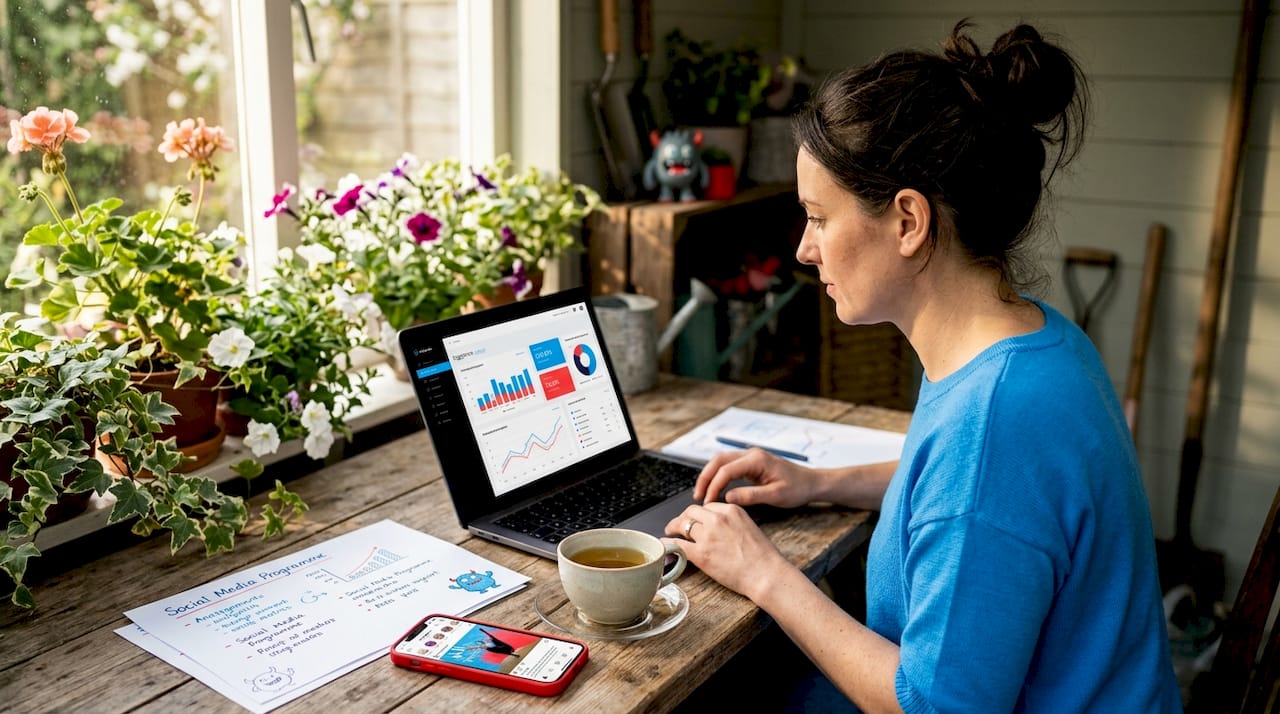
The distinction between likes and deeper engagement matters here. Comments, shares, and saves tell algorithms that a user spent time with your content and found it worth acting on. Likes tell algorithms that someone noticed and approved. Both signals are useful, but they carry different weights.
Pro Tip: Prioritise authentic likes from real accounts. Fake or bot-generated likes produce a spike in the like count without the accompanying watch time, comment activity, or save behaviour that algorithms use to validate the signal. Platforms are increasingly effective at identifying and discounting inauthentic engagement.
Consider the practical difference:
- Likes trigger initial distribution to a wider test audience
- Comments signal active interest and extend content visibility in feeds
- Shares introduce your content to entirely new networks
- Saves indicate high-value content that users intend to return to
For a small business posting on Instagram, a post that earns 200 genuine likes within the first hour will reach a meaningfully larger audience than one that earns 200 likes over three days. Speed and authenticity of engagement both factor into how far your content travels.
What research links likes to business financial performance?
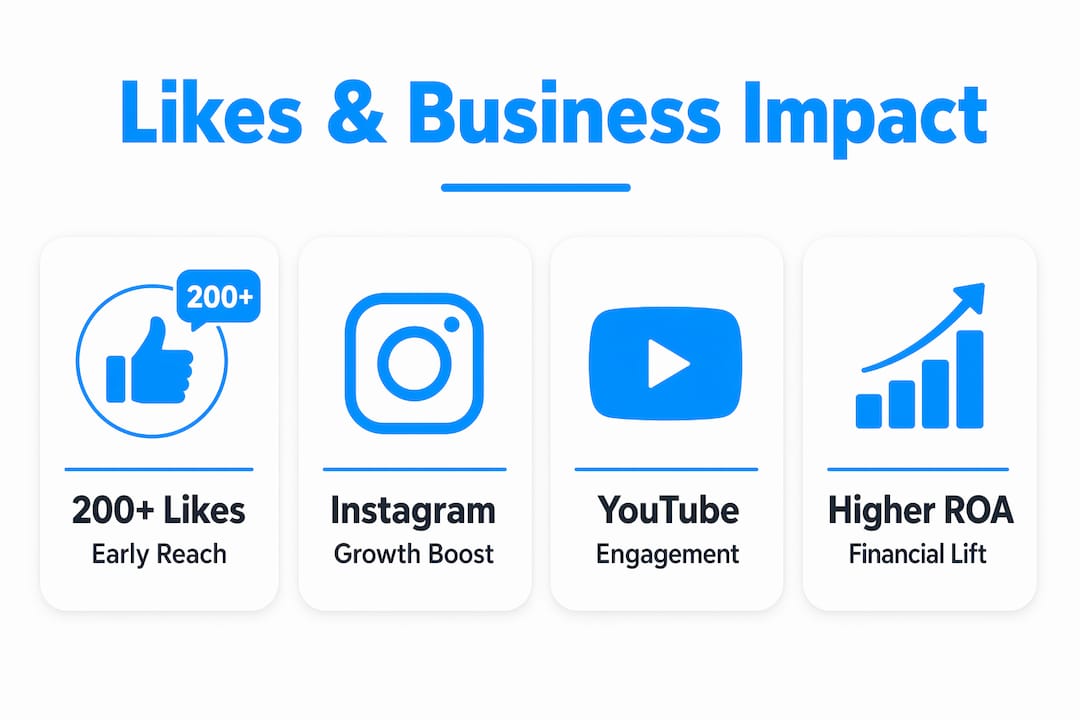
The importance of likes in marketing is not just theoretical. An MDPI study analysing 388 firm-years from 2019 to 2022 found that Instagram likes correlate positively with Return on Assets (ROA) at a statistically significant level (β = 0.0004, p < 0.05), and YouTube likes show a similar positive association. This means that businesses actively accumulating genuine likes on visual platforms are, on average, performing better financially than those that are not. The correlation is modest but consistent, which matters for strategy.
The platform you focus on makes a significant difference. The same MDPI dataset shows that Facebook and Twitter likes do not demonstrate the same statistically significant link to financial performance metrics. Instagram and YouTube, both built around visual and video content, appear to generate engagement that more reliably translates into business outcomes.
| Platform | Likes linked to ROA | Likes linked to ROE | Notes |
|---|---|---|---|
| Yes (β = 0.0004) | Via comments | Visual content advantage | |
| YouTube | Yes (β = 0.0002) | Yes | Video engagement depth |
| Not significant | Not significant | Lower visual content priority | |
| Twitter/X | Not significant | Not significant | Text-dominant platform |
The practical implication is clear. If you are a small business owner with limited time and budget, concentrating your like-generation efforts on Instagram and YouTube will produce a stronger return than spreading effort evenly across every platform. Audience engagement strategies that account for platform-specific behaviour consistently outperform generic, platform-agnostic approaches.
How have 2026 attribution model changes affected likes’ measurement?
From March 2026, Meta revised its attribution framework in a way that directly affects how you interpret the likes contribution to revenue. Previously, non-link engagements such as likes could be counted under click-through attribution. Under the new model, likes are now classified under “engage-through” attribution with a fixed one-day conversion window.
This change has caused many businesses to see a reported drop in click-through attributed conversions, which has led some to incorrectly conclude that likes have lost their commercial value. That conclusion is wrong. The engagement is still happening. The measurement category has simply changed.
Here is how to adapt your reporting approach:
- Separate your click-through and engage-through conversion columns in Meta Ads Manager so you are comparing like-for-like data across time periods.
- Add the engage-through column to your standard reports if it is not already visible, as it now captures the conversion activity previously attributed to like-based interactions.
- Avoid comparing post-March 2026 click-through conversion numbers directly against pre-March 2026 figures without accounting for the reclassification.
- Treat the one-day engage-through window as a conservative measure of likes’ direct conversion influence, not a ceiling on their broader impact across the customer journey.
Pro Tip: Entrepreneurs who understand the new attribution framework will make better budget decisions than those reacting to surface-level drops in reported conversions. Brief your team or agency on this change before drawing conclusions from performance data.
What is the difference between likes and deeper engagement in driving business success?
Likes open the door. Deeper engagement walks through it. This distinction is central to understanding how likes influence business success over the long term. A like tells a platform that your content is worth noticing. A comment, share, or save tells it that your content is worth investing time in, and that distinction shapes how long your content remains visible in feeds and recommendation engines.
Social media influenced purchases for 76% of social users in the past six months, with 90% of Gen Z and 84% of Millennials reporting recent social-influenced buying decisions. This statistic confirms that the impact of social media engagement on purchasing behaviour is substantial, but it also reveals that the pathway from engagement to purchase involves multiple touchpoints, not a single like.
The practical difference between engagement types breaks down as follows:
- Likes signal approval and trigger initial algorithmic distribution
- Comments create social dialogue, build community, and extend content lifespan in feeds
- Shares generate referral reach into new, untapped networks at no additional cost
- Saves indicate purchase consideration or high-value content, making them the strongest predictor of conversion intent
The goal for any small business is to use likes as the entry point and then design content that naturally encourages the next step. A product post that earns 500 likes but zero saves is performing less effectively than one that earns 300 likes and 80 saves. The saves tell you that people are returning to consider a purchase. You can enhance Instagram engagement by structuring posts to invite saves, such as tutorial content, product comparisons, or limited-time offers that users want to revisit.
How can small businesses leverage likes effectively for growth?
The likes and customer loyalty connection is built through consistency and authenticity, not volume alone. Small businesses that treat likes as the beginning of a relationship rather than the end goal tend to build audiences that convert. Sales through social platforms accounted for 17% of all online sales in 2025, which confirms that social engagement is a genuine commercial channel, not a supplementary one.
Practical steps to leverage likes within a broader growth strategy include:
- Post on visual platforms first. Given the research linking Instagram and YouTube likes to ROA and ROE, prioritise these channels over text-heavy platforms if your goal is financial performance.
- Time your posts for peak activity. Likes accumulate fastest when your audience is online. Use Instagram Insights or YouTube Analytics to identify your specific audience’s active hours and schedule accordingly.
- Use influencer partnerships selectively. Micro-influencers in your niche generate likes from genuinely interested audiences. A post liked by 2,000 relevant followers outperforms one liked by 20,000 indifferent ones.
- Track beyond the like count. Monitor saves, profile visits, and link clicks alongside likes to understand which content is moving audiences further down the funnel.
- Respond to comments on liked posts. When a post earns likes, the comment section is where conversion conversations begin. Responding promptly signals that your brand is active and trustworthy.
For YouTube specifically, proven engagement strategies that combine views with likes create a compounding effect on the algorithm, pushing videos into recommended feeds for weeks after publication rather than just the first 48 hours.
Key Takeaways: The Role Of Likes In Business Growth
Likes are a legitimate early-funnel business signal, but their commercial value depends entirely on the platform you use, the authenticity of the engagement, and how you measure it within updated attribution frameworks.
| Point | Details |
|---|---|
| Platform specificity matters | Instagram and YouTube likes correlate with ROA and ROE; Facebook and Twitter do not show the same effect. |
| Likes trigger organic reach | Authentic likes prompt algorithms to distribute content more widely, reducing paid reach dependency. |
| 2026 attribution has changed | Meta now classifies likes under engage-through attribution, so reported conversions look different without actual performance declining. |
| Deeper engagement drives conversion | Comments, shares, and saves carry more algorithmic weight and better predict purchase intent than likes alone. |
| Combine likes with strategy | Treat likes as the entry point and design content that moves audiences toward saves, comments, and purchases. |
Why I think most small businesses are measuring likes completely wrong
I have spent years watching small business owners dismiss likes as meaningless vanity metrics or, conversely, obsess over like counts while ignoring every other signal. Both responses miss the point. Likes are a legitimate early indicator of content health, and the MDPI data linking Instagram and YouTube likes to ROA is not something you can wave away. But a like count on its own tells you almost nothing about whether your business is actually growing.
The 2026 Meta attribution change has made this confusion worse. When business owners see their reported click-through conversions drop after March 2026, many assume their social content has stopped working. What has actually happened is that the measurement category shifted. The engagement is still there. The revenue influence is still there. The reporting just looks different now.
My honest recommendation is to build a simple dashboard that tracks likes alongside saves, profile visits, and direct messages for every major post. Within a month, you will see clearly which content types generate likes that go nowhere and which generate likes that lead to saves, enquiries, and sales. That pattern is where your strategy should live. Focus on social media’s role in business growth as a system, not a single metric, and likes will start making sense as one useful data point within a much richer picture.
— Luna
Grow your engagement with Greediersocialmedia
Greediersocialmedia has helped over a million UK businesses and creators build genuine social media presence since 2013, without ever asking for your password. If the research in this article has made one thing clear, it is that authentic likes on the right platforms produce real financial results. Greediersocialmedia’s approach focuses on real followers, real likes, and real views delivered securely and quickly.
Whether you are starting from zero on Instagram or trying to accelerate an existing YouTube channel, the team at Greediersocialmedia offers targeted support designed for businesses that want traction, not just numbers. Explore the social media growth tactics that have helped UK entrepreneurs turn engagement into authority and authority into revenue.
FAQ
Do likes directly increase revenue for small businesses?
Likes do not generate revenue on their own, but research from an MDPI study covering 388 firm-years shows that Instagram and YouTube likes correlate positively with Return on Assets and Return on Equity. They function as early-funnel signals that improve organic reach and brand visibility, which in turn supports revenue growth.
Why do Instagram likes matter more than Facebook likes?
The MDPI dataset shows that Instagram and YouTube likes have statistically significant associations with firm financial performance, while Facebook and Twitter likes do not. This is likely due to Instagram’s visual content format generating stronger purchase intent and deeper audience engagement.
How did Meta’s 2026 attribution change affect like measurement?
From March 2026, Meta reclassified non-link engagements such as likes under “engage-through” attribution with a one-day conversion window. Reported click-through conversions may appear lower, but this reflects a measurement reclassification rather than a genuine decline in likes’ commercial influence.
Are likes or saves more valuable for business growth?
Saves are a stronger predictor of purchase intent because they indicate a user intends to return to your content. Likes are more valuable for triggering initial algorithmic distribution. Both serve different purposes within the engagement funnel, and the most effective content earns both.
How can I get more genuine likes on Instagram?
Post during your audience’s peak activity hours using Instagram Insights, use visual content formats such as Reels and carousels, and partner with niche micro-influencers whose followers match your customer profile. Greediersocialmedia also offers Facebook post likes and Instagram engagement services for UK businesses seeking faster, authentic growth.