
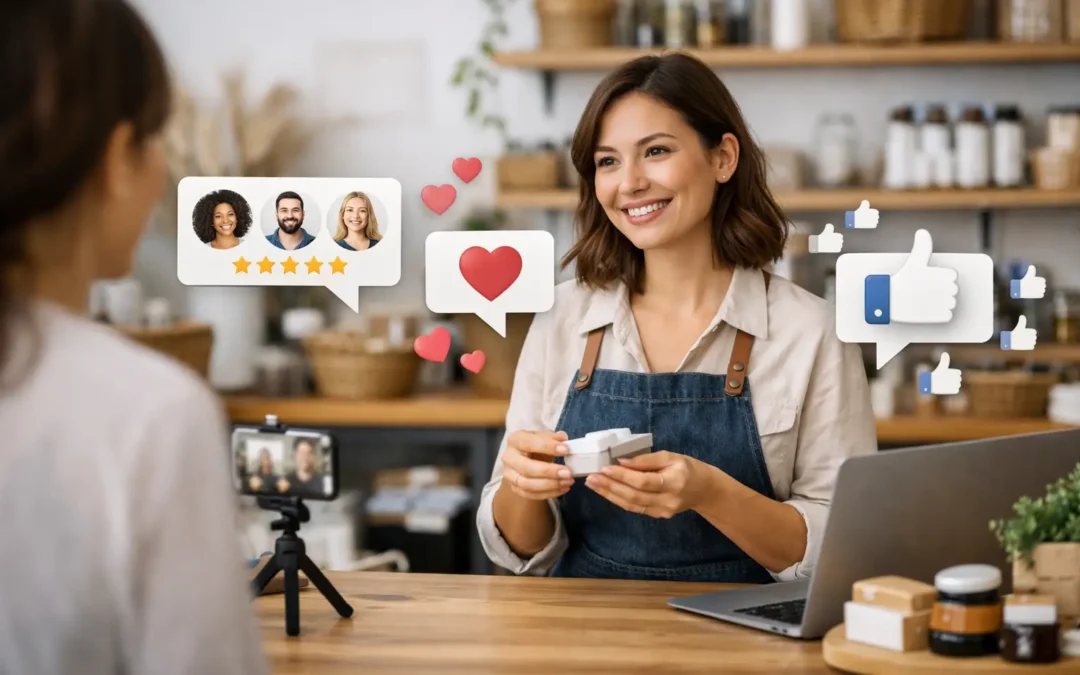
A quiet profile costs money. If your business page looks empty, slow, or ignored, most people will not hang around long enough to see how good your product really is. That is why social proof for small business matters so much. It shapes first impressions in seconds, and in crowded social feeds, those seconds decide whether people trust you, follow you, or buy from someone else.
For small businesses, creators, shops, trades, startups and local brands, social proof is not a vanity extra. It is part of the sales process. When people see followers, likes, views, shares, comments and customer reactions, they take your business more seriously. They assume you are active, relevant and worth paying attention to. That perception has real commercial value.
What social proof for small business really does
Social proof works because people rarely make decisions in a vacuum. They look for signals. If others appear to trust your brand, new visitors feel safer doing the same. If your posts already have engagement, your content looks more established. If your business account has a strong audience, you do not look like you started yesterday.
That matters even more for smaller brands that do not have the luxury of household-name recognition. Big companies can rely on brand familiarity. Small businesses need visible proof that they are active, legitimate and worth the click. Social metrics help fill that gap fast.
There is also a momentum effect. A page with visible activity tends to attract more real attention than one that looks dead. People are more likely to engage when they feel they are joining something already moving. They are less likely to be the first person to comment on a post with no likes and no traction. Stronger engagement signals remove that hesitation.
Why empty numbers hurt trust
Most business owners know poor branding looks unprofessional. Fewer realise weak social signals do exactly the same thing. A polished logo and smart website will only go so far if your Instagram has 43 followers, your TikTok videos sit on double-digit views, and your Facebook posts get no interaction.
Fair or not, people judge. They use social numbers as shortcuts. A low-engagement profile can suggest low demand, low relevance or low reliability. Even if your service is excellent, the market may read your page as unproven.
That does not mean every account needs massive numbers. It means your public profile needs enough visible proof to support your positioning. A local salon, online clothing shop, fitness coach or music artist does not need celebrity-scale reach. But they do need enough traction to look credible in their lane.
The forms of social proof that move buyers
Not every signal carries equal weight. Some help with authority, some help with visibility, and some help with conversion. The strongest setup usually comes from combining several.
Followers give your page a base level of authority. They tell visitors that people are interested in your brand over time, not just on one post. Likes and reactions support individual content performance and make your posts feel active. Views matter heavily on video-led platforms because people use them as a quick cue for relevance. Shares, reposts and retweets suggest people find your content worth passing on. Reviews and testimonials add a more direct trust layer because they speak to actual buying experience.
For many small businesses, the smart move is balance. A profile with decent followers but no likes can look inflated. A post with likes but a weak overall page can look inconsistent. The most convincing presentation is one where your profile and your posts support each other.
Social proof for small business and platform performance
There is a trust side to social proof, but there is also a visibility side. Platforms push content that appears to hold attention and attract reactions. If your posts get stronger signals early, they often stand a better chance of reaching more people. That does not guarantee viral growth, and anyone promising that outright is overselling it. But better social signals can absolutely improve how your content is perceived by both users and algorithms.
This is where many small brands get stuck. They know they need engagement to grow, but they need growth to attract engagement. That cycle can be painfully slow when you are posting into silence. Strategic social proof helps break that stall. It gives your content enough visible momentum to stop looking ignored.
For ecommerce brands, that can mean more confidence from shoppers checking your socials before they buy. For musicians and creators, it can mean looking more attractive to potential collaborators. For service businesses, it can help reassure prospects who are comparing several providers at once.
When buying social proof makes commercial sense
There is still a strange hesitation around paid social growth, as if every business should wait politely for the algorithm to notice them. That sounds noble, but it is not always practical. If your audience judges you on visibility, credibility and momentum, then improving those signals is a business decision.
Buying social proof makes sense when the goal is clear. If you need to make a new business profile look established, support a product launch, strengthen your authority before outreach, or give your content a better chance of attracting attention, paid engagement can be useful. It is especially useful when done quickly, safely and without needless friction.
The trade-off is simple. Social proof helps you look stronger, but it still works best when paired with decent content, active posting and a real offer people want. Bought engagement cannot rescue a confused brand or a poor product. What it can do is stop weak numbers from undermining a good business.
What small businesses should look for
Not all providers are equal, and this is where trust matters. Small businesses should look for delivery that is safe, fast and straightforward. No password requests should be the baseline, not a bonus. Clear package options matter. Secure checkout matters. Support matters. If a provider is vague, slow, or impossible to contact, that is a red flag.
It also pays to work with a supplier that understands urgency. When a business needs stronger social proof, it usually needs it now, not next month. Fast delivery is part of the value. So is reliability. If you are using engagement to support a campaign, launch or promotion, delays are not harmless. They cost attention while it is hottest.
That is one reason brands choose established suppliers such as Greedier Social Media. The appeal is not just the numbers. It is the combination of instant delivery, safe ordering, no password requirement and UK support, which removes friction for businesses that want results without unnecessary risk.
How to use social proof without looking forced
The smartest use of social proof is not loud. It is consistent. You want your profile to look active, trusted and commercially credible, not chaotic. That means matching the level of engagement to your stage, your niche and your posting habits.
If you are a local business, focus on building a respectable profile presence and supporting the posts that matter most, such as offers, launches, customer wins and seasonal campaigns. If you are an influencer or musician, stronger views and likes can help your best content look more competitive. If you run an online shop, social proof around product posts can reduce hesitation and support buyer confidence.
There is also timing to think about. Social proof works hardest at key decision points. Before a person follows, buys, enquires or shares, they often scan your profile for reassurance. That means your most visible posts and your overall page health matter more than random filler content.
The real value is perception that converts
Some people talk about social proof as if it is superficial. That misses the point. Marketing has always relied on perception. Shop fronts matter. Packaging matters. Reviews matter. A busy restaurant attracts more interest than an empty one. Social media is no different.
Perception is often the first stage of conversion. People need to believe your business is credible before they give you their attention. They need to feel they are choosing a brand with momentum, not taking a chance on one that looks ignored. Social proof gives them that reassurance.
For small businesses, that reassurance can be the difference between being scrolled past and being taken seriously. And in a market where attention is expensive, being taken seriously is not cosmetic. It is commercial.
If your business is worth buying from, your social presence should look the part. Build the proof, support the perception, and let your profile start working harder for the sales you want.