
TL;DR:
- Social proof for influencers builds through audience trust signals like engagement, endorsements, and transparency. It enhances credibility more than follower count alone and is driven by expert validation and authentic interactions. Consistently sharing real experiences and transparent sponsorships accelerates trust and long-term growth.
Social proof for influencers is defined as the credibility derived from audience behaviours, peer endorsements, and engagement signals that validate an influencer’s authority and persuade others to follow, trust, and buy. Rooted in the psychological principle that people copy others’ actions under uncertainty, it is the invisible force that separates influential creators from those who simply post content. Brands now scrutinise credibility signals far beyond follower counts, making social proof the single most important asset a creator can build. Understanding what drives it, and how to grow it, is no longer optional for serious influencers.
What is social proof for influencers and why does it matter?
Social proof for influencers is the accumulation of trust signals that tell an audience, and potential brand partners, that a creator’s voice is worth listening to. These signals range from comment quality and engagement rates to industry certifications and peer endorsements. Without them, even the most polished content struggles to convert viewers into loyal followers or buyers.

The psychological mechanism is straightforward. When a viewer sees thousands of genuine comments praising a creator’s advice, they assume the advice is sound. This cognitive shortcut reduces the mental effort required to evaluate a new source. Brands exploit this same shortcut when they choose which influencers to partner with, which is why credibility signals for influencers have become a formal evaluation category in influencer marketing strategies.
The importance of social proof grows as audiences become more sceptical. Creators who understand its mechanics can build it deliberately rather than waiting for it to accumulate by chance.
What types of social proof do influencers use?
Six recognised types of social proof operate in influencer marketing, each serving a different trust need.
- Expert social proof: An industry authority endorses the creator or the creator demonstrates specialist knowledge through detailed, accurate content.
- Celebrity or influencer social proof: A well-known figure tags, shares, or collaborates with the creator, transferring credibility by association.
- User social proof: Followers share testimonials, reposts, or reviews that confirm the creator’s value.
- Wisdom of the crowd: High subscriber counts, view totals, or follower numbers signal that many people have already decided the creator is worth following.
- Wisdom of friends: A viewer’s personal contact follows or recommends the creator, making the endorsement feel personal and trustworthy.
- Certification: Verified badges, platform awards, or professional qualifications add institutional weight to a creator’s profile.
Beyond these categories, specific credibility signals separate credible influencers from those gaming metrics. Comment quality is one of the strongest. A comment section filled with thoughtful questions and personal stories signals a real relationship between creator and audience. Transparent sponsorship disclosure, using labels such as #ad or #sponsored, also functions as a credibility signal rather than a liability.
| Type | Example signal | Typical trust level |
|---|---|---|
| Expert | Peer citations, detailed tutorials | High |
| Celebrity or influencer | Collaboration posts, shoutouts | High |
| User | Testimonials, reposts, reviews | Medium to high |
| Wisdom of the crowd | Follower count, total views | Medium |
| Wisdom of friends | Personal recommendations | Very high |
| Certification | Verified badge, professional qualification | High |
Pro Tip: Display multiple types of social proof simultaneously. A creator who has a verified badge, genuine user testimonials, and a recent expert collaboration signals credibility from three independent directions at once.
How do expertise, trustworthiness, and authenticity shape influencer credibility?
Expertise is the strongest predictor of whether an audience will act on an influencer’s recommendation. A study of 288 respondents aged 15–29 found that expertise and trustworthiness are the top predictors of consumer purchase intention, with physical attractiveness ranking significantly lower. This matters because many creators invest heavily in aesthetics while neglecting the depth of knowledge that actually drives conversions.
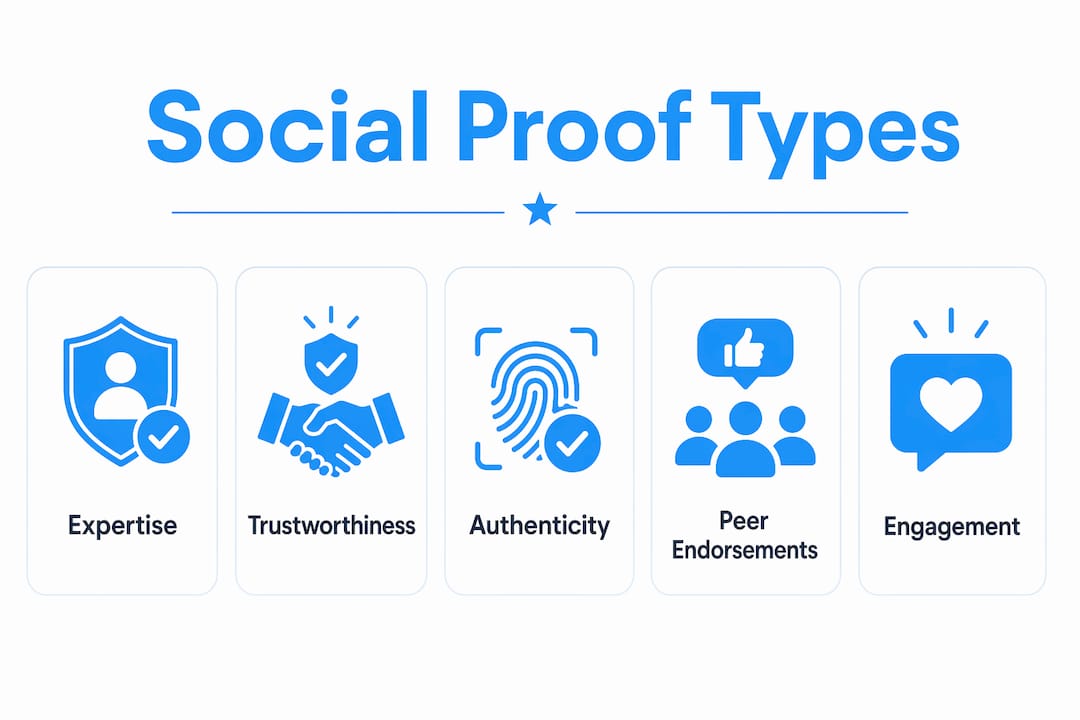
Trustworthiness is built through consistency and transparency. Audiences track whether a creator’s recommendations align with their stated values over time. A single misaligned sponsorship can erode months of accumulated trust. Transparent sponsorship disclosure goes beyond regulatory compliance. It actively shapes positive audience perception because it signals the creator respects their followers enough to be honest.
Authenticity is the third pillar, and it is the hardest to fake. Audiences have a finely tuned detector for scripted or overly polished content. Creators who share imperfect real experiences foster deeper trust than those who present a curated highlight reel. A creator admitting a product did not work as expected, or sharing a genuine failure, often generates more engagement than a flawless endorsement.
“Audiences have a highly developed detector for artificial content. Genuine imperfection fosters stronger trust and social proof than any polished production ever could.”
- Prioritise depth of knowledge over surface-level aesthetics in your content.
- Disclose every paid partnership clearly, even when platforms do not require it.
- Share real outcomes, including mixed results, to build long-term credibility.
- Maintain consistent values across every brand deal and piece of organic content.
Pro Tip: Before accepting a sponsorship, ask whether you would recommend this product to a close friend without payment. If the answer is no, the deal will cost you more in trust than it earns in fees.
Why does engagement rate matter more than follower count?
Engagement rate relative to peer group size is the industry-standard measure of influencer credibility. A creator with 20,000 followers and a 6% engagement rate is demonstrably more influential than one with 500,000 followers and a 0.4% rate. The numbers tell a clear story about whether an audience is genuinely listening.
Micro-influencers, those with between 10,000 and 100,000 followers, generate 60% higher engagement than mega-celebrities. That gap exists because smaller creators maintain closer relationships with their audiences, respond to comments personally, and produce content that feels relevant rather than broadcast. Brands increasingly allocate budget to micro-influencers for exactly this reason.
Evaluating engagement quality requires looking beyond the like count. Organic comments and comment sentiment reveal whether an audience trusts and engages with a creator or simply scrolls past. Sudden spikes in follower numbers without corresponding engagement growth indicate inorganic activity, which destroys social proof rather than building it.
| Metric | What it signals | Red flag |
|---|---|---|
| Engagement rate vs. peer group | Active, trusting community | Rate far below niche average |
| Comment quality | Relationship strength | Generic or emoji-only comments |
| Follower growth pattern | Organic audience building | Sudden unexplained spikes |
| Sentiment in comments | Audience trust level | Predominantly negative or neutral |
- Calculate engagement rate by dividing total interactions by follower count, then multiply by 100.
- Read the most recent 20–30 comments on any post to assess genuine audience connection.
- Compare growth curves over 90-day periods to spot irregular patterns.
Pro Tip: Use a simple spreadsheet to track your engagement rate monthly. A consistent upward trend, even a slow one, is far more valuable to brand partners than a large but stagnant follower count.
How can influencers build social proof strategically?
Building social proof is a deliberate process, not a byproduct of posting frequently. The most effective creators treat it as a long-term asset that compounds over time. You can read more about growing social proof fast with specific tactics, but the foundational steps are consistent across niches.
- Co-create content with your audience. Ask followers to share their experiences with a product or topic you cover. Feature their responses in your content. This generates user social proof while deepening the relationship between you and your community.
- Pursue long-term brand partnerships over one-off deals. Authentic long-term campaigns build unbeatable trust because audiences see the creator genuinely integrating a brand into their life rather than promoting it once and moving on.
- Seek expert endorsements actively. Reach out to recognised figures in your niche for collaborations, interviews, or even a simple quote. A single expert endorsement carries more weight than dozens of generic testimonials.
- Collect and display user testimonials. Screenshot positive comments, compile follower success stories, and share them regularly. This activates user social proof and reminds your audience that others trust and benefit from your content.
- Maintain consistent messaging across platforms. Audiences follow creators across Instagram, YouTube, and TikTok. Inconsistent values or contradictory recommendations across platforms erode the trust built on each individual channel.
- Engage with comments deliberately. Responding to thoughtful questions with detailed answers signals that you value your audience. This behaviour encourages more high-quality comments, which in turn strengthens your credibility signals.
Practical social proof strategies show that creators who combine multiple types of social proof simultaneously see the strongest results. Pairing user testimonials with expert endorsements and consistent disclosure creates a credibility stack that is very difficult for audiences to dismiss.
Pro Tip: Pin your most commented or shared post to the top of your profile. This immediately signals to new visitors that your content generates real conversation, which is one of the fastest credibility shortcuts available.
Key takeaways
Social proof for influencers is built through expertise, authentic engagement, and transparent disclosure, not follower count alone.
| Point | Details |
|---|---|
| Expertise drives conversions | Expertise and trustworthiness predict purchase intention more reliably than physical attractiveness. |
| Engagement beats follower size | Micro-influencers generate 60% higher engagement than mega-celebrities, making rate the key metric. |
| Authenticity is non-negotiable | Audiences detect scripted content; real, imperfect experiences build deeper and more durable trust. |
| Transparent disclosure builds credibility | Labelling paid content with #ad signals honesty and actively improves audience perception. |
| Multiple proof types compound | Combining expert, user, and crowd social proof creates a credibility stack that is hard to dismiss. |
Why I think most influencers are building social proof backwards
The standard advice tells creators to grow their follower count first and worry about credibility later. I think that is exactly the wrong order. Follower numbers without genuine engagement are a liability, not an asset. Brands have become sophisticated enough to spot the difference, and audiences always could.
What I have observed is that creators who obsess over comment quality, who respond to every thoughtful question and share honest product experiences, build social proof that compounds quietly and then accelerates suddenly. The audience does the work for them. A single viral comment thread, sparked by a creator’s honest admission that a product disappointed them, can generate more trust than six months of polished sponsored content.
Transparent disclosure is the most underused credibility tool available. Creators fear that labelling a post as an ad will reduce engagement. The research says the opposite. Audiences respect honesty. They follow creators who treat them as intelligent adults. The importance of social proof lies not in the numbers you display but in the genuine relationships those numbers represent.
My practical advice: audit your last 30 posts. Count the comments that contain a question or a personal story. If that number is low, your social proof is fragile regardless of your follower count. Fix the relationship before you fix the metrics.
— Luna
How Greediersocialmedia can support your social proof growth
Building social proof takes time, but the right foundation accelerates everything. Greediersocialmedia has supported over a million creators and businesses since 2013, helping UK-based influencers establish genuine visibility on Instagram, Facebook, and beyond, without requiring passwords or compromising account security.
If you are ready to move beyond vanity metrics and build the kind of presence that brands and audiences actually trust, Greediersocialmedia’s approach to authentic engagement growth gives you a practical starting point. Real followers and genuine interactions create the engagement signals that make social proof visible and verifiable. You can also explore building trust online with strategies that complement organic growth for long-term credibility.
FAQ
What is social proof for influencers in simple terms?
Social proof for influencers is the evidence that other people trust and value a creator’s content, shown through engagement, endorsements, and follower behaviour. It is the credibility signal that persuades new audiences and brand partners to take an influencer seriously.
Which type of social proof is most effective for influencers?
Expert social proof and wisdom of friends carry the highest trust levels because they come from sources the audience already respects. User testimonials and authentic engagement are close behind, particularly for micro-influencers building niche authority.
Does follower count matter for social proof?
Follower count contributes to “wisdom of the crowd” social proof, but engagement rate is a far stronger credibility signal. Micro-influencers with 10,000 to 100,000 followers generate 60% higher engagement than mega-celebrities, making rate the metric that brands and audiences actually trust.
How does transparent disclosure affect influencer credibility?
Transparent disclosure, such as using #ad or #sponsored labels, actively improves audience perception rather than harming it. Research confirms that influencer-brand fit combined with honest disclosure shapes stronger positive consumer responses than undisclosed promotions.
How quickly can an influencer build meaningful social proof?
There is no fixed timeline, but creators who combine consistent authentic content, deliberate audience engagement, and long-term brand partnerships typically see compounding credibility gains within three to six months. Quality of interaction matters far more than posting frequency.