
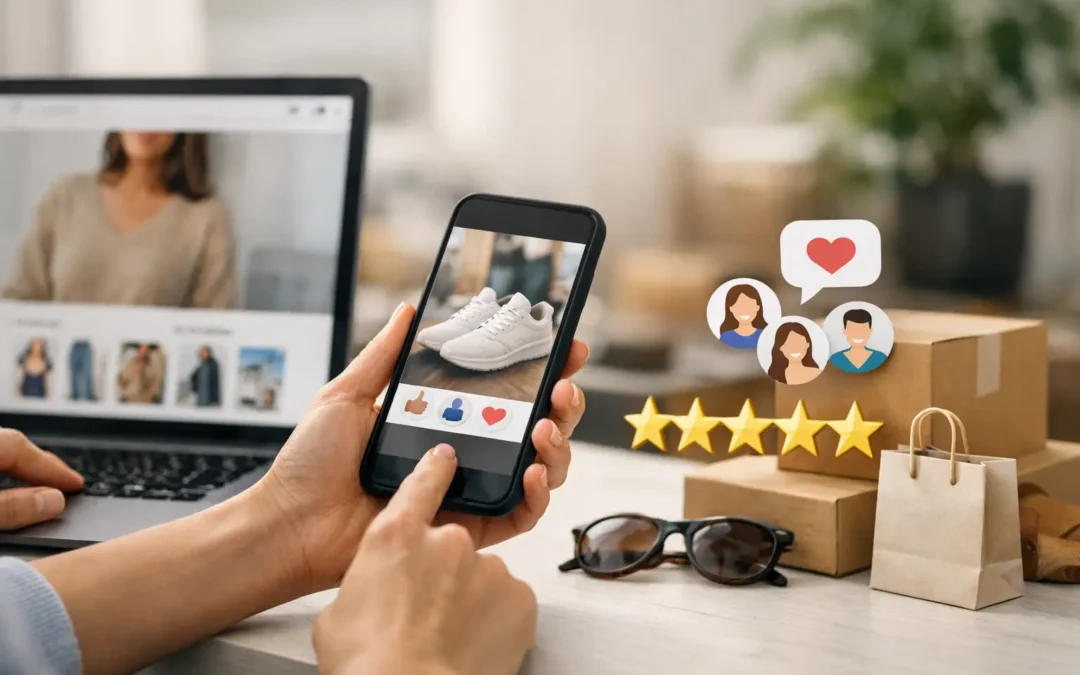
A shopper lands on your product page, likes what they see, then hesitates. That pause is where sales are won or lost. Social proof for ecommerce brands works because buyers want reassurance before they spend. They want signs that other people have already taken the risk, liked the product and felt good about the purchase.
That is the real commercial value here. Social proof is not just a nice extra for your site or your socials. It is a trust shortcut. In crowded markets, especially when customers are comparing prices, delivery times and brand reputation in seconds, that shortcut matters. If your store looks untested, people bounce. If it looks active, trusted and in demand, they move with more confidence.
Why social proof for ecommerce brands matters more than ever
Most ecommerce brands are not losing sales because the product is poor. They are losing sales because the buyer does not feel certain enough. Trust is fragile online. A customer cannot pick the item up, ask a member of staff a quick question or judge the atmosphere of a physical shop. They are relying on signals.
Those signals come from reviews, customer photos, user-generated content, follower counts, likes, comments, video views, press mentions and visible demand. When those signals are weak, your brand feels small, risky or forgettable. When they are strong, your offer feels safer and more popular.
This matters even more for newer brands and smaller operators. Big retailers already have built-in authority. Independent ecommerce businesses have to create that authority fast. Strong social proof helps close that gap. It gives your brand weight before your customer has had time to research you properly.
There is also a second benefit people often miss. Social proof does not only help with conversion. It helps with attention. Products and posts that appear active get more interest. On social platforms, visible engagement can make content feel worth watching. On-site, visible demand can make products feel worth buying. People follow momentum.
The types of social proof that move ecommerce sales
Not all social proof has the same job. Some forms are there to reduce fear. Others create urgency. Others build the sense that your brand is already established.
Reviews are still one of the strongest trust drivers because they answer the questions buyers have in plain language. Does it fit? Is it worth the money? Did it arrive on time? That kind of detail removes friction. Star ratings help at a glance, but written reviews do the heavier lifting.
User-generated content adds another layer. When real customers post photos or videos using your products, your store stops looking staged. It starts looking lived-in. That is especially powerful in beauty, fashion, fitness, homeware and gifting, where people want proof that products look good outside of studio photography.
Visible social media engagement plays a different role. Follower numbers, likes, views and shares do not replace customer reviews, but they can shape first impressions very quickly. A brand with active social channels looks more credible than one with flat engagement and silent posts. That first impression can affect whether someone clicks through, trusts your ads or gives your page enough attention to convert.
Sales volume indicators can also work well if used carefully. Messages such as popular item, best seller or recently bought by others can help reassure a buyer that demand is real. The key is not to overdo it. If every product is labelled best seller, the effect disappears.
Where ecommerce brands get social proof wrong
The biggest mistake is treating social proof as decoration. A widget with stale reviews from two years ago is not helping you. Nor is an Instagram feed with weak engagement, inconsistent posting and no visible momentum. If your signals are there, they need to look current, active and believable.
The second mistake is relying on just one form. Reviews alone are useful, but they do not tell the whole story. Social proof works best when your website, product pages and social channels support each other. A customer might discover you on TikTok, check your Instagram, read your reviews, then return to your site to buy. If one of those touchpoints looks weak, confidence drops.
The third mistake is ignoring presentation. Five excellent reviews buried at the bottom of a page will not do much. Social proof should appear where hesitation happens – near pricing, near add-to-basket buttons, near delivery information and around product imagery.
There is also a trust line you should not cross. Social proof needs to support credibility, not damage it. If your reviews look fake, your comments are full of spam, or your numbers jump wildly with no consistency in the rest of your brand presence, shoppers notice. Smart customers are sceptical. They do not need perfection, but they do need your brand to feel solid.
Building stronger social proof without waiting months
A lot of ecommerce operators know they need more proof, but they move too slowly. They wait for organic traction to arrive on its own, while competitors build visible momentum and take the sale.
The smarter approach is to build your trust signals deliberately. That means asking for reviews after fulfilment, reposting customer content, showing customer results, keeping your social channels active and making sure your engagement levels do not make your brand look ignored.
This is where speed matters. If your products are strong but your public signals are weak, you are leaving money on the table. Social proof is partly about authenticity, but it is also about visibility. People need to see that your brand has an audience, a customer base and signs of life.
For many ecommerce brands, especially those trying to grow in competitive niches, paid engagement support can help strengthen that first layer of perception. It is not a replacement for product quality or service. It is a practical way to avoid looking empty while your brand scales. More likes, views, followers or post engagement can make your content look more established, which helps reduce doubt when new customers check you out.
That matters because perception affects behaviour. A strong-looking social profile can improve how shoppers judge your brand before they even read a product description. If your content appears active and in demand, people are more likely to keep watching, keep clicking and keep considering the purchase.
Social proof for ecommerce brands on social media
Social platforms are often the first trust test. A customer sees your ad, visits your profile and makes a quick decision. If your page looks active, they feel safer. If it looks neglected, they move on.
For ecommerce brands, Instagram and TikTok are especially important because they turn product discovery into a public popularity test. Shoppers are not only asking whether they like the item. They are asking whether other people are engaging with it too. Views, likes and comments can influence whether your brand feels current or invisible.
YouTube, Facebook, X and Threads all play slightly different roles, but the same principle applies. Public engagement supports perceived authority. It tells your audience that people are already paying attention. For smaller brands, that can be the difference between looking established and looking unproven.
This is why many operators choose fast, safe delivery of engagement to strengthen their profile while building broader marketing activity. When done properly, it helps remove one of the biggest friction points in ecommerce growth – looking too small to trust. Greedier Social Media has built its offer around that exact need, giving brands a way to increase visibility quickly without adding complexity.
What good social proof actually looks like
Good social proof feels consistent. Your website has current reviews. Your socials have visible engagement. Your brand mentions customers instead of only talking about itself. Your posts do not feel like they are being published into a void.
It also feels commercially aligned. A luxury brand may need polished customer content and quality-focused reviews. A trend-led brand may benefit more from high view counts and active social engagement that signal hype. A practical household brand may rely more on straightforward reviews and repeat purchase signals. It depends on what your customers need to believe before buying.
The key is simple. Every signal should reduce doubt or increase confidence. If it does neither, it is noise.
The commercial edge most brands underestimate
Social proof compounds. It helps your ads feel more trustworthy, your product pages feel safer and your social media feel more credible. That means stronger click behaviour, better on-page confidence and less hesitation at checkout.
Will social proof fix a weak product or poor service? No. But if your product is good and your offer is competitive, stronger proof can help you convert the traffic you already have and improve how new audiences judge you.
That is why serious ecommerce brands do not treat social proof as an afterthought. They build it into the sales process. They know buyers need confidence, and confidence rarely appears on its own.
If your brand looks better trusted than discovered, you have work to do. Start with the signals your customers can see first, strengthen the ones that support action, and make sure your business looks as credible on the surface as it is behind the scenes.
For more background, see HubSpot’s guide to social proof for ecommerce: https://blog.hubspot.com/marketing/social-proof.