
The role of events in local social media strategy is often underestimated by small businesses.
TL;DR:
- Community events are the most effective way to boost local social media growth through organic content and engagement. Implementing a three-phase strategy before, during, and after events maximizes reach, influence, and audience participation. User-generated content and social listening further enhance community trust and event success.
Community events are the single most reliable catalyst for local social media growth. The role of events in local social media goes far beyond a few tagged photos. Events create authentic content, build trust, and generate the kind of organic reach that paid advertising rarely matches. Nearly 64% of the global population uses social media to find nearby activities. For UK local businesses, that figure represents a direct pipeline between a well-run event and a larger, more engaged audience. MDG Agency confirms that a strong social event profile now functions as a brand’s first impression to Gen Z and millennial audiences.
How do community events directly impact local social media engagement?
Events are the most reliable trigger for organic social media activity at a local level. When a business hosts or sponsors a community event, it gives people a reason to post, share, and tag. That activity compounds quickly across platforms like Instagram, Facebook, and TikTok, where location tags and hashtags push content to local discovery feeds.
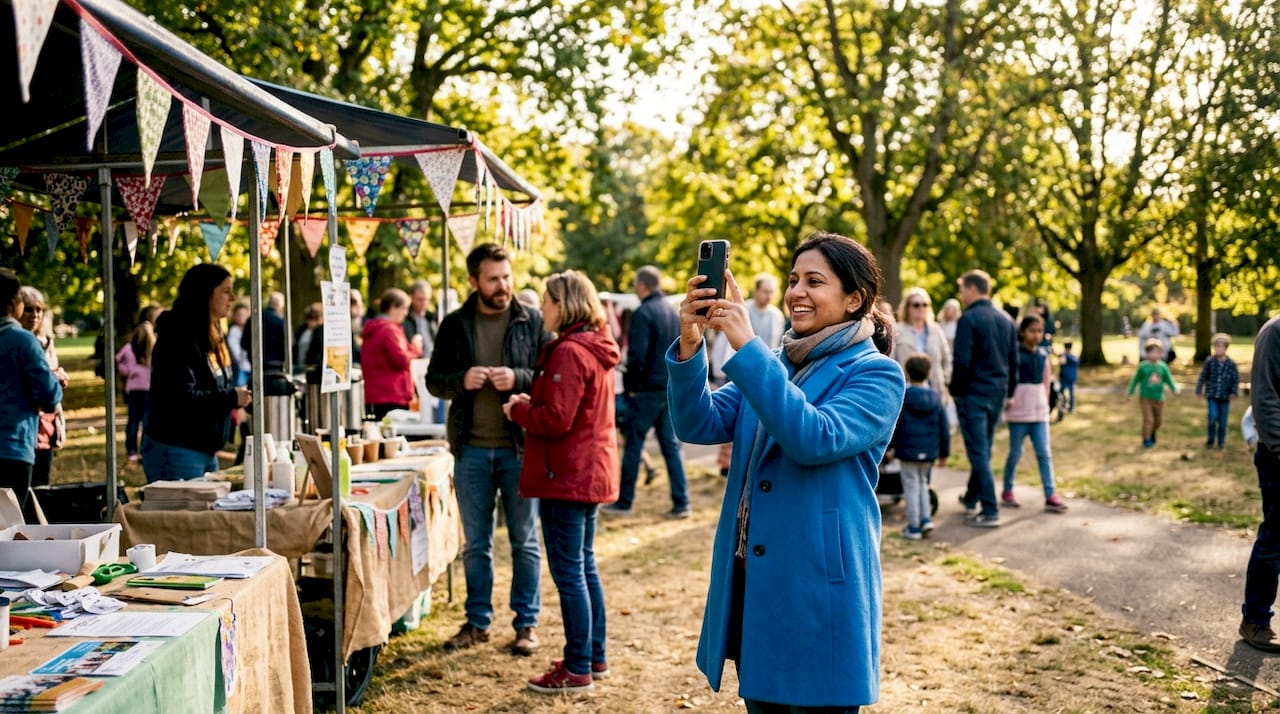
A major event can generate an extraordinary volume of digital activity. Research into sports tourism events recorded 25,000 posts, 30,000 interactions, and 12,000 network nodes from a single event’s social media footprint. That scale of activity identifies key community influencers and dramatically extends a brand’s organic reach without additional spend.
The psychological driver behind much of this activity is FOMO, the fear of missing out. When attendees post in real time, their followers see a live event unfolding and feel the pull to engage or attend. This effect is most powerful on Instagram Stories and TikTok, where short, unpolished clips feel immediate and credible.
Hashtags and branded content amplify the effect further. A dedicated event hashtag consolidates all attendee posts into a single, searchable thread. That thread becomes a living piece of local social media marketing that continues to attract views long after the event ends.
| Phase | Typical engagement level | Primary content type |
|---|---|---|
| Pre-event | Moderate | Announcements, countdowns, teaser posts |
| During event | High | Live posts, Stories, UGC, real-time shares |
| Post-event | Moderate to high | Highlights, testimonials, recap videos |
The table above shows a clear pattern. Engagement peaks during the event itself, but the post-event phase is where businesses most often fail to capitalise. Keeping content flowing in the 24–48 hours after an event sustains the momentum that took effort to build.
What social media strategies should local businesses use before, during, and after events?
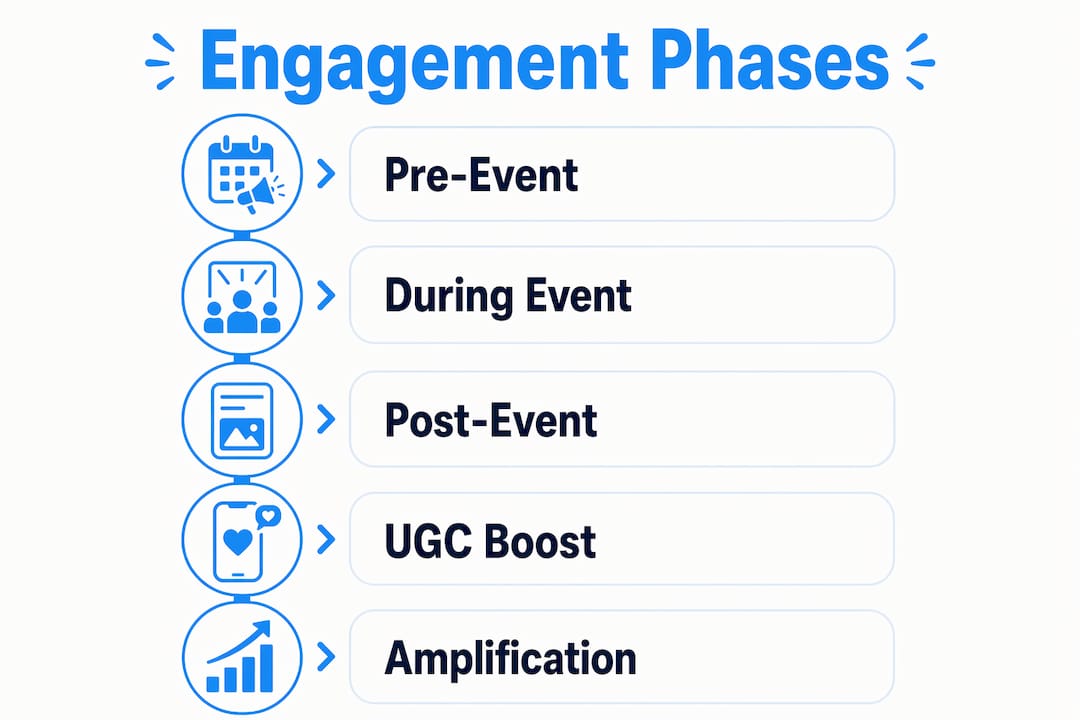
A three-phase approach is the most effective structure for event social media. Each phase has a distinct goal, and skipping any one of them leaves measurable value on the table. An integrated pre, during, and post strategy is the recognised standard for maximising both ROI and post-event advocacy.
Phase one: pre-event buzz
The goal before an event is to build anticipation and grow your audience before a single attendee arrives.
- Announce the event at least two weeks in advance across all active channels.
- Post a countdown series, one post every two to three days, using a consistent branded hashtag.
- Share behind-the-scenes content such as venue setup, speaker previews, or product sneak peeks.
- Run a poll or question sticker on Instagram Stories to involve your audience in event decisions.
- Partner with local micro-influencers or community groups to extend your pre-event reach.
Phase two: real-time engagement
During the event, your priority shifts to capturing and sharing content as it happens.
- Assign one person specifically to social media coverage so it does not fall to whoever has a spare moment.
- Post Stories every 30–60 minutes to keep non-attendees engaged and drive last-minute foot traffic.
- Encourage attendees to use your event hashtag by displaying it prominently on signage and screens.
- Go live on Facebook or Instagram for at least one key moment, such as a speaker, performance, or product reveal.
- Respond to comments and mentions in real time to signal that your brand is present and listening.
Phase three: post-event amplification
The 24–48 hours after an event are critical. Enthusiasm is at its peak, and your audience is primed to engage.
- Publish a highlight reel or photo album within 24 hours.
- Tag attendees, speakers, and partners in your recap posts to trigger their networks.
- Share user-generated content with credit to the original poster.
- Post a thank-you message that invites followers to your next event.
- Use analytics to identify which posts performed best and replicate that format next time.
Pro Tip: Create your event hashtag before you announce anything else. Use it in every pre-event post so it already has traction by the time attendees start sharing on the day.
How can social media listening improve hyper-local event planning?
Social media listening is the practice of monitoring public conversations about your brand, location, or topic across platforms. It differs from basic monitoring, which only tracks direct mentions. Listening captures broader community sentiment, including conversations that never tag your account directly.
For local event planning, listening is a genuine competitive advantage. Social media listening reveals unfiltered local opinions that help organisers address community needs before they become complaints. A local business in Manchester, for example, might discover through hashtag monitoring that residents consistently raise concerns about parking or litter at community events. Addressing those concerns publicly builds trust and increases organic sharing.
The practical benefits of social listening for local event planning include:
- Identifying which topics and formats your local audience genuinely cares about
- Spotting micro-influencers who already talk about your area or industry
- Catching negative sentiment early so you can respond before it spreads
- Finding content gaps that your event can fill for the community
- Tracking competitor events to understand what draws local audiences
Listening does have limits. Online conversations skew towards certain demographics, particularly younger, more digitally active residents. Blending social listening with traditional outreach, such as local Facebook groups, community notice boards, and in-person conversations, gives a more complete picture.
Pro Tip: Set up Google Alerts for your town name, event name, and relevant local hashtags. Spend ten minutes each morning reading the results. This simple routine surfaces community conversations that most businesses never see.
What role does user-generated content play in event-driven social media growth?
User-generated content, commonly called UGC, is the content your attendees create and share independently. It is the most credible form of social proof a local business can earn. UGC from events typically generates 3–5 times the volume of content produced by internal marketing teams. That volume advantage translates directly into wider reach and greater authenticity.
The most effective social media content from events is not what businesses post. It is what they inspire attendees to create. Activations like branded photo spots, custom frames, and social walls give attendees a reason to share and a format that keeps your branding visible in every post.
Live social walls display attendee posts in real time on screens at the event venue. They create a visible feedback loop that encourages more posting. Attendees see their content displayed publicly and feel immediate recognition. That recognition spurs further participation from others who want the same experience.
| Content type | Reach | Perceived authenticity | Volume potential |
|---|---|---|---|
| Brand-produced posts | Moderate | Lower | Limited by team capacity |
| User-generated content | High | Higher | Scales with attendance |
| Live social wall posts | Very high | High | Peaks during event hours |
A content cascade strategy extends UGC value beyond the event itself. By resharing the best attendee content within 24–48 hours, you sustain post-event momentum and keep your brand visible while competitors go quiet. This approach also signals to your audience that you value their contributions, which increases the likelihood they will post at your next event.
Understanding feedback loops in content engagement is central to making UGC work at scale. When attendees see their posts acknowledged and amplified, the loop reinforces itself and drives participation higher throughout the event.
Key takeaways
Community events drive local social media growth most effectively when businesses combine a structured three-phase strategy with UGC activations, social listening, and rapid post-event content amplification.
| Point | Details |
|---|---|
| Events drive organic reach | Attendee posts and hashtags extend your brand to audiences you cannot buy with ads. |
| Three-phase strategy is essential | Pre-event buzz, real-time coverage, and post-event amplification each serve a distinct purpose. |
| UGC outperforms brand content | Attendee-created content generates 3–5 times the volume of internal marketing output. |
| Social listening refines planning | Monitoring local conversations reveals community needs before they become event-day problems. |
| Post-event window is critical | Sharing highlights within 24–48 hours captures peak enthusiasm and drives future registrations. |
What I have learned from watching UK businesses get events wrong
Most local businesses treat the event itself as the finish line. They spend weeks on logistics and almost nothing on social media planning. Then they wonder why the event generated little lasting visibility online.
The uncomfortable truth is that the event is not the product. The content it produces is the product. A well-run market stall or community fair with no social media strategy leaves almost no digital trace. The same event with a dedicated hashtag, a photo spot, and one person assigned to real time posting can generate weeks of content and hundreds of new followers.
I have also noticed that UK businesses consistently underestimate the post-event window. The 24–48 hours after an event are when audience enthusiasm peaks and when social campaigns deliver their highest returns. Most businesses post a single thank-you graphic and move on. The businesses that win are the ones resharing attendee content, tagging contributors, and teasing the next event while the energy is still live.
Authenticity matters more than production quality. A shaky video of a packed room outperforms a polished graphic every time. Gen Z and millennials validate events on social platforms before they commit to attending. What they want to see is real people having a real experience, not a brand broadcasting at them.
My honest advice: allocate as much planning time to your social media strategy as you do to your event logistics. Build your hashtag first. Assign your social media resource before you book your venue. Measure your results with the same rigour you apply to ticket sales. The businesses that treat social media as an afterthought will always be outpaced by those who treat it as the main event.
— Luna
How Greediersocialmedia helps local businesses grow through events
Running a great community event is only half the work. Translating that event into lasting social media growth requires the right strategy and the right support.
Greediersocialmedia has supported over a million UK clients since 2013, helping local businesses turn event activity into real, measurable audience growth. From building follower counts before an event to amplifying post-event content through authentic engagement, Greediersocialmedia offers a secure, password-free service that delivers results without shortcuts. For local businesses ready to make every event count on social media, the social media growth tactics page outlines exactly how to build presence that lasts well beyond the event itself.
FAQ
What is the role of events in local social media growth?
Events act as catalysts for organic social media activity by giving local audiences a reason to post, share, and tag. The resulting content extends a brand’s reach far beyond its existing follower base.
How do local events boost social media engagement?
Attendee posts, branded hashtags, and real-time Stories create a surge of organic content during and after an event. Research shows a single major event can generate tens of thousands of posts and interactions across social platforms.
What is the best social media strategy for a local event?
A three-phase approach covering pre-event buzz, real-time coverage, and post-event amplification within 24–48 hours is the recognised standard for maximising reach and ROI from community events.
How does user-generated content help local businesses after an event?
UGC typically produces 3–5 times the content volume of brand-produced posts, extending reach and lending credibility that branded content alone cannot achieve. Resharing UGC in the days after an event sustains visibility and encourages future participation.
What is social media listening and why does it matter for event planning?
Social media listening monitors public conversations about your location, brand, or topic to surface community needs and preferences. It helps local event organisers address concerns proactively, which builds trust and increases organic sharing before and after the event.