
Yes, you may have a legal route to a refund for bought followers, particularly if the service was never delivered or does not match what was advertised. Your first move should be to contact the provider directly, quoting your order number and attaching screenshots as proof. The Consumer Rights Act 2015 gives you a statutory basis to ask, even when a seller’s own policy says otherwise.
TL;DR:
- Refunds are legally required if the purchased followers are not delivered, misrepresented, or disappear shortly after delivery, with a 14-day repayment window once agreed.
- Always document your purchase, communication, and evidence of non-delivery or issues before contacting the provider, as this greatly strengthens your refund claim.
- Providers that refuse refunds often cite breach of terms or platform removal, but you can insist on a statutory refund if the service was never properly delivered or was falsely advertised.
- Chargebacks are a fallback option and depend on timely, well-organized proof within around 120 days of purchase, but they are not guaranteed.
- Choosing reputable, password-free services with clear policies reduces dispute risks and simplifies the refund process if issues arise.
Table of Contents
- What UK consumer law says about bought followers
- How to request a refund from your provider
- Why a provider might refuse and how to push back
- Chargebacks and bank disputes: what to expect
- Evidence checklist and a realistic timeline
- What reputable follower services do differently
- What the refund process actually teaches buyers
- A safer way to buy engagement without the dispute risk
- Sources
- FAQ
What UK consumer law says about bought followers
The Consumer Rights Act 2015 treats followers, likes and views as digital content, which means the same protections that cover apps or software downloads apply here. Under section 45 of the Act, you can require a refund when digital content is not as described, not fit for purpose, or simply never turns up. Once a trader agrees to the refund, they must pay it within 14 days, using your original payment method and without deducting fees.
That 14-day clock only starts once the refund is agreed, not from the moment you ask, so a slow or evasive seller can still frustrate the process even where you are clearly in the right.
- Not as described: the package promised UK-targeted followers but delivered generic or bot accounts.
- Not delivered: the order was paid for but nothing appeared on your account.
- Not fit for purpose: followers vanished or were removed shortly after delivery.
A refund must be paid within 14 days of being agreed, with no extra charges, according to the Consumer Rights Act 2015. This matters because some providers try to offer store credit or a “refill” instead of cash, which is not the same as your statutory right to a refund.
Separately, the Competition and Markets Authority has flagged fake and misleading engagement as an enforcement priority. Its guidance on fake and misleading reviews warns that businesses offering artificial engagement can breach consumer protection law, which can work in your favour if a provider misrepresented what it was selling you.
How to request a refund from your provider
Open with a written message rather than a phone call, since you need a paper trail. Structure it clearly and keep it factual.
- State your order ID, purchase date, the exact service bought and the amount paid.
- Describe what went wrong: non-delivery, mismatched description, or followers that disappeared.
- Attach screenshots showing the order confirmation and the current state of your account, with visible timestamps.
- Ask specifically for a refund under the Consumer Rights Act 2015, not a credit or replacement.
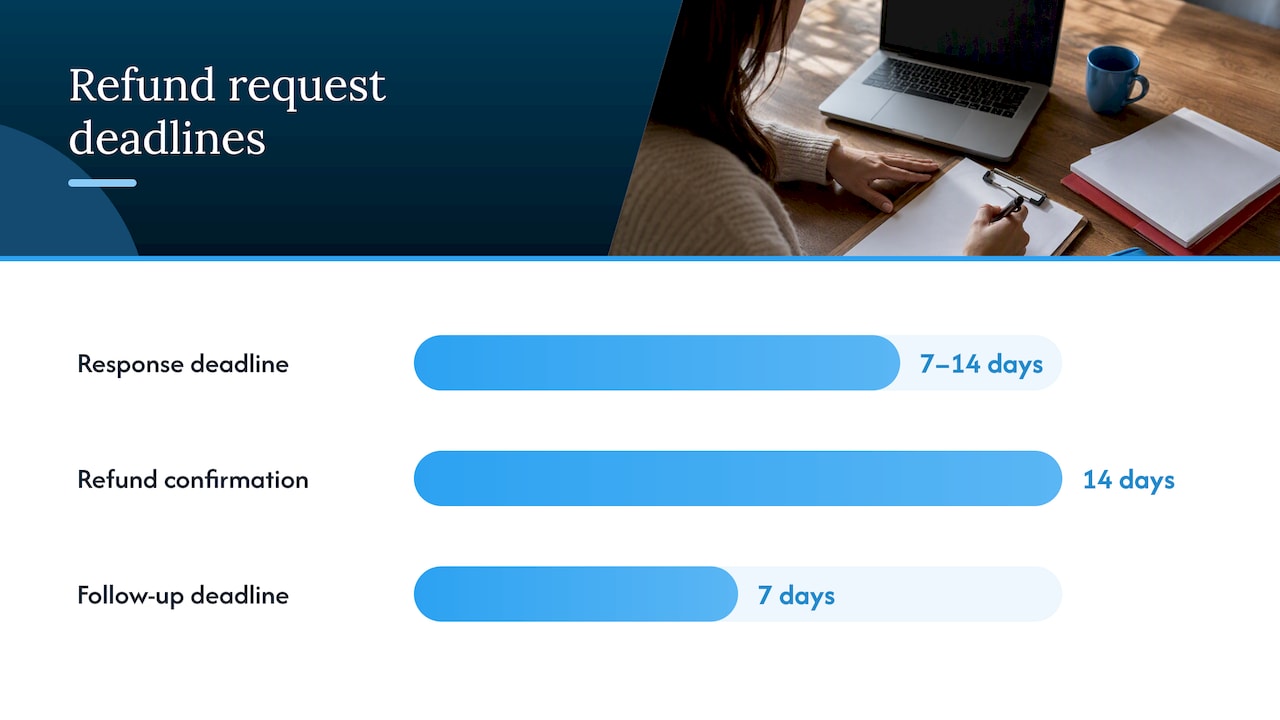
- Give a reasonable deadline, typically 7 to 14 days, for a response.
Send this to the provider’s official support address or contact form, never through a social media comment, and keep everything in a single email thread so the history stays intact.
- Use one subject line and reply within the same thread for every follow-up.
- Save a copy of every screenshot the day you take it, before anything changes.
- Note the date and time of each message you send and receive.
A short template helps: “I am requesting a refund under the Consumer Rights Act 2015 for order [number], purchased on [date], because the service was not delivered as described. Please confirm the refund within 14 days.” If there is no reply, escalate with: “This is a follow-up to my request on [date]. I have not received a response and will consider further action, including a chargeback, if this is not resolved within 7 days.”
Pro Tip: Keep every screenshot and email in one folder, named by date, so you can produce a single, ordered file if the dispute escalates.
Why a provider might refuse and how to push back
Not every refusal is unlawful, and some are entirely within a provider’s rights. Understanding the difference helps you decide where to push and where to accept the outcome.
- Breach of terms: if you violated the platform’s own conditions of sale, a refund can be reasonably declined.
- Chargeback bans: some sellers write no-chargeback clauses into their terms, though these do not override your statutory rights.
- Platform removal: providers often argue that followers were delivered and any later removal by Instagram or TikTok is not their fault.
- Misleading or unlawful services: if the offer itself involved deception, this can complicate a straightforward refund claim and may need a wider escalation.
Where a refusal conflicts with your statutory right to a refund for content that was never delivered or not as described, say so explicitly and reference the Consumer Rights Act 2015 in your reply. If the provider still refuses, that is the point to consider a chargeback through your bank.
Chargebacks and bank disputes: what to expect
A chargeback is a card-scheme remedy, not a legal right, so your bank is not obliged to pursue one even with a strong case. Banks typically want to see that you tried to resolve things with the seller first, so documented correspondence matters more than you might expect.
- Gather proof of non-delivery or mismatched description, plus your full email thread with the provider.
- Check your card scheme’s time limit, since some schemes allow up to around 120 days from the transaction date to raise a dispute.
- Submit a single, organised file rather than scattered attachments.
Card scheme disputes often carry a time limit of around 120 days from the transaction date, according to a representative Financial Ombudsman decision, so acting quickly matters more than waiting for the perfect case. Ombudsman decisions show that banks can decline chargebacks when a customer cannot supply the requested evidence or misses a procedural deadline, which is why preparation before you contact your bank counts for more than the strength of your complaint alone.
Evidence checklist and a realistic timeline
Treat this as a case file from the outset, not an afterthought once things go wrong.
Save these items:
- Order confirmation, receipt and payment reference.
- Screenshots of the service description at the time of purchase.
- Before-and-after follower or engagement counts, with dates.
- Every message exchanged with the provider, in order.
- A copy of the provider’s terms and conditions.
- Days 0 to 7: contact the provider with your evidence and a clear refund request.
- Days 7 to 30: escalate if there is no response, and set a firm deadline.
- Days 30 to 120: consider a chargeback if the provider has refused or gone silent, checking your card scheme’s own time limit first.
For a bank or ombudsman submission, combine everything into a single PDF, ordered by date, with clear labels for each item. This single step often shortens how long an adjudicator takes to reach a decision. If you are also trying to establish whether the service was genuine, our guide on spotting fake engagement sets out the signs worth photographing before you raise a claim.
What reputable follower services do differently
Irwin Lee writes for Greedier Social Media, which has operated in this space since 2013 and reports serving over one million customers, delivering followers, likes and views without ever requesting a password. That approach exists precisely because password requests and vague delivery terms are the most common source of disputes in this market.
A provider that states its terms clearly, shows visible support channels and never needs your login details gives you far less to dispute in the first place.
Trustworthy providers publish clear refund and delivery terms, respond to support requests within a stated window, and never ask for account passwords. Readers checking whether an order looks legitimate can compare it against our list of common fake follower warning signs.
Pro Tip: Before buying, screenshot the provider’s delivery and refund terms so you have a record of what was promised, not just what you paid.
What the refund process actually teaches buyers
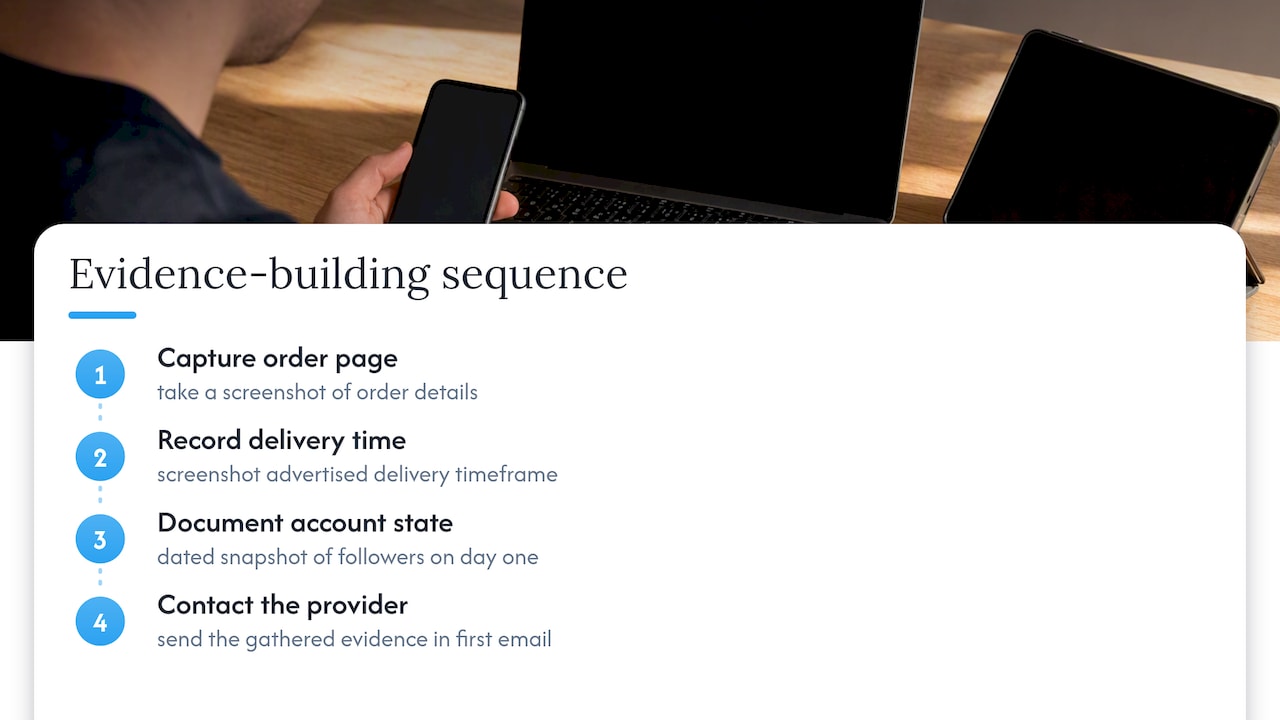
The most overlooked point in this entire process is that a strong refund claim is built before you ever contact the provider, not after. Buyers who screenshot the order page, the advertised delivery time and the account state on day one are in a completely different position from those who only start gathering evidence once something has gone wrong.
Conventional advice tends to focus heavily on the chargeback as the main lever, but that undersells how much weight a well-documented direct request carries and the benefits of influencer marketing strategies for safer engagement approaches. Providers settle far more disputes at the first email stage than most guides suggest, and a chargeback should be treated as the fallback it legally is, not the first tool you reach for.
If you take one thing from this, prioritise timestamps over arguments. A dated screenshot showing followers that vanished within a week says more than any amount of correspondence explaining how disappointed you are.
— Irwin Lee
A safer way to buy engagement without the dispute risk
Greedier Social Media sells Instagram followers, likes and video views without ever asking for your password, which removes one of the most common sources of refund disputes before it starts.
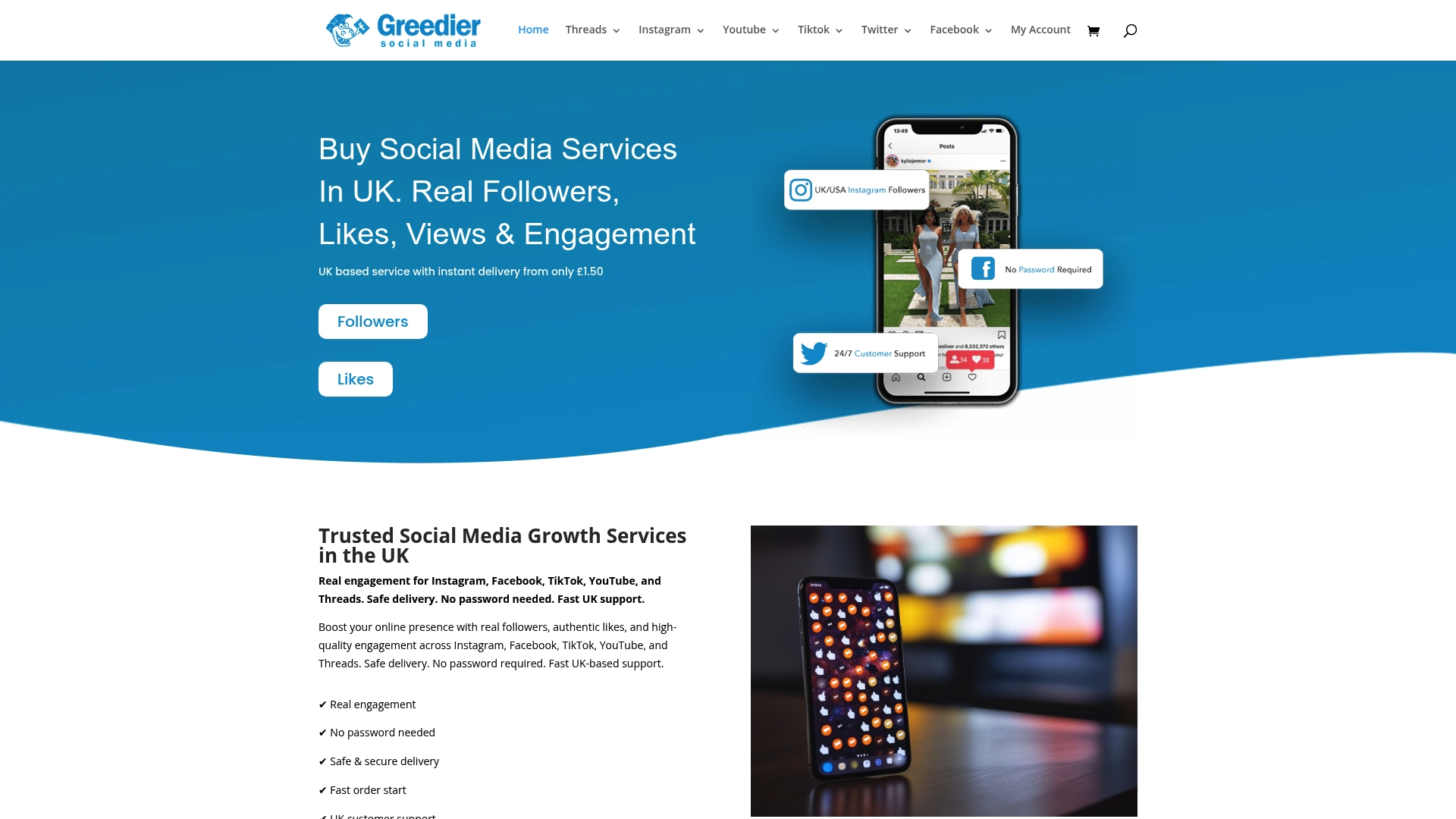
- Password-free delivery across Instagram, TikTok, YouTube and Facebook packages.
- UK-based support you can contact directly if an order needs reviewing.
- Clear, published terms so you know what to expect before you pay.
If you would rather avoid the dispute process altogether, browse the Instagram followers category or get in touch with support before you order if you have questions about how delivery works.
Sources
- Consumer Rights Act 2015, section 45: Right to a refund
- CMA guidance: Fake and misleading reviews
- Financial Ombudsman decision DRN-6283516
FAQ
Is buying followers against Instagram’s rules?
Buying followers breaches Instagram’s own terms of service, which can lead to reduced reach or account penalties, though it is not a criminal offence. The legal risk sits more with misleading engagement claims under consumer protection law than with the purchase itself. Our piece on buying followers and suspension risk covers what platforms actually enforce.
How much does it cost to buy 1,000 Instagram followers?
Prices vary widely by provider and by how the followers are sourced and delivered. Greedier Social Media prices its Instagram followers between £1.99 and £229.99 depending on the package size and options chosen.
How do I report bought followers on Instagram?
You can report suspicious accounts or activity directly through Instagram’s in-app reporting tools, which flag the content for platform review. This is separate from seeking a refund, which should go through the provider you paid rather than the platform itself.
Can buying followers damage my Instagram account?
Poor-quality or bot followers can lower your engagement rate and, in some cases, trigger platform review or reduced reach. Choosing a provider with clear, UK-targeted delivery and no password requests reduces that risk considerably.
Can I get my money back if the provider refuses a refund?
If a provider refuses a valid refund request, you can escalate to a chargeback through your bank, provided you act within your card scheme’s time limit, often around 120 days. Banks require documented evidence of your attempt to resolve the issue directly with the seller first.