
Real followers retention rate is the share of followers who are still connected a set time after they followed you, and cohort measurement is the way to track it. Hootsuite’s engagement guidance shows why you must fix the cohort and denominator first, and at Greedier Social Media we apply that discipline when measuring follower retention.
TL;DR:
- Track each weekly follower cohort separately; calculate retention as cohort members still following at the checkpoint divided by the cohort’s original size, multiplied by 100.
- Measure every cohort at 7, 30, and 90 days, then build monthly baselines and check the newest cohort weekly for early changes.
- No universal retention benchmark exists; the often cited 1% to 5% range measures engagement, so compare retention after 30 days with your own historical cohorts.
- Tag cohorts by acquisition source and compare them separately; if one source has weaker retention after 30 days, adjust its welcome experience or targeted content.
- Report cohort retention alongside engagement and audience growth, keeping denominators consistent; high growth with weak retention points to acquisition sources or onboarding that need review.
Table of Contents
- What does follower retention rate actually measure?
- How do you measure follower retention step by step?
- Is there a standard benchmark for follower retention?
- Why do some followers stay while others leave?
- Which tactics improve real follower retention?
- How should you report retention next to engagement and growth?
- Why we prioritise real followers and retention
- What can we do to help your followers stay?
- FAQ
- Sources
What does follower retention rate actually measure?
Retention asks one question: of the people who followed during a given window, how many are still following at a fixed later point? Common checkpoints are 7, 30 and 90 days, and you should pick one before you look at any numbers.
There are two ways to calculate it, and they answer different questions:
- Snapshot retention compares your follower count at two dates. It mixes new arrivals with departures, so a busy week of growth can hide a real exodus.
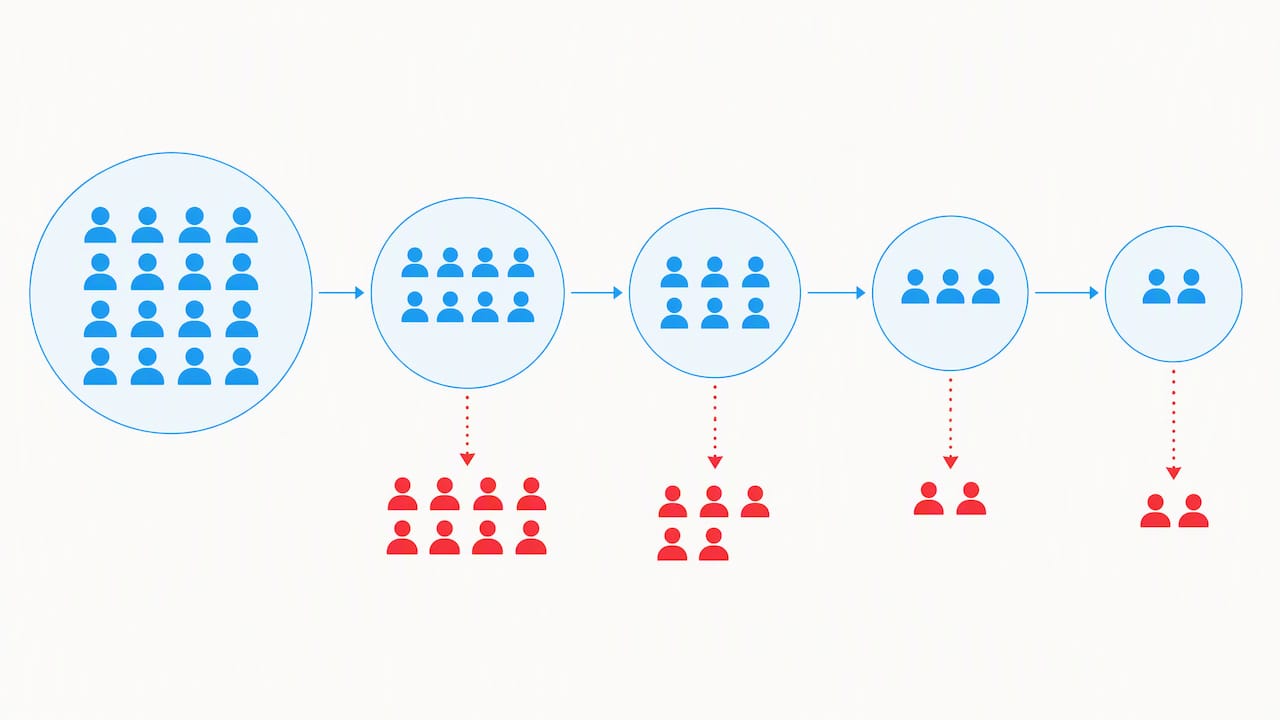
- Cohort retention tracks only the people who followed in one window, such as a single week, and checks how many remain later. This is the method we recommend.
- Engagement measures what followers do (likes, comments, saves), not whether they stay. Hootsuite notes that the denominator matters: reach-based and follower-based engagement answer different questions and should be reported separately.
A follower who never interacts but never leaves still counts as retained. A follower who likes everything and then unfollows does not. That is why the two metrics belong side by side, not in place of each other.
How do you measure follower retention step by step?
The cohort formula is: retention rate = (followers from the cohort still following at period end ÷ new followers in the cohort) × 100. Avoid the snapshot shortcut of dividing today’s total by last month’s total, because it cannot tell whether the people you gained are the people who stayed.
Here is a method you can copy into a spreadsheet:
- Choose a cohort window, such as all followers gained in one calendar week.
- Record the number of new followers in that window as your cohort size.
- Export or list those accounts, or record the exact count from your analytics.
- At 7, 30 and 90 days, count how many from the cohort still follow you.
- Divide each count by the cohort size and multiply by 100.
- Repeat weekly so every cohort sits in its own row.
A worked example, using illustrative figures: say 400 people follow you in week one, and 340 of them still follow 30 days later.
Hootsuite’s guidance is explicit that 600 interactions on a reach of 20,000 equals a 3% engagement rate, and the same rule applies to retention: define the base and the endpoint before you calculate any percentage.
Is there a standard benchmark for follower retention?
No single figure applies to every account, and the numbers people quote usually describe engagement, not retention. Hootsuite’s engagement guidance gives a broad engagement range of 1% to 5%, and it explicitly treats that as an engagement benchmark, not a retention one.
Retention shifts with several factors:
- Acquisition source: followers who arrive through a recommendation, a giveaway or paid promotion often behave differently from those who found you through your content. Our own page discusses bought followers.
- Account size and niche: a small local business and a large entertainment account attract very different audiences.
- Platform: each network treats feeds, notifications and unfollowing differently.
The practical answer is to build your own baseline. Track a few months of cohorts, note the typical 30-day figure for each acquisition source, and judge new cohorts against your history. Our guide on why follower quality beats quantity explains why a smaller, stable audience often outperforms a larger, leaky one.
Why do some followers stay while others leave?
Peer-reviewed research frames staying as a relationship, not a count. Vu, Wang, Keating and Chen define stickiness as the length of association plus the frequency of interaction, and their 2025 study finds that source credibility raises stickiness through parasocial interaction, with trustworthiness partly mediating the effect.
Followers stay when they feel they know and trust the account, not merely because they pressed follow once.
The evidence points to a few drivers:
- Credibility and trust: audiences that believe an account is knowledgeable and honest keep checking it.
- Responsiveness: Buffer’s analysis of nearly 2 million posts found that replying to comments was associated with up to 42% higher performance on Threads and 30% on LinkedIn. That is an observed association, not proof of course.
- Authenticity over time: a Management Science model describes how authenticity shifts between growth and monetisation stages, and why a poorly handled shift can erode loyalty.
Taken together, durable followership comes from repeat behaviour and trust, not from the follower number alone.
Which tactics improve real follower retention?
Start with the habits that deepen the relationship, then test what sticks for each cohort.
- Reply quickly and regularly. Responding to comments builds the familiarity the research links to stickiness, and Buffer’s data associates replies with stronger performance.
- Use recurring formats. A weekly series or familiar sign-off gives followers a reason to check back, which raises the interaction frequency Vu and colleagues describe.
- Welcome new followers. A pinned post that explains who you are and what to expect gives a new cohort an immediate reason to stay.
- Create cohort-targeted content. If your 30-day figures drop for one source, post material aimed at that group.
- Test creatives against retention. Compare cohorts that arrived during different campaigns instead of judging posts on likes alone.
- Measure by channel. Track cohorts from each acquisition source separately so you can see which ones hold.
Pro Tip: Tag every cohort with its source in your spreadsheet. A 10-point gap in 30-day retention between two sources tells you more than any average ever will.
If you also run sales, the same thinking applies beyond social media: Ahead of Sales explains the metrics, plans and scripts for retaining clients, which maps neatly onto turning followers into repeat customers. For accounts that have added followers recently, our content strategy after buying followers guide covers what to do next.
How should you report retention next to engagement and growth?
Present three metrics together: cohort retention, engagement rate (by reach, or by followers when you need a stable baseline), and audience growth rate. Keep denominators consistent, as Bitly’s measurement guide advises, so comparisons stay fair.
Mismatches tell a story:
- High growth, low retention: you are acquiring people who do not stay, so review the source or the welcome experience.
- High retention, low engagement: followers stay but stay quiet, which suggests content that is pleasant but not prompting action.
- High engagement, low growth: your core audience is active, but reach or discovery is limiting you.
- All three rising: your acquisition and content are working together.
Build monthly cohorts and add weekly spot checks on the latest one, so a sudden drop shows up within days, not at the end of the quarter.
Why we prioritise real followers and retention
I have seen too many accounts chase a bigger number and then wonder why nothing changed. Follower counts flatter you; retention tells you the truth. We focus on real, secure delivery with UK support because a follower only has value if they are still there and still interested later. My advice is to run your first cohort measurement before you buy or promote anything, then compare the next batch against it.
— Irwin Lee
What can we do to help your followers stay?
We offer real, UK-targeted follower packages with secure, password-free delivery and quick support, so each new cohort starts from a credible footing and you can measure it with the method above.

- Pick a starter package from our Instagram follower range, where prices run from £1.99 to £229.99 for one-off purchases.
- Track the new cohort at 7, 30 and 90 days using the formula in this guide.
- Read our techniques guide for practical steps to keep new followers engaged.
Start with a small order, measure its cohort, and decide from your own figures.
FAQ
What is a good follower retention rate on Instagram?
There is no single accepted figure, because retention depends on how followers arrived, your niche and your account size. Build a baseline from your own past cohorts and judge new ones against it. Hootsuite’s 1% to 5% range is an engagement benchmark, not a retention one.
How is retention different from engagement rate?
Retention counts how many followers stay connected, while engagement counts what they do. Hootsuite’s guidance separates reach-based from follower-based engagement, and both should be reported alongside a cohort retention figure.
Does replying to comments help keep followers?
Evidence points that way, though it is not proof. Buffer’s large 2026 analysis associated replies with stronger performance, and the Vu et al. research links responsiveness to the parasocial ties that support stickiness.
How often should I measure follower retention?
Build monthly cohorts and check the newest one weekly. Measure each at 7, 30 and 90 days so you can see both early drop-off and longer-term loyalty.
Sources
- How to calculate engagement rate in 2026
- The State of Social Media Engagement in 2026: 52M+ Posts Analyzed
- Increasing Social Media Stickiness Through Parasocial Interaction and Influencer Source Credibility – Van Canh Vu, Shasha Wang, Byron W Keating, Etta YI Chen, 2025
- Influencer Authenticity: To Grow or to Monetize | Management Science