
These local customer attraction strategies UK businesses rely on most all centre on visibility and trust.
Optimise your Google Business Profile, collect reviews systematically, and run geo-targeted ads with a tight radius. These three moves deliver the fastest, most measurable local growth for UK small businesses, and you can start all three today. Add one offline tactic, such as a leaflet drop or a community sponsorship, and you have a four-part foundation that covers both digital intent and physical presence.
Start here today:
- Log into Google Business Profile and confirm your address, phone number, opening hours, and primary category are accurate.
- Send a review request to your last five customers, either by text, email, or a printed QR code at the till. Trustpilot and Google reviews are both worth collecting.
- Set up a £5-per-day geo-targeted ad on Meta Ads targeting a 3-mile radius around your premises.
- Post one piece of local content on your social channels today, tagging your town or neighbourhood.
Greediersocialmedia has helped UK businesses accelerate this exact process by building early social proof while organic channels gain traction.
Local Customer Attraction Strategies UK: Key Takeaways
An effective approach to local customer growth in the UK combines a fully optimised Google Business Profile, a systematic review collection process, and 2–3 targeted paid or organic channels measured by acquisition cost.
| Point | Details |
|---|---|
| Start with GBP | Complete every field, add photos, and post weekly to enter the Google map pack and generate free local enquiries. |
| Reviews drive rankings | Collect reviews consistently using automated SMS or QR codes; recency and volume matter more than business age. |
| Geo-ads deliver fast leads | Google Ads and Meta Ads with a 1–5 mile radius and £300–£1,000/month budget produce leads within 1–4 weeks. |
| Pick 2–3 channels only | Test each channel with a predefined pass/fail threshold; spreading budget across six channels produces noise, not results. |
| Greediersocialmedia accelerates traction | Use Greediersocialmedia’s UK-targeted engagement packages to build early social proof while organic channels gain momentum. |
Table of Contents
- What is your 7-day local marketing action plan?
- What are the core local customer attraction strategies for UK businesses?
- How do you choose the right channels and measure what matters?
- Which tools help you run a hyperlocal campaign in the UK?
- What UK legal and practical rules apply to local marketing?
- What has actually worked for UK clients
- Greediersocialmedia speeds up your local social traction
- Sources
- FAQ
What is your 7-day local marketing action plan?
A week is enough time to lay every foundation. Here is what each day looks like, with realistic time and cost estimates.
- Day 1 (free, 45 minutes): Complete every field in Google Business Profile. Add at least 10 photos, write a keyword-rich business description, and set your service area. Check that your name, address, and phone number (NAP) exactly match what appears on your website.
- Day 2 (free, 30 minutes): Build a review request template. A short, friendly SMS or email asking for a Google or Trustpilot review works well. Send it to your last 10 customers. Print a QR code linking directly to your review page and place it at the counter or in your packaging.
- Day 3 (free, 1 hour): Audit your NAP across Yell, Bing Places, and Apple Maps. Inconsistencies as small as “St” versus “Street” can suppress your local rankings. Correct any mismatches you find.
- Day 4 (£50–£150, 1 hour): Launch a Meta Ads campaign targeting a 3–5 mile radius. Use a single image ad with a clear local offer and a tap-to-call or tap-for-directions button. Set a daily budget of £5–£10 to start.
- Day 5 (free, 45 minutes): Publish a Google Business Profile post featuring a time-limited local offer. Something like “10% off this week for [Town] residents” ties your listing to immediate action and signals activity to Google’s local algorithm.
- Day 6 (free or low cost, 1 hour): Identify two local community groups on Facebook or Nextdoor where your customers are active. Join them and contribute genuinely before any promotion. Post one piece of helpful, non-salesy local content.
- Day 7 (free, 30 minutes): Check your mobile site speed using Google PageSpeed Insights. Confirm your phone number is clickable and your booking or contact form works on a phone screen. A majority of local searches happen on mobile, so a broken tap-to-call button is a direct revenue leak.
By day 7, you should see: at least 5 new reviews requested, a live paid ad generating impressions, a completed GBP listing, and consistent NAP data across the main directories.
What are the core local customer attraction strategies for UK businesses?
Google Business Profile: your most valuable free asset
A fully completed GBP listing is the single fastest route into the Google map pack, which delivers a consistent stream of free local enquiries. Fill in every field: business name, address, phone, website, opening hours, service areas, and at least one primary and two secondary categories. Upload photos of your premises, team, and products regularly. Google rewards active listings, so publish a new GBP post at least once a week.

Map pack visibility is driven more by review volume and recency than by how long your business has existed. A new café with 40 recent five-star reviews will often outrank a ten-year-old competitor with 12 stale ones.
Pro Tip: Combine a GBP post with a time-limited local offer, such as “Free coffee with any lunch order, this Friday only, [Town] branch.” This triggers both a search impression and an immediate reason to walk in, giving you a measurable footfall spike you can attribute directly to the post.
Local SEO and hyperlocal content
Location-specific landing pages, “near me” keyword phrases, and consistent citations across directories are the three pillars of local SEO. Create a dedicated page for each town or area you serve, but only if you can write genuinely local content for it. Duplicate pages with token town names swapped in do more harm than good.
Use tools like BrightLocal to audit your citations and SEMrush to identify which local keywords your competitors rank for. NAP consistency across Yell, Bing Places, and Apple Maps is a basic hygiene step that many businesses skip, and it costs them rankings.
Hyperlocal marketing converts nearby search intent into physical visits, particularly for cafés, salons, retail shops, and local services. Mobile-first design, tap-to-call buttons, and accurate opening hours are non-negotiable for this to work.
Reviews and reputation management
Reviews are both a ranking signal and a conversion tool. The businesses that collect reviews consistently, not just when they remember to ask, are the ones that dominate the local pack. Automate the ask: a post-purchase SMS, a follow-up email 24 hours after a service, or a QR code on the receipt. Keep the message short and direct.
Responding to every review, positive or negative, signals to Google that your listing is actively managed. For negative reviews, respond within 24 hours, acknowledge the issue without admitting liability, and offer to resolve it offline. A systematic review process increases review volume and directly improves local conversion rates.
For ready-made templates, UK small business testimonial templates give you a starting point for review request messages and follow-up sequences.
Referrals and reviews are the lowest-cost, highest-trust channels available to a local business. Design a simple automated follow-up and you will collect more reviews in a month than most competitors gather in a year. The businesses that treat review collection as a system, not an afterthought, consistently outperform those that rely on customers volunteering feedback unprompted.
Geo-targeted paid ads and geofencing
Google Ads and Meta Ads both allow you to target by postcode, radius, or drawn boundary. For footfall-driven businesses (retail, hospitality, gyms), a 1–3 mile radius with time-of-day targeting, such as lunchtime for a café or Friday evening for a bar, produces the tightest cost-per-visit. For appointment-based businesses (clinics, salons, tradespeople), a wider 5–10 mile radius with a strong booking CTA works better.

Geo-targeted campaigns with budgets of £300–£1,000 per month, when targeted tightly, deliver faster leads than organic channels alone. Geofencing, where ads trigger when someone enters a defined geographic boundary, works best for impulse-driven businesses and must be paired with time-sensitive creative to produce measurable walk-ins.
For a deeper look at how local social content fits into this paid strategy, see types of local social media content for UK small businesses.
Social content and neighbourhood targeting
Local content outperforms generic brand content on social platforms because it is inherently relevant to the people who see it. Post about local events, tag nearby landmarks, celebrate local sports teams, and respond to community conversations. Facebook community groups and Nextdoor are particularly effective for neighbourhood-level reach in the UK.
What is local social media marketing? covers the tactics and formats that build credibility with a local audience, from event coverage to behind-the-scenes posts that make your business feel like part of the community.
Offline community engagement
Sponsoring a local football club, attending a farmers’ market, or hosting a community event builds the kind of trust that a Google ad cannot replicate. Gov local advertising and customer recommendations as practical routes to new customers, and offline presence feeds both. A well-placed banner at a school sports day or a branded stall at a Christmas market puts your business in front of local families in a context that feels personal, not transactional.
Combining offline credibility with online proof, such as posting photos from the event on your GBP and social channels, multiplies the trust effect. Neither channel alone achieves what both together can.
Loyalty and referral programmes
A simple referral mechanic, such as “give a friend £10 off, get £10 credit yourself,” costs almost nothing to set up and produces warm leads who already trust you. A clear USP at the centre of your referral offer makes it easier for customers to explain why they are recommending you. Keep the incentive straightforward and ensure any discount or reward is clearly described to comply with ASA guidance on promotional claims.
For UK businesses running email or SMS referral campaigns, PECR and UK GDPR rules apply. Only contact people who have opted in, keep records of consent, and include an unsubscribe option in every message.
For ideas on crafting a USP that makes your referral offer land, this guide to building a unique selling proposition is worth reading before you write your campaign copy.
How do you choose the right channels and measure what matters?
Pick 2–3 channels that match your customers’ behaviour and treat each as an experiment with a predefined pass or fail threshold. Spreading budget across six channels simultaneously produces noise, not data.
| Channel | Best for | Typical monthly cost | Time to see results | Effort required | Expected outcome |
|---|---|---|---|---|---|
| Google Business Profile | All local businesses | Free | 4–12 weeks | Low (initial setup + weekly posts) | Map pack visibility, calls, direction requests |
| Local SEO and location pages | Service businesses, multi-location | £50–£300 (DIY to agency) | several weeks | Medium (content creation, citation management) | Organic rankings, “near me” traffic |
| Google Ads (local campaigns) | Appointment and footfall businesses | £300–£1,000/month | 1–4 weeks | Medium (ad copy, bid management) | Calls, bookings, store visits |
| Meta Ads (radius targeting) | Retail, hospitality, events | £150–£300/month | 1–3 weeks | Low to medium (creative, audience setup) | Footfall, page follows, event sign-ups |
| Review collection (Google/Trustpilot) | All local businesses | Free to £50/month (tools) | 2–6 weeks | Low (template + automation) | Higher ranking, improved conversion |
| Offline events and sponsorships | Community-facing businesses | £50–£150/event | 4 weeks | High (planning, attendance) | Brand recognition, referrals |
KPIs to track by channel:
- GBP: profile views, direction requests, calls, and photo views (all visible in the GBP dashboard).
- Google Ads: cost per call or cost per booking, click-through rate, and impression share within your target radius.
- Meta Ads: cost per result (footfall proxy: link clicks or event responses), reach within your postcode area.
- Reviews: total review count, average star rating, and response rate.
- Offline: new customer source (ask at point of sale), footfall on event days versus baseline.
When to stop a channel: if after six weeks a paid channel has not produced a cost per lead below your average transaction value, pause it, review the creative and targeting, and relaunch with one variable changed. Do not keep spending on a channel that has not shown a single conversion signal.
Which tools help you run a hyperlocal campaign in the UK?
Core tools and one-sentence use cases:
- Google Business Profile (free): claim, complete, and post to your listing to appear in the map pack and Google Search.
- Google Ads (pay-per-click): run location-targeted search and display campaigns with radius and postcode controls.
- Meta Ads Manager (pay-per-click): create radius-targeted image and video ads for Facebook and Instagram with tap-to-call or booking buttons.
- BrightLocal (from £29/month): audit your local citations, track local rankings, and manage NAP consistency across directories.
- SEMrush (from £99/month): identify local keyword gaps, audit on-page SEO, and monitor competitor rankings.
- Trustpilot (free tier available): collect and display verified reviews that appear in Google search results and build consumer trust.
- Yell (free basic listing): a UK-specific directory that contributes to local citation signals.
- Bing Places (free): a frequently overlooked citation source that feeds Microsoft’s local search results.
- Apple Maps (free via Apple Business Connect): critical for iPhone users searching locally, particularly in higher-income demographics.
- Nextdoor (free for businesses): reach hyperlocal audiences in specific neighbourhoods through community posts and sponsored content.
Lightweight stack for tight budgets: Google Business Profile (free) plus BrightLocal (£29/month). GBP handles your map pack presence and review collection; BrightLocal keeps your citations clean and tracks whether your rankings are improving.
For managing your reputation across these platforms, this step-by-step guide to online reputation management covers the process from first review request to handling a public complaint.
What UK legal and practical rules apply to local marketing?
Running local campaigns in the UK involves a handful of rules that are easy to overlook and occasionally expensive to ignore.
- Leaflet distribution: you do not need a licence to hand out leaflets on public streets in most cases, but distributing door-to-door on private land (including managed estates) requires permission from the landowner or managing agent. Check your local council’s guidance at gov.uk for any local bylaws that restrict street distribution.
- Email and SMS marketing: under PECR and UK GDPR, you may only send direct marketing messages to individuals who have opted in, or to existing customers under the “soft opt-in” rule (where you collected their contact details during a sale and they have not opted out). Always include an unsubscribe mechanism and keep records of consent.
- Advertising claims: the Advertising Standards Authority (ASA) requires that all marketing communications, including social posts and Google Ads, are honest, legal, and not misleading. Avoid phrases like “the best in [Town]” unless you can substantiate the claim. Promotional offers must state their terms clearly, including expiry dates and any restrictions.
- Review authenticity: posting fake reviews, or paying for them from people who have not used your service, breaches ASA rules and Google’s terms of service. Only ask genuine customers for reviews, and never offer a reward in exchange for a positive review specifically (a general thank-you incentive for leaving any honest review is a grey area; seek legal advice if unsure).
- Offline events and markets: if you are running a stall at a public event, check whether the event organiser’s public liability insurance covers traders, or whether you need your own policy. For events on public land, a temporary event notice (TEN) may be required if you are selling alcohol. See gov.uk guidance on temporary event notices for details.
What has actually worked for UK clients
The pattern we see most consistently at Greediersocialmedia is this: UK small businesses that combine a completed GBP listing with a steady flow of new reviews and at least one active social channel reach local customers faster than those relying on any single tactic. The businesses that stall are usually the ones waiting for their website to rank organically before doing anything else.
Two examples illustrate this. An independent hair salon in the East Midlands focused on three things for 90 days: completing their GBP, sending a review request SMS after every appointment, and posting one before-and-after photo per week on Instagram. Their inbound calls from Google Maps increased noticeably within the first month, and their booking rate from new customers improved over the quarter. A second client, a family-run café in a market town in Yorkshire, added a Meta Ads campaign targeting a 2-mile radius alongside their GBP work. Footfall on Saturday mornings, their target trading period, picked up within three weeks of the campaign going live.
Neither of these required a large budget or specialist agency support. What they required was consistency: showing up in the same places, with the same message, week after week.
Full case studies with verified figures are available on request. Client details have been anonymised.
Greediersocialmedia speeds up your local social traction
Building a local social presence from scratch takes time. GBP and local SEO deliver results over weeks and months; paid ads produce faster leads but require creative and budget. The gap between launching your profiles and having enough social proof to convert a sceptical local customer is where many small businesses stall.
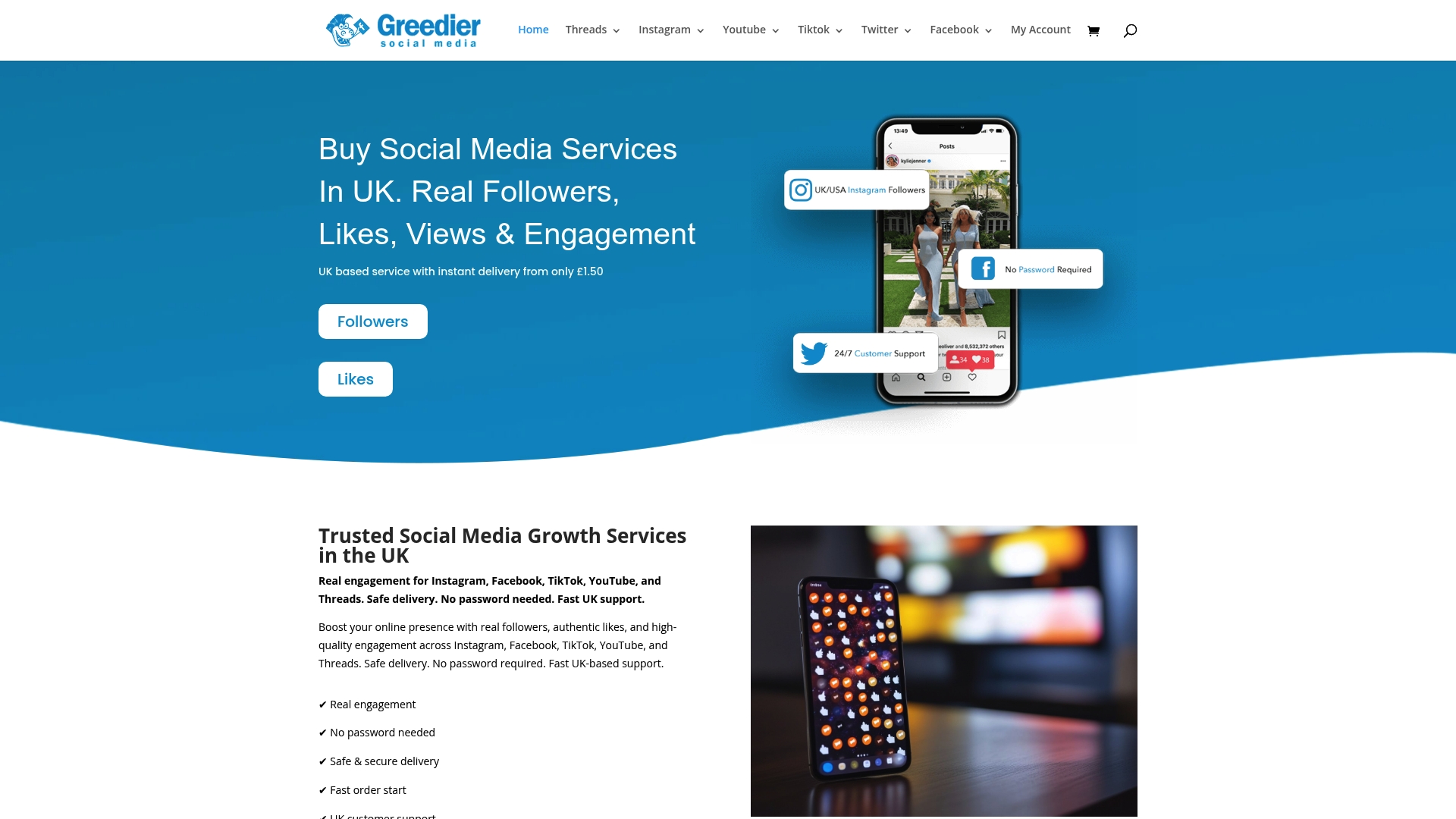
Greediersocialmedia fills that gap. Since 2013, the platform has helped over a million UK users build genuine social proof on Instagram, Facebook, TikTok, YouTube, and Threads, without requiring your password and with UK-targeted delivery that keeps engagement relevant to your actual audience. For a new account or a business relaunching its social presence, a targeted boost in real followers and engagement gives your local posts the early traction they need to be seen by the community you are trying to reach.
Paid engagement works best as a complement to the organic work described in this guide, not a replacement for it. Use it to accelerate the credibility-building phase while your GBP and local SEO take effect. Browse the social media growth packages and pick the one that fits your current platform and budget.
Sources
FAQ
How do you attract local customers quickly in the UK?
Optimise your Google Business Profile, collect reviews from recent customers using a QR code or SMS, and run a geo-targeted Meta Ads campaign within a 3–5 mile radius. These three steps can all be live within a week and produce measurable results within 1–4 weeks.
What are the six strategies to attract customers?
The six most effective local strategies are: optimising your Google Business Profile, building local SEO with location-specific content, running geo-targeted paid ads, collecting and responding to reviews, engaging with community groups and offline events, and running a simple referral programme. GOV.UK guidance highlights customer recommendations and local advertising as the most practical starting points.
How to attract local customers using social media?
Post content that references your specific town or neighbourhood, join local Facebook groups and Nextdoor, and use Meta Ads with a tight geographic radius. Consistent local content, such as event coverage, community shoutouts, and behind-the-scenes posts, builds the familiarity that converts a local scroller into a paying customer.
What is the 3-3-3 rule in sales?
The 3-3-3 rule is a prospecting framework suggesting you contact three new prospects, follow up with three existing leads, and complete three nurturing actions each day. It is a sales cadence tool rather than a local marketing framework, but the underlying principle, consistency over volume, applies directly to local review collection and referral outreach.
What channels should a small UK business prioritise first?
Pick 2–3 channels that match where your customers already spend time, measure acquisition cost per channel, and cut any channel that has not produced a conversion signal within six weeks. For most UK small businesses, Google Business Profile and one paid social channel is the right starting combination.