
These examples of UK small business testimonials show exactly what makes a quote actually convert.
The most effective testimonials for UK small businesses combine a named person, a specific result, and a verified platform badge. Quotes with a real name and job title convert best for websites; short video clips work hardest on social; verified platform reviews on Trustpilot or Google Business Profile carry the most weight for local search and AI discovery.
Highest-impact formats at a glance:
- Named quote with result — use on your homepage and product pages; include a before/after detail or a number (“saved us 4 hours a week”)
- Verified platform review — publish on Trustpilot, Google, or Reviews.co.uk; these feed local search rankings and AI overviews
- 30-second video testimonial — use in Instagram Stories, Facebook ads, and email campaigns; outperforms static text in paid placements
- Mini case study — use in B2B proposals, pitch decks, and service pages; challenge → action → result structure works for any sector
The practical examples and copy-ready templates are in Section 5. Start there if you need something to send or publish this week.
Pro Tip: Ask for a testimonial within 48 hours of a positive interaction. Response rates drop sharply after a week.
Examples Of UK Small Business Testimonials: Key Takeaways
Strong testimonials combine a named person, a specific result, and a verified platform badge — and collecting them consistently is what separates businesses that grow from those that stagnate.
| Point | Details |
|---|---|
| Verified reviews convert | 73.6% of visitors are more likely to buy when they see verified reviews on-site. |
| Specificity is the credibility driver | Name the person, the service, and the result — vague praise convinces nobody. |
| Ask within 48 hours | Response rates drop sharply after a week; build the ask into your post-job process. |
| Repurpose across channels | One case study can produce a homepage quote, three social cards, and a video clip. |
| Reply to every review | Consistent responses feed Google’s local pack and AI overviews at no extra cost. |
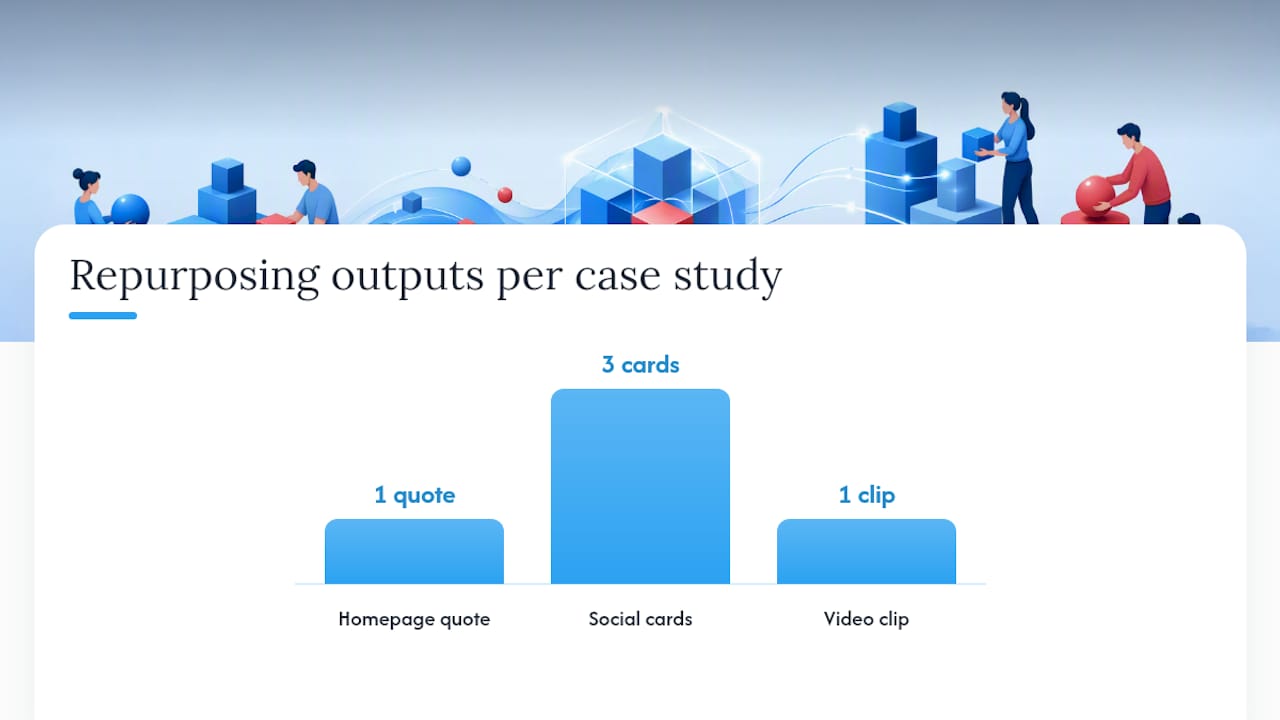
Table of Contents
- Why testimonials matter for UK small businesses
- What makes a testimonial actually convert?
- How to ask customers for testimonials
- 12 ready-to-use UK small business testimonial examples
- Where to place and repurpose testimonials
- UK legal and verification checklist
- How to measure whether testimonials are working
- The mistake most UK small businesses make with testimonials
- Your seven-day testimonial action plan
- Sources
- FAQ
Why testimonials matter for UK small businesses
A testimonial is a first-person statement from a real customer describing their experience with your product or service. It differs from a general review in that you typically request it, curate it, and publish it yourself. A case study goes further, adding structured context (challenge, action, result) and is usually longer.
For UK small businesses, the stakes are high. According to Trustpilot, 73.6% of visitors say they are more likely to buy from a website that displays verified customer reviews. That figure alone justifies putting testimonials on every high-traffic page you own.
Beyond conversions, reviews drive measurable revenue growth for SMBs by improving click-through rates in search results and feeding the signals that Google’s local pack and AI overviews use to rank businesses. Collecting verified reviews is both a sales tactic and a discovery tactic, and for a small business without a large ad budget, that dual return matters.
Trust signals on your website also reduce the friction that kills conversions on mobile, where most UK local searches now happen. A single well-placed testimonial near a “Book Now” or “Get a Quote” button can do more work than a paragraph of marketing copy.
What makes a testimonial actually convert?
Most testimonials fail not because the customer said something wrong, but because the business published something too vague. “Great service, would recommend” tells a prospective buyer nothing they couldn’t guess.
The must-haves:
- Specificity — what changed, what problem was solved, how much time or money was saved
- Named person and role — “Sarah T., owner, Leeds bakery” is far more credible than “Anonymous”
- Timeframe — “within two weeks” or “after three months” grounds the claim
- Before/after detail — even one sentence contrasting the situation before and after
- Product or service named — not just “the team” but “the monthly bookkeeping package”
- Third-party verification — a platform badge, screenshot, or link to the original review
Startups including a small constructive detail alongside the praise, because balanced reviews read as more authentic and reassure buyers who are sceptical of uniformly glowing copy. A testimonial that says “the onboarding took a bit longer than expected, but once we were set up, the time savings were immediate” is more persuasive than five stars with no context.
That example, from the Subby testimonials page, works because it names a specific feature, mentions a concrete benefit, and references the team. Authenticity in branding consistently outperforms polished copy precisely because buyers can tell the difference.
What reduces credibility:
- Overly formal or copywriter-perfect language that sounds nothing like a real person
- Missing name, role, or location
- Generic praise with no specifics (“amazing company, 10/10”)
- No verification link or platform badge
How to ask customers for testimonials
The biggest barrier is not customer reluctance — it is the business never asking. A direct, personal request sent at the right moment gets a response. A generic automated email sent two weeks later rarely does.
Email templates
After a service completion:
Subject: Quick favour — would you share your experience?
Hi [Name],
Really glad we could help with [specific job/project]. If you have two minutes, an honest review on [Google / Trustpilot / Reviews.co.uk] would mean a lot to us as a small business.
Here’s the direct link:
Thanks so much,
[Your name], [Business name]
After a product purchase (e-commerce):
Subject: How did
work out for you?Hi [Name],
Hope you’re getting on well with . If it’s been useful, we’d love a quick review — it helps other customers find us and takes less than a minute.
[Leave a review → link]
Cheers,
[Your name]

SMS template
In-person prompt (trades, salons, hospitality)
Hand the customer a small card or show them your phone screen: “If you’re happy with today, would you mind leaving us a quick Google review? It takes about 30 seconds and really helps a small business like ours.”

Video request script
Pro Tip: Replying to every Google review is one of the lowest-cost ways to improve local visibility. Set a weekly 15-minute slot to respond, and use a template to speed it up — but always read it before you post.
Collection process checklist:
- Decide who asks (owner, account manager, or automated email trigger)
- Set the timing (within 48 hours of completion or delivery)
- Record the date, platform, and customer name in a simple spreadsheet
- Store a screenshot of the original review alongside the consent record
- Follow up once, after five days, if no response
Google Business Profile guidance advises that automated reply drafts should be approved by a human before posting, to maintain brand voice and platform compliance.
12 ready-to-use UK small business testimonial examples
These examples are written to be adapted. Replace the bracketed fields with your own details. Each is labelled with its best placement.
Trades (plumber, electrician, builder):
Café / food business:
Hair salon / beauty:
Accountant / bookkeeper:
E-commerce:
B2B marketing agency:
Glazing / home improvement:
Fitness / personal trainer:
Video testimonial script (30–45 seconds):
[Shot 1 — customer on camera, natural setting]
“Before I found [Business name], I was struggling with [specific problem].”[Shot 2 — product/service in use or finished result]
“They [specific action taken]. The difference was [concrete result].”[Shot 3 — back to customer, smiling]
“I’d recommend them to anyone who needs [service/product]. Honestly, I wish I’d found them sooner.”
Mini case study template:
The Videtta Heating case study is a strong real-world example of this format in action: a UK plumbing business grew from £223k to £1.3m over five years, with the website converting a significant portion of visitors into leads, partly through consistent testimonial and marketing strategy.
The UK government’s business success stories hub documents similar patterns across sectors, showing how structured case studies helped small firms secure finance and scale internationally.
Where to place and repurpose testimonials
Getting a testimonial is only half the job. Where you put it determines whether it earns its keep.
| Placement | Best format | Notes |
|---|---|---|
| Homepage | Named quote with photo | Place near the primary CTA |
| Product/service page | Short quote + star rating | Match testimonial to the specific service |
| Google Business Profile | Verified review response | Reply to every review within 48 hours |
| Instagram Story/Reel | 15–30 second video clip | Add captions for silent viewing |
| Facebook ad | Short quote + result stat | Test with and without a photo |
| Email campaign | One-line quote in footer or body | Link to full case study |
Repurposing checklist:
- Long case study → pull a single quote for the homepage
- Homepage quote → turn into a social card using Adobe Express templates
- Social card → export as a short video clip for Instagram or Facebook ads
- Video testimonial → transcribe and use as a written quote on the service page
Adobe Express offers ready-made testimonial graphic templates that a small business can adapt in minutes, no designer needed. Add alt text to every image (“Customer testimonial from Sarah M., Manchester plumber”) and captions to every video so the content is accessible and indexable.
For local social media content specifically, testimonials perform best when they reference a location or a recognisable local detail — it signals relevance to nearby buyers.
UK legal and verification checklist
Fake or incentivised reviews without disclosure are not just bad practice — they breach ASA and CMA guidance and can result in enforcement action.
Immediate actions:
- Always get written or recorded permission before publishing a testimonial
- Keep a screenshot of the original review with the date and platform
- Record the customer’s name, date, and consent method in a spreadsheet
- Never fabricate, edit for meaning, or pay for fake reviews
- If you offer an incentive (discount, freebie) for a review, disclose it clearly: “Incentivised review” or “#ad” where required
Platform rules:
- Trustpilot prohibits fake reviews and requires businesses to invite customers only after a genuine transaction
- Google Business Profile guidance prohibits incentivised reviews that are not disclosed and requires responses to comply with platform terms
- Reviews.co.uk and Feefo both verify that reviewers are genuine customers before publishing
Verification steps that improve credibility:
- Link the testimonial to a timestamped photo of the finished job or delivered product
- Name the employee involved (“Ask for Jamie when you call”)
- Reference an order or job number where appropriate, without exposing personal data
- Display the platform badge (Trustpilot, Google, Feefo) alongside the quote
The ASA and CMA have both published guidance on endorsements and reviews. Check the ASA website and the CMA’s consumer protection pages for the current rules on paid endorsements and review manipulation.
How to measure whether testimonials are working
Testimonials are a marketing asset, not a decoration. Track them like one.
KPIs to monitor:
- Conversion rate on pages with testimonials versus pages without
- Click-through rate on ads that use a testimonial versus ads that do not
- Number of new verified reviews per month (target: at least four)
- Referral traffic from Trustpilot, Google, and Reviews.co.uk in Google Analytics
A/B test idea: Run your service page with a testimonial block against the same page without one for 30 days. A meaningful sample is roughly 200 unique visitors per variant. Track form submissions or calls as the conversion event.
Consistent review responses feed into Google’s local pack and AI overviews, so response rate is itself a metric worth logging. Aim to reply within 24 hours.
Tracking checklist:
- Add UTM parameters to any link in a testimonial-driven email campaign (e.g.
utm_source=email&utm_medium=testimonial) - Log the date you added a testimonial to a page and check conversion data 30 days later
- Note which platform each lead came from (Google Business Profile vs website vs social)
For a fuller picture of how reviews boost online presence, track your Google Business Profile insights monthly — views, calls, and direction requests all respond to review volume and recency.
The mistake most UK small businesses make with testimonials
Most owners collect a testimonial once, publish it in a sidebar, and forget about it. The testimonial sits there for three years, undated, unverified, and doing almost nothing.
The businesses that get real traction treat testimonials as a rolling content asset. They collect one new verified review every week, repurpose it across three channels, and rotate homepage quotes quarterly so returning visitors see fresh social proof.

The second mistake is chasing five-star perfection. A balanced review that acknowledges a small friction point — “the wait time was longer than expected but the result was worth it” — converts better than a wall of identical five-star ratings, because it reads as real.
Pro Tip: Don’t wait for customers to volunteer a testimonial. Build the ask into your post-job process as a standard step, the same way you send an invoice. Treat it as admin, not a favour.
Pro Tip: Video testimonials filmed on a customer’s phone, slightly shaky and unscripted, consistently outperform polished studio versions in paid social ads. The imperfection is the signal.
Your seven-day testimonial action plan
- Day 1: Send the email template from Section 4 to your last 20 customers. Personalise the subject line with the job or product name.
- Day 2: Identify one recent buyer who was visibly happy. Send the video request script. Offer to help them film it if needed.
- Day 3: Add your two strongest existing testimonials to your homepage, near the primary call to action. Include the customer’s name, role, and location.
- Day 4: Claim or update your Google Business Profile and Trustpilot page. Check that your business category, address, and opening hours are correct.
- Day 5: Reply to every unanswered review on Google and Trustpilot. Keep replies short, personal, and on-brand.
- Day 6: Create one testimonial social card using Adobe Express. Schedule it for the following week.
- Day 7: Set up a simple spreadsheet to log new reviews: date, platform, customer name, consent recorded (yes/no).
Once you have a steady flow of testimonials, the next step is making sure your social presence amplifies them. Greediersocialmedia’s social media growth strategy guide explains how to turn verified reviews and testimonials into consistent audience growth across Instagram, Facebook, and TikTok.
Sources
- 20 customer review examples: Ideas for small businesses
- Google Business Profile support
- Google review reply tools for UK small businesses (2026 guide)
This article is general information, not a substitute for advice from a qualified lawyer. Consult a qualified legal professional about your own circumstances before acting on anything here.
FAQ
Can you give an example of a UK small business testimonial?
A strong example: “[Plumber’s name] arrived within two hours, fixed the leak, and charged exactly what he quoted. I’ve already passed his number to three friends.” — named customer, specific service, concrete outcome, location implied.
What do five-star positive reviews look like for small businesses?
The most effective five-star reviews name the employee, describe the specific service, and include one concrete detail (“finished in a day”, “saved me £200”). Generic praise like “great service” carries far less weight with prospective buyers.
What are some of the most successful small business ideas in the UK?
Trades (plumbing, electrical, glazing), food and hospitality, personal care (salons, fitness), and B2B services (bookkeeping, marketing) consistently generate strong testimonial content because the results are tangible and personal. The Videtta Heating case study shows a UK plumbing business growing from £223k to £1.3m using structured testimonials and marketing.
What should a website testimonial include?
A website testimonial should include the customer’s full name (or first name and initial), their role or location, the specific product or service used, and a concrete result or change. A platform badge or link to the original verified review adds credibility.
How do I ask a customer for a testimonial without it feeling awkward?
Frame it as a quick favour rather than a formal request, and make it easy: send a direct link to your Google or Trustpilot page with a one-sentence prompt. Asking within 48 hours of a positive interaction, when the experience is fresh, produces the highest response rates.