
Most reputable providers start delivering within minutes, then complete the rest of a medium or large order over several hours to a few days. Instant arrival of thousands of followers in a single burst is a warning sign, not a feature. The number that actually matters is retention at 30 days, so log your starting count with a timestamp and check again on day 3 and day 30 before you judge whether the order worked.
TL;DR:
- Providers typically deliver followers in staged waves over hours or days, with a fast start often indicating pacing rather than instant completion.
- Small orders (100-500 followers) usually finish within two hours, while larger orders can take up to a week, especially during peak times.
- Delivery speed is affected by account status, region targeting, platform enforcement, and sourcing models, with real accounts naturally taking longer.
- Tracking delivery with timestamps and monitoring retention at 30 days reveals whether followers are from sustainable sources or low-quality panels.
- Reputable providers should offer documented retention rates and detailed logs; promises of instant full delivery or vague claims suggest lower quality or higher risk.
Table of Contents
- What ‘instant’, ‘fast start’ and ‘drip feed’ actually mean
- How long should a follower order actually take?
- What actually speeds up or slows down your order
- A simple log to track delivery and spot problems early
- Why retention matters more than how fast followers arrive
- What to ask before you check out
- How we think about delivery timing and measurement
- Where to buy real followers with a measurable delivery pattern
- FAQ
- Sources
What ‘instant’, ‘fast start’ and ‘drip feed’ actually mean
Providers use these terms loosely, and the gap between marketing copy and what lands in your account causes most buyer complaints. Understanding the difference between a start time and a completion time is the first step to reading any delivery promise correctly.
“Instant” usually means the order begins processing immediately, not that the full count appears at once. The remainder typically rolls out in waves over the following hours or days. “Drip feed” describes this staged approach deliberately: small, spaced batches rather than one lump delivery.
There are sound operational reasons providers pace delivery this way:
- Sourcing limits: real-account networks can only release so many accounts at once without straining their own pool.
- Throttling: spacing out delivery reduces the chance of tripping automated detection on the platform side.
- Geo-matching: matching followers to a requested region or demographic takes longer than pulling from an unsorted queue.
- Queue position: your order sits behind others placed earlier, so busy periods push completion times out.
The implication for you is straightforward: a fast start with a gradual finish is normal and often a sign of a provider pacing deliveries sensibly. Instagram’s own community standards enforcement reporting notes that detection technology can catch adversarial account creation within minutes, which is exactly why vendors who care about your account’s standing avoid dumping huge volumes in one go.
Pro Tip: Treat any order that finishes 100% within 15 minutes as a reason to pause and check the source, not as a win.
How long should a follower order actually take?
Delivery time scales with order size, but the relationship isn’t strictly linear. Provider queues, time of day and current platform conditions all shift the numbers.
As a general guide:
- Small orders (100 to 500 followers) tend to complete within one to two hours, often starting within minutes.
- Medium orders (500 to 5,000 followers) typically take several hours to two or three days, delivered in multiple batches.
- Large orders (5,000 or more) can reasonably take three to seven days, sometimes longer during high-demand periods.
A small order that finishes in under an hour is plausible and common. A 5,000-follower order that lands in full within 20 minutes is not a sign of efficiency, it’s a sign the “followers” came from a low-quality panel or automated bot farm rather than a managed, paced network. Genuine capacity constraints mean providers juggling many simultaneous orders will naturally extend timelines during peak hours, particularly evenings and weekends when order volume spikes.
If a provider quotes a timeline that sits well outside these ranges in either direction, treat it as a question to ask rather than a figure to accept. A supplier who promises a 5,000-follower order “instantly” is either overselling a drip-fed process as instant, or running accounts that will not survive a platform sweep.
What actually speeds up or slows down your order
Several factors interact to determine how quickly your followers arrive, and only some of them are within your control.
- Order quantity: larger orders are throttled deliberately to avoid flooding your account with an unnatural spike.
- Account state: a private account, a recently restricted account, or one with unusual activity flags can slow or interrupt delivery.
- Region targeting: requesting followers from a specific country or demographic narrows the available pool and extends timing.
- Platform-side enforcement: Meta runs continuous, large-scale detection and removal cycles, and a wave of enforcement activity can pause or reroute deliveries industry-wide.
- Provider sourcing model: networks built on real, active accounts move more slowly than panels relying on freshly created or automated profiles, precisely because real accounts take longer to recruit and rotate.
Account state is worth paying particular attention to. If your Instagram profile is set to private, some delivery methods cannot process the order until you switch to public, which adds a manual step most buyers overlook. Similarly, an account that has previously triggered a temporary action block may see delivery stall until that restriction clears on Meta’s side.
The sourcing model matters more than most buyers realise. A provider working from a genuine, real-account network will always be slower than one running bot panels, because recruiting and rotating real users takes time that a script does not need. That extra time is usually the price of a result that survives longer than a few weeks.
A simple log to track delivery and spot problems early
Treating a follower order like any other purchase with a paper trail makes disputes and refunds far easier, and it’s the only reliable way to separate a provider’s marketing claims from what actually happens to your account.
Log these details the moment you place the order:
- Baseline follower count, screenshotted or written down, taken immediately before checkout.
- Timestamp of purchase, including the time zone, so later checks are comparable.
- Order ID or confirmation reference from the provider.
- Device and location used to place the order, in case a dispute needs supporting detail.
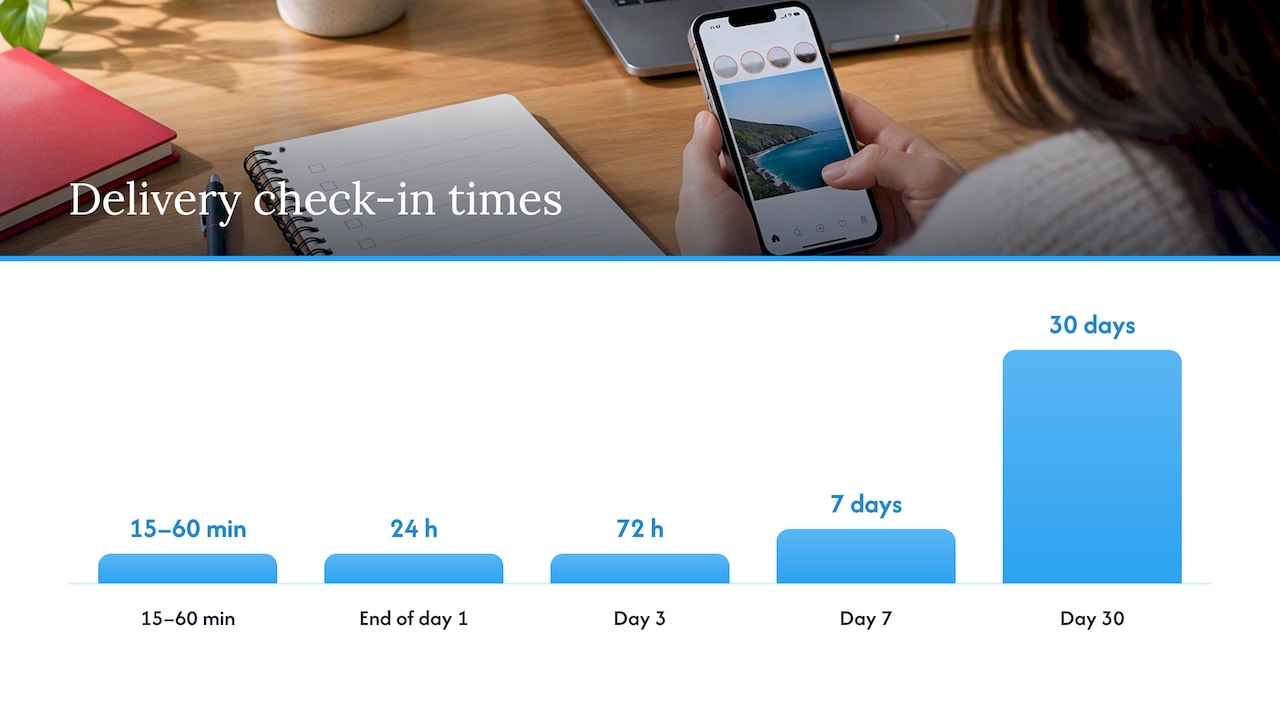
- Check-in points: record the count again at 15 to 60 minutes, end of day one, day 3, day 7, and day 30.
That final column is the one that tells you whether the order actually worked. A count that holds steady from day 7 to day 30 suggests a provider sourcing from real or stable accounts. A count that drops sharply between day 3 and day 30 points to a panel that cannot survive platform cleanups.
Pro Tip: Keep a simple spreadsheet row per order rather than relying on memory. Screenshots with visible timestamps are the strongest evidence if you need to raise a dispute.
If your day-30 check shows a drop beyond what the provider disclosed upfront, ask for their delivery log covering your specific order and raise a dispute referencing the baseline count, the order ID, and the day-30 figure. A provider who cannot produce any record of what they delivered and when is not one to reorder from.
Why retention matters more than how fast followers arrive
Speed tells you almost nothing about whether an order will last. Permanence is governed by two separate forces: Meta’s ongoing enforcement against inauthentic activity, and the simple fact that not every delivered account stays active.
Meta’s inauthentic behaviour policy explicitly forbids buying, selling or exchanging engagement, and permits the platform to remove violating accounts at any time. That means no provider, however confident the sales copy sounds, can promise permanence. What they can offer is evidence of how their followers have historically held up.
Detection technology blocks or detects millions of attempts at inauthentic activity, and Meta’s own estimate puts fewer than 5% of worldwide daily active people as solely violating accounts in the most recent reporting period.
That figure, from Meta’s transparency reporting on fake accounts, is the clearest publicly available signal of how aggressively enforcement operates at scale. For buyers, it reinforces a simple rule: ask any provider for their documented 30-day retention rate before you order, because that number tells you more than any delivery speed claim.
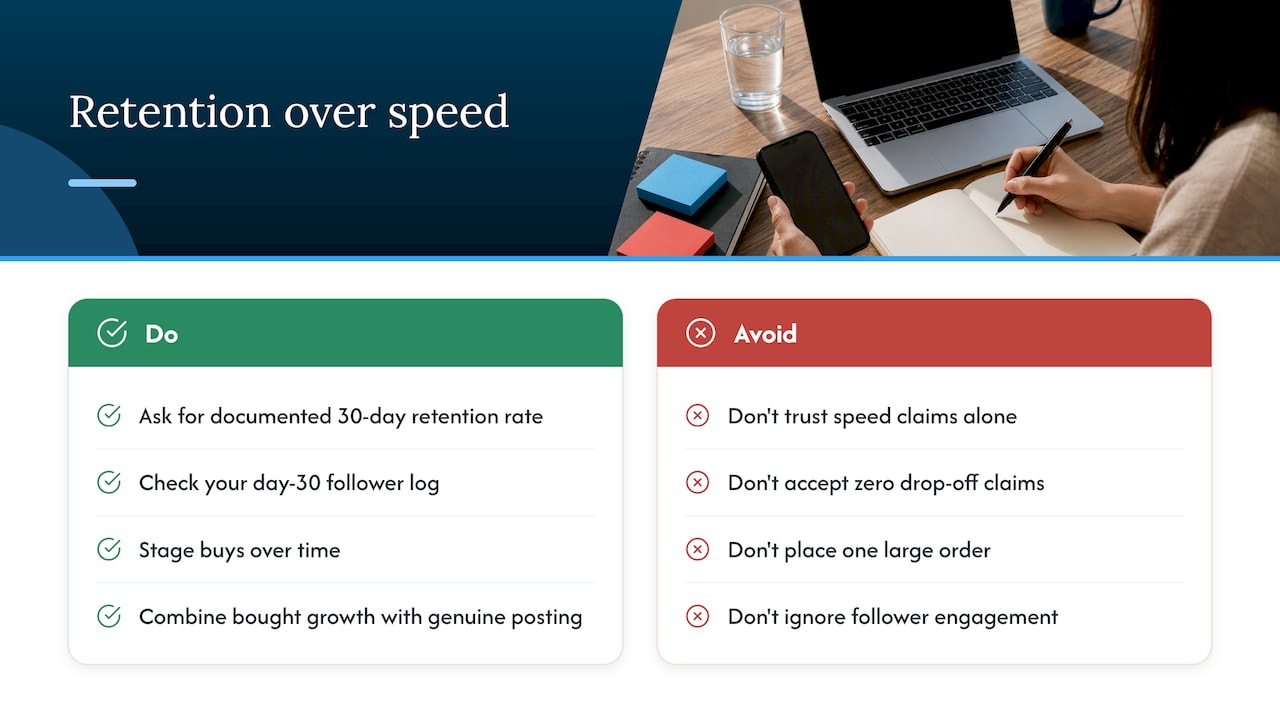
Expect some drop-off in the first 30 to 60 days regardless of provider quality. This is normal even for accounts sourced carefully, and a provider who claims zero drop-off is not being straight with you. What should concern you is a steep decline rather than a gradual one, and that’s exactly what a day-30 check in your log will reveal.
It’s also worth separating follower count from actual marketing value; for example, automating Instagram DMs properly can convert followers into leads and increase marketing impact. Instagram’s recommendation systems weigh interaction and relevance signals far more heavily than raw follower numbers, so a larger but inactive audience does little for your reach in Explore or Suggested Accounts. A smaller, more engaged following, built from or blended with organic activity, tends to serve your visibility goals better than a high count alone. Staging your buys over time, rather than one large order, and combining bought growth with genuine posting activity both reduce the risk of the kind of sharp enforcement action that undoes an order overnight.
What to ask before you check out
Choosing the right delivery pattern starts with matching your actual goal to the risk you’re willing to accept, not with picking whichever package looks cheapest.
If you need a visible boost ahead of a launch or campaign, a faster, staged delivery over a day or two is reasonable. If you’re building a page’s long-term credibility, a slower, more gradual delivery spread across a week or more tends to look more natural and carries less enforcement risk.
Before paying, ask the provider:
- Can you show a documented 30-day retention rate for orders similar to mine?
- Will you provide a delivery log with timestamps per batch, not just a total count?
- What is your sourcing model: real accounts, a managed network, or a resale panel?
- What is your refund or replacement policy if retention falls below what you quoted?
Refuse outright if a provider promises a large order delivered in minutes with no breakdown of batches. Refuse too if they cannot produce any retention data, or if their terms are vague about what happens when the count drops. A provider willing to put numbers and timestamps behind their claims is one you can actually hold accountable, and that’s worth more than a slightly faster quote. For UK buyers specifically, a safety checklist before ordering is worth working through line by line rather than skimming.
How we think about delivery timing and measurement
Delivery speed is only useful information when it’s paired with a way to check the outcome. That’s the lens this guide is written through: treat a provider’s timeline as a claim to verify, not a promise to trust outright.
A reputable provider in this space may deliver real followers, likes and views without requiring account passwords, focusing on staged, measurable delivery rather than instant mass dumps. The approach leans on the same 7-day and 30-day checkpoints recommended here: a fast start to confirm the order is live, followed by gradual completion, followed by a retention check once the dust has settled. That sequence isn’t proprietary, it’s simply the most honest way to judge whether an order delivered real value.
The wider point stands regardless of which provider a reader chooses: a delivery timeline means little without a baseline count, a timestamp, and a day-30 comparison to check against it.
— Irwin Lee
Where to buy real followers with a measurable delivery pattern
If you’d rather hand the measurement and sourcing over to a provider that builds its process around retention rather than raw speed, Some providers sell real Instagram followers with password-free, targeted delivery and direct support if your order needs attention.
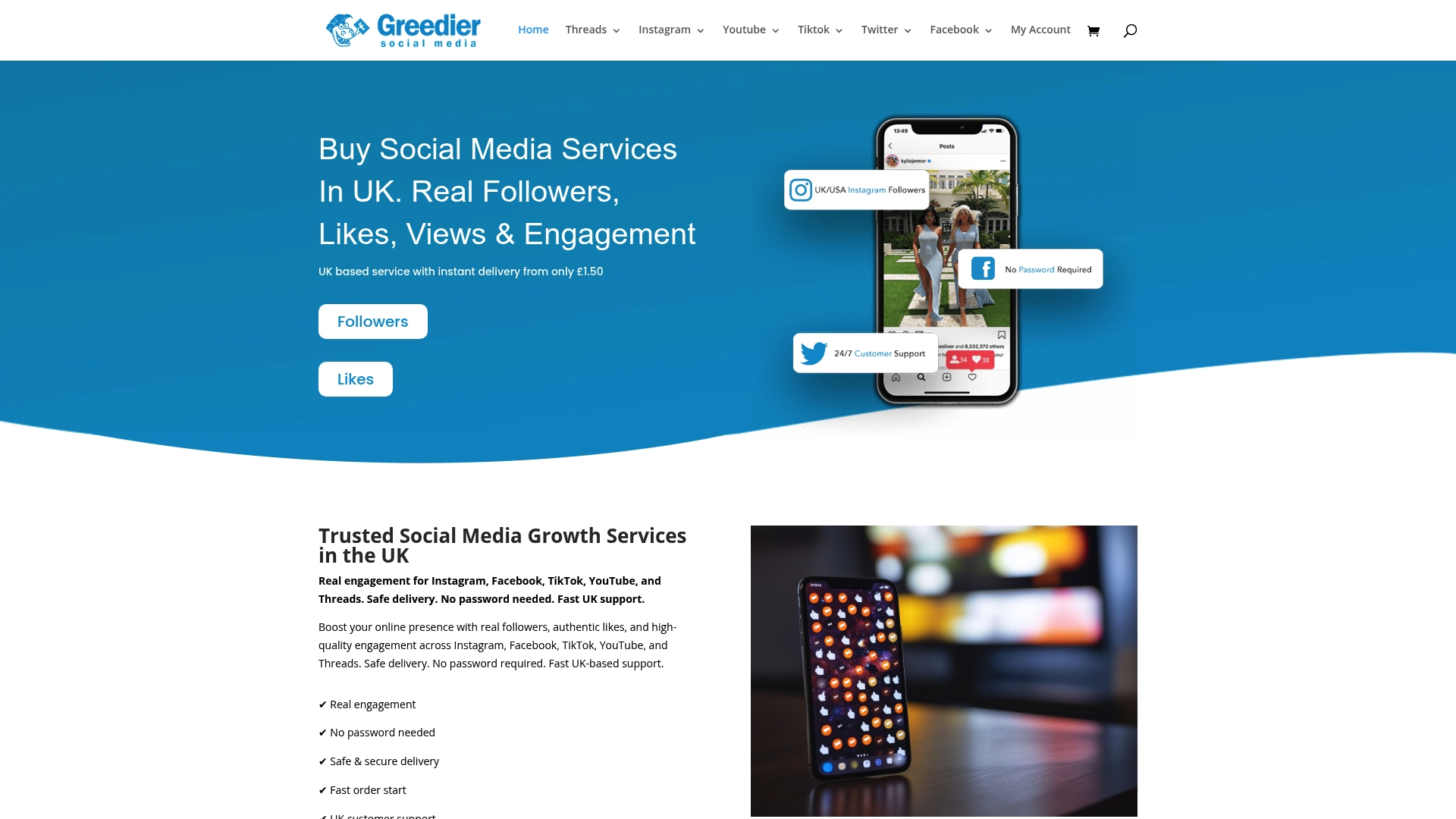
The Instagram followers category covers packages from £1.99 to £229.99 for one-off orders, alongside likes, video views and Reel views starting from under a pound. For ongoing growth rather than a single top-up, the Auto Instagram Followers plan runs £15.00 to £100.00 a month and delivers on a recurring basis instead of a single batch. Orders can be logged against the checkpoints covered in this guide, with timestamps at purchase and checks at day 3, day 7 and day 30, and support may offer guidance on what retention to expect.
One thing worth remembering regardless of which provider you choose: if bought followers or engagement are connected to commercial content, UK advertising rules under the ASA’s guidance on social media endorsements require that commercial connection to be made obvious to your audience, regardless of how quickly the growth arrived.
To place an order or ask about current delivery timelines for a specific package, visit the Instagram services page and check availability before checkout.
FAQ
How long will it take to get 1,000 followers on Instagram?
A typical follower order from a paced provider usually starts within minutes and completes over several hours to a few days, depending on queue load. Orders that finish fully within 15 minutes are more likely sourced from low-quality panels than real account networks.
What is the 5-3-1 rule on Instagram?
The 5-3-1 rule is a content planning habit some creators use, posting a mix of five curated pieces, three original posts and one video per week, rather than an official Instagram policy. It has no direct bearing on how quickly bought followers are delivered or retained.
Does Instagram show followers in time order?
Instagram’s follower list does not display a public timestamp of when each follower was added, so you cannot verify delivery order from the app itself. This is exactly why keeping your own log with timestamps at purchase and at checkpoints like day 3 and day 30 is the only reliable way to track what actually happened.
How many Instagram followers do I need to make $1,000 a month?
There is no fixed follower count that guarantees a set income, because earnings depend on engagement rate, niche, and how you monetise rather than follower numbers alone. Instagram’s own ranking signals favour accounts with strong interaction over raw follower count, which is one reason a smaller, engaged audience can out earn a larger inactive one.
Sources
- Inauthentic behaviour policy update (Meta)
- Community standards enforcement report — fake accounts (Meta Transparency)
- How the Instagram algorithm works (Hootsuite)
- Social media endorsements: being transparent with your followers (UK government / ASA guidance)