
Learning how to grow foot traffic social media presence properly connects online activity to real-world visits.
TL;DR:
- Social media, when used with local intent and genuine community engagement, significantly increases in-store foot traffic. Platforms like Instagram, Facebook, TikTok, and Google Business Profile are essential tools for converting online followers into customers. Consistently posting locally relevant, urgent content and pairing social activity with optimized local SEO amplifies reach and drives tangible visits.
Social media is a direct driver of in-store visits when used with local intent, consistent posting, and genuine community engagement. 71% of consumers research local businesses on social media before visiting, and active social businesses see up to three times more foot traffic than inactive ones. To grow foot traffic through your social media presence, the industry term is local social media marketing. It combines platform strategy, hyperlocal content, and local SEO to convert online followers into paying customers walking through your door. Platforms like Instagram, Facebook, TikTok, and Google Business Profile are the primary tools. This guide covers exactly how to use them.
Which platforms best support boosting local foot traffic?
Choosing the right platform is not about personal preference. It is about where your local customers spend their time and what content format matches your business.
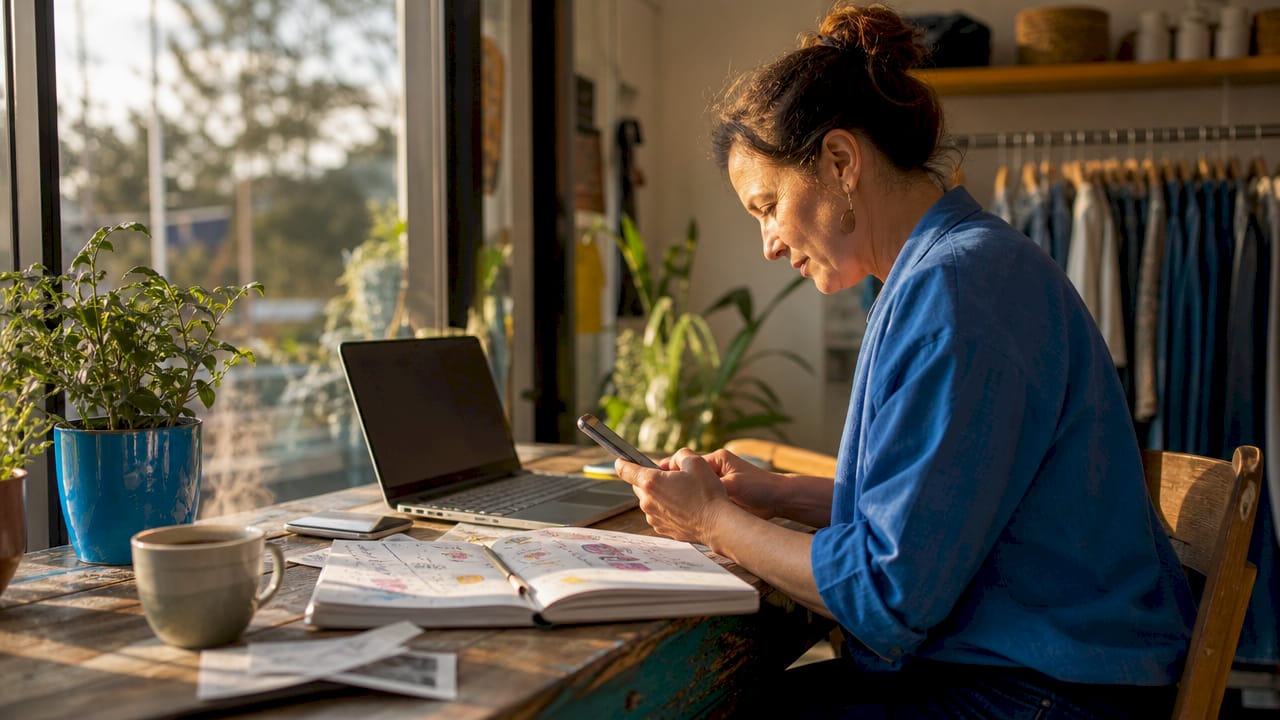
Instagram suits product-led businesses such as boutiques, cafés, florists, and beauty salons. Its visual format, Stories, Reels, and location tags make it ideal for showcasing products and promoting in-store events. 90% of Instagram users follow at least one business account, which means your potential local audience is already in the habit of engaging with brands there.
Facebook reaches an older local demographic and remains the strongest platform for community groups, event promotion, and local awareness advertising. Its Events feature is particularly effective for driving physical attendance. TikTok is growing fast among younger local audiences and rewards authentic, unpolished content. A short video of your shop floor, a staff member demonstrating a product, or a behind-the-scenes clip of your morning setup can reach thousands of local viewers organically.
Google Business Profile (GBP) sits outside the traditional social media category but works in direct synergy with it. A verified and fully optimised GBP listing increases your chances of appearing in the Google local 3-Pack, which impacts 93% of local searches. Pairing your social activity with a strong GBP listing is one of the highest-return actions a local business can take.
| Platform | Best for | Key feature |
|---|---|---|
| Boutiques, cafés, salons | Reels, Stories, location tags | |
| Older demographics, events | Events, community groups, local ads | |
| TikTok | Younger audiences, organic reach | Short video, trending audio |
| Google Business Profile | All local businesses | Local 3-Pack, reviews, map visibility |
For scheduling and analytics, tools like PromoRepublic and Monolit are built specifically for local businesses. They allow you to manage posts across platforms, track local engagement, and identify which content types are pulling people into your store. Building a clear social media strategy before you start posting saves considerable time and produces far better results.
Pro Tip: Set up your Google Business Profile before investing heavily in any social platform. It is free, it directly affects your local search ranking, and it amplifies everything else you do on social media.
What content actually converts followers into store visitors?
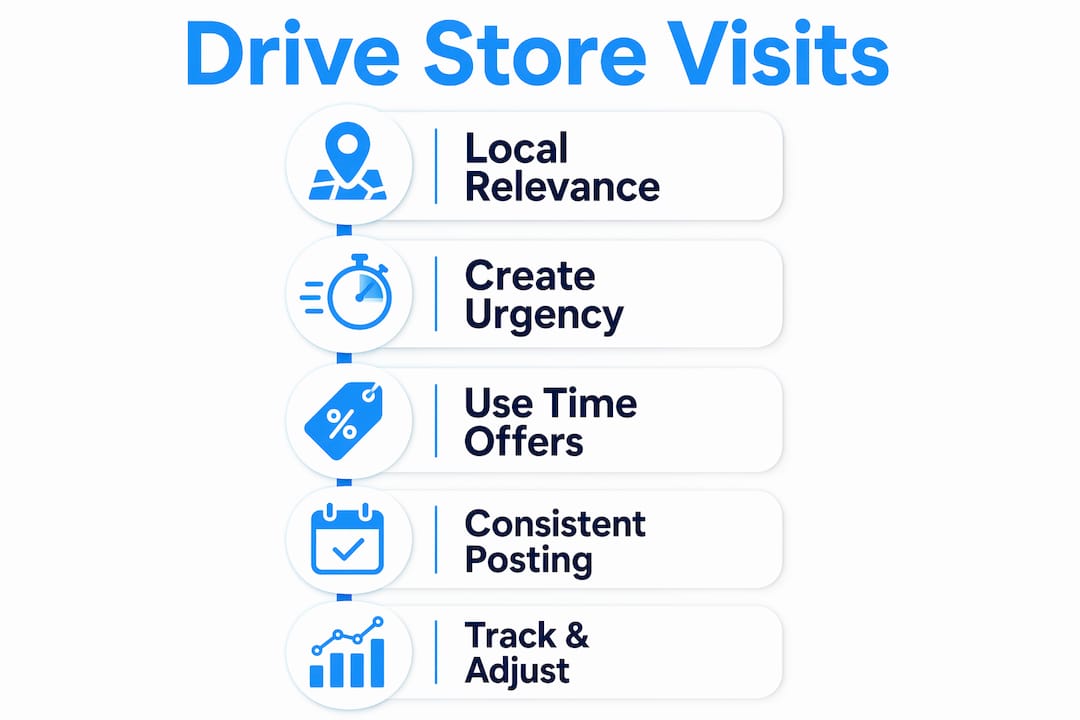
Content that drives physical visits shares three characteristics: it is locally relevant, it creates urgency, and it gives the viewer a specific reason to show up in person.
Time-sensitive offers are among the most effective formats. A post that reads “Today only: 20% off all handmade candles, in-store only” gives a follower a concrete reason to act immediately. Generic promotional posts do not create that same pull. The key word is “in-store only.” It makes the physical visit the exclusive reward, not just a convenient option.
Behind-the-scenes content consistently outperforms polished promotional material. Behind-the-scenes posts drive two to three times more engagement than standard product shots. A short video of your team preparing for a Saturday market, or a time-lapse of your window display being dressed, builds familiarity and trust. People visit businesses they feel they already know.
Here are the content types that most reliably increase store visitors:
- Location-tagged posts and Stories that appear in local search results and area-specific feeds
- User-generated content (UGC) such as customer photos and reviews reposted to your feed, which acts as social proof
- Local event announcements tied to your store, such as product launches, workshops, or seasonal promotions
- Staff introductions and day-in-the-life content that humanises your brand and builds community loyalty
- Countdown posts for limited-time offers or exclusive in-store drops
Posting frequency matters, but not in the way most business owners assume. Posting three to five quality, location-tagged updates per week outperforms daily generic posting. Consistency and local relevance beat volume every time.
Local hashtags are underused by most small businesses. Using tags like #SheffieldCafé or #BristolBoutique places your content in front of people actively browsing local feeds. Combine these with location tags on every post and Story to maximise discoverability.
Pro Tip: Train your staff to ask every customer “How did you hear about us?” and record the answers. This low-tech method gives you direct evidence of which social posts are actually driving visits, and it costs nothing.
How does local SEO and social media work together?
Social media and local SEO are not separate strategies. They are two parts of the same system, and together they create a multiplier effect that significantly increases your local discoverability.
46% of all Google searches carry local intent, and 76% of consumers who conduct a local search on their smartphone visit a physical business within 24 hours. That statistic defines the opportunity. Your social media activity feeds directly into local search signals when it is set up correctly.
The foundation is NAP consistency. Your business Name, Address, and Phone number must be identical across your GBP listing, Facebook page, Instagram bio, website, and any other directory. Inconsistencies confuse search engines and suppress your local ranking. This is a five-minute fix that many businesses overlook for years.
Reviews are a local SEO signal that social media can actively generate. Encourage satisfied customers to leave a Google review by posting a direct link in your Instagram Stories or Facebook posts. Businesses with a higher volume of recent, positive reviews rank higher in local search results and attract more walk-in customers. For a detailed breakdown of how to optimise your GBP listing, the process is more straightforward than most business owners expect.
Paid local awareness ads on Facebook and Instagram extend your reach beyond your existing followers. Local awareness ads can cost as little as £0.01 to £0.05 per local impression, making them one of the most cost-effective tools available to small businesses. The most effective approach is to boost your best-performing organic content to a three to seven mile radius around your store, rather than creating separate ad content from scratch.
- Keep NAP data identical across all platforms and directories
- Respond to every Google review, positive or negative, within 48 hours
- Post GBP updates at least once a week to signal active business status
- Embed customer photos and UGC into your website to strengthen social proof signals
- Use location tags on every social post to reinforce your geographic relevance
How do you measure and improve social-driven foot traffic?
Measurement is where most small businesses fall short. Without tracking, you cannot distinguish between a traffic problem and a conversion problem, and the solutions to each are completely different.
Foot traffic sensors and POS data help separate these two challenges. If your sensor data shows strong visitor numbers but low sales, the problem is in-store conversion, not social media reach. If visitor numbers are low, the problem is discoverability and outreach. Treating both with the same solution wastes time and budget.
Promo codes are one of the most reliable ways to connect social posts to in-store visits. Create a unique code for each platform, such as INSTA10 for Instagram followers or FB10 for Facebook, and track redemptions at the till. This gives you direct attribution data without any expensive software. Download-free loyalty programmes that customers can join in under 60 seconds also reduce friction significantly and improve the conversion rate from online follower to in-store customer.
Pro Tip: Set three KPIs before you start any social campaign: weekly post reach, promo code redemptions, and weekly foot traffic count. Review them together every fortnight. If reach is up but redemptions are flat, your call-to-action needs work. If redemptions are up but foot traffic is flat, your in-store experience needs attention.
Key metrics to track across your social and local SEO activity include:
- Post reach and impressions segmented by location where available
- Profile visits and website clicks from your social bios
- GBP insights including direction requests, phone calls, and website visits
- Promo code redemptions per platform per week
- In-store visitor counts correlated with posting days and campaign periods
Brands running gamified in-store events see a 35% increase in foot traffic. This is worth noting because it confirms that social media works best when it promotes a reason to visit, not just a reason to follow. Events, workshops, exclusive launches, and competitions give your social content a purpose beyond brand awareness.
Key Takeaways: Grow Foot Traffic Social Media Presence
Social media drives real foot traffic when it is local, consistent, and built around genuine reasons for customers to visit in person rather than simply scroll past.
| Point | Details |
|---|---|
| Platform selection matters | Match your platform to your audience: Instagram for visual products, Facebook for events and older demographics, TikTok for younger reach. |
| Local SEO and social are linked | Consistent NAP data and a verified Google Business Profile amplify every social post you publish. |
| Quality beats frequency | Three to five location-tagged posts per week outperform daily generic content. |
| Measure with attribution | Use platform-specific promo codes and staff training to connect social posts directly to in-store visits. |
| Urgency drives visits | Time-sensitive, in-store-only offers convert followers into customers far more effectively than standard promotional content. |
What I have learned about social media and real-world footfall
By Luna
Most business owners I speak with treat social media as a digital billboard. They post a product photo, add a price, and wait. That approach rarely moves people off their sofas and into a shop.
The businesses I have seen genuinely grow their foot traffic through social media share one habit: they treat their platforms as a community, not a broadcast channel. They reply to comments within the hour. They share customer photos with genuine enthusiasm. They post about the neighbourhood, not just the product. That local identity is what makes a follower feel like a regular before they have ever visited.
The other mistake I see constantly is chasing follower counts instead of engagement quality. A local café with 800 highly engaged local followers will outperform a boutique with 8,000 passive ones every single time. Growing your audience quickly is worth pursuing, but only if those followers are genuinely local and interested. Numbers without relevance are just vanity.
My honest advice: pick one platform, commit to it for 90 days, post with local intent, and respond to every single comment and message. The results will surprise you. Consistency and community beat clever campaigns almost every time.
— Luna
Ready to turn your social following into store visits?
Greediersocialmedia has helped over a million businesses and creators build genuine, engaged audiences since 2013. For local retailers, that engagement is the foundation of real-world foot traffic growth.
If you are ready to move beyond guesswork and build a social presence that actually brings customers through your door, explore the social media growth hacks Greediersocialmedia has developed specifically for local businesses. From authentic follower growth to content strategies built around local discoverability, the growth packages are designed to deliver measurable results without wasting your time or budget. Expert support is available from day one, and no passwords are ever required.
FAQ
How quickly can social media increase store visitors?
76% of consumers who find a local business through a smartphone search visit within 24 hours. With a time-sensitive post and a verified Google Business Profile, you can see results within days of publishing.
Which social platform works best for local businesses?
Instagram and Facebook are the most effective platforms for most local businesses, with Google Business Profile acting as a critical support layer. The right choice depends on your customer demographic and product type.
How do I know if social media is driving foot traffic?
Use platform-specific promo codes at the till and train staff to ask customers how they heard about you. These two methods give direct attribution data without requiring any specialist software.
Do I need paid ads to promote my business online?
Paid ads are not required to start, but local awareness ads on Facebook and Instagram offer very low cost per impression and strong ROI when used to boost your best organic content within a local radius.
What is the biggest mistake local businesses make on social media?
Most businesses use social media as an advertising platform rather than a community tool. Focusing on genuine engagement, local relevance, and specific reasons to visit in person consistently outperforms product-only promotional posting.