
The strongest examples of community focused UK brands share one quality: they convert a purchase into something visible and local. Gymshark built a creator-led fitness movement. Community Clothing sustains skilled manufacturing jobs across 49 towns. Stand Out Socks turns every pair sold into paid work for someone with Down syndrome. These are not CSR footnotes — they are the business model.
Here is the shortlist, with the community model and the one lesson worth stealing:
- Gymshark — creator-led; Instagram and YouTube; lesson: seed micro-communities around shared identity before you have scale.
- Rapha — product-led; Rapha Cycling Club membership (paid, gated); lesson: a paid membership tier filters for your most committed advocates.
- Community Clothing — mission-led; direct website and press; lesson: local manufacturing is a verifiable community claim, not just a talking point.
- Stand Out Socks — mission-led; social media and direct e-commerce; lesson: humanise fulfilment by naming the person who packed the order.
- Brilliantly Brave — mission-led; in-person events and social; lesson: reinvesting 100% of profits makes community claims auditable.
- NeonThreads — creator-led; private Discord (gated); lesson: move your most engaged buyers off public feeds and into a members-only space.
- Labre’s Hope — mission-led; direct website and word-of-mouth; lesson: employment and training outcomes give your brand a metric the press can quote.
- Joseph Cheaney & Sons — product-led; in-store events and heritage press; lesson: a named local factory is a community anchor, not just a supply chain detail.
- OUBAS — mission-led; direct website and craft press; lesson: just-in-time production is both a sustainability claim and a community signal.
- Rosenberries — creator-led; Discord and community drops (gated); lesson: let your community vote on what gets made next.
Examples Of Community Focused UK Brands: Key Takeaways
The most durable community-focused UK brands convert purchases into verifiable local outcomes — jobs, training, manufacturing postcodes — and that specificity is what drives both earned media and repeat purchase rates.
| Point | Details |
|---|---|
| Start with a gated space | Open a private Discord or membership group with founding members before you have scale. |
| Make community claims verifiable | Name a factory, a job count, or a profit reinvestment figure — vague claims earn nothing. |
| Use co-creation early | A single product vote in the first 30 days demonstrates genuine member influence. |
| Measure repeat purchase rate | Community members buying more frequently than non-members is the clearest health signal. |
| Greediersocialmedia as a starting point | Use targeted UK social growth to build the visible credibility that attracts founding community members. |
Table of Contents
- What actually makes a brand ‘community-focused’?
- Ten UK case studies: tactics, platforms and what to copy
- Which tactics do these brands share, and which suit your model?
- A 90-day playbook for adapting these tactics to your brand
- Measurable local impact: what the evidence actually shows
- How the examples were selected
- What I would prioritise if I were starting today
- Greediersocialmedia can accelerate your early community signals
- Sources
- FAQ
What actually makes a brand ‘community-focused’?
The phrase gets used loosely. For the purposes of this article, a brand qualifies as community-focused when it meets at least three of the following six criteria. These are the signals used to select every example below.
1. Mission to local or social benefit. The brand’s stated purpose ties commercial activity to a named group or place. This is not a vague “we care” statement — it is a specific claim: jobs in Northamptonshire, training in Moray, manufacturing in Lancashire.
2. Reinvested profits. A share of revenue (or all of it) flows back into the community the brand claims to serve. This makes the community claim verifiable through accounts or impact reports, which matters for PR and stakeholder credibility.
3. Co-creation at scale. Customers shape products, not just buy them. Involving buyers in design decisions builds commitment before a product launches and reduces the risk of dead stock.
4. Employment or training impact. The brand creates or sustains paid jobs, apprenticeships, or structured training for a defined group. This is the most concrete metric available and the easiest to communicate in earned media.
5. Gated or high-value member spaces. Private Discord servers, paid membership clubs, or invitation-only groups signal that the brand values depth of relationship over follower count. These spaces produce measurably higher engagement than public feeds.
6. Membership or subscription models. Recurring revenue tied to community access (events, early drops, exclusive content) aligns commercial incentives with community health. When members churn, the brand feels it immediately.
Pro Tip: When evaluating whether a brand’s community is genuine or performative, look for a verifiable metric: a job count, a manufacturing postcode, a training cohort size. Vanity metrics (follower counts, likes) tell you nothing about community health. A brand that can name the town where its fabric is woven is almost always more credible than one that cannot.
Ten UK case studies: tactics, platforms and what to copy
1. Gymshark
Gymshark sells fitness apparel and has built one of the UK’s most studied creator-led communities. The model is straightforward: identify athletes and content creators whose audiences overlap with your target buyer, give them product and a platform, and let them build sub-communities around shared training goals. The primary channels are Instagram, YouTube, and TikTok, all open access. There is no gated tier, which means the community is wide rather than deep.
The practical lesson is timing. Gymshark seeded creator relationships when both the brand and the creators were small, which meant the community felt organic rather than sponsored. By the time the brand had scale, the community already existed.
2. Rapha
Rapha sells premium cycling kit and runs the Rapha Cycling Club, a paid membership that gives access to exclusive kit, guided rides, and a global network of clubhouses. The access model is gated and paid, which filters the membership for committed cyclists rather than casual browsers.
The community model is product-led: the shared practice is cycling, and Rapha is the kit members use. This maps directly onto the HBR principle that the strongest communities form around shared practice, not around the brand itself. The commercial benefit is price resilience: members who belong to a club are far less likely to switch to a cheaper alternative.
3. Community Clothing
Community Clothing manufactures across 49 towns and cities in England, Scotland and Wales, using spare capacity in British factories during their quieter periods. The model keeps skilled workers employed year-round and keeps the supply chain entirely domestic. There is no gated community space — the community is the manufacturing network itself, and the brand communicates it through its website and press coverage.
The lesson for marketers: local manufacturing is a verifiable community claim. You can put a postcode on it. That specificity is what earns press coverage and customer trust in a way that “ethically made” alone never does.
4. Stand Out Socks
Stand Out Socks is a family business that creates paid jobs for people with Down syndrome. Orders are picked and packed by the team, and the brand makes this visible: buyers know who handled their order. The community model is mission-led, the platform is direct e-commerce and social media, and the access model is open.
The metric that matters here is employment: real, paid work for people who face significant barriers to it. The humanised fulfilment tactic (naming the team member, including a personal note) turns a one-off purchase into an ongoing relationship. Repeat purchase rates for brands that do this well tend to be substantially higher than category averages, because the buyer feels personally connected to the outcome.
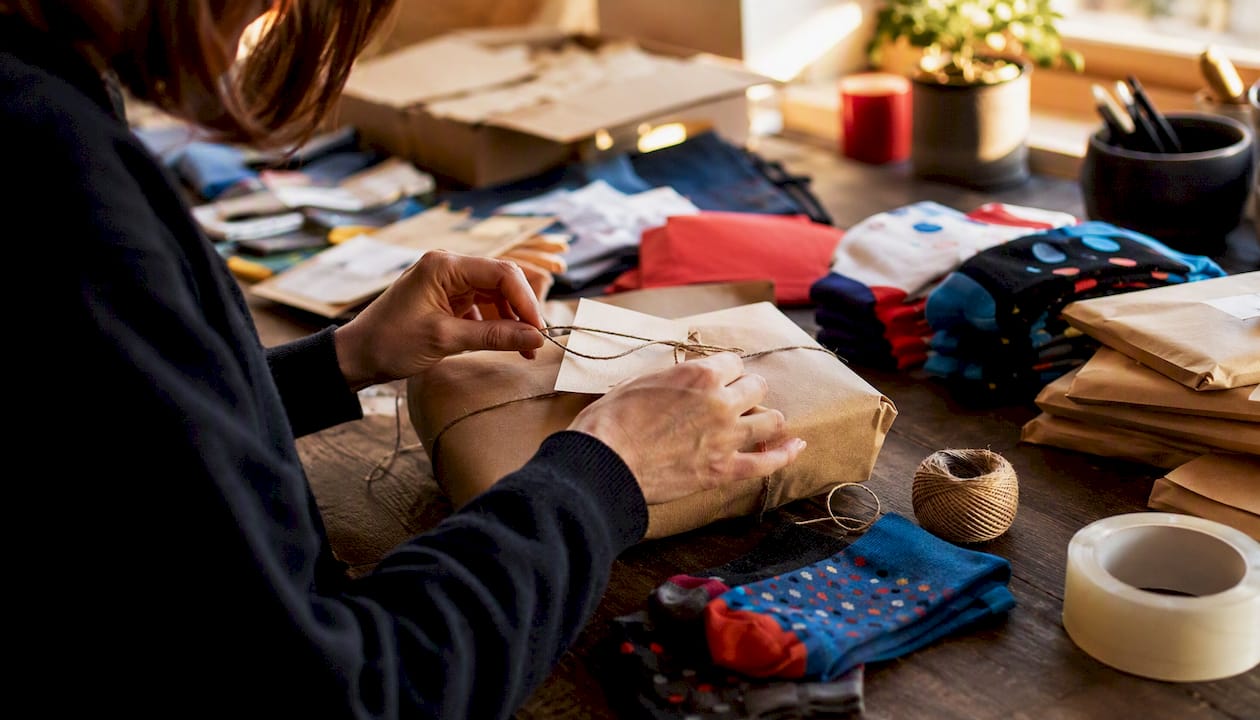
Statistic callout: Stand Out Socks links every purchase directly to employment outcomes for people with Down syndrome. — making the social return on each transaction explicit and traceable.
5. Brilliantly Brave
Brilliantly Brave reinvests 100% of profits into local mental-health training, peer support and wellbeing initiatives in Moray and surrounding areas. The model is mission-led, the channels are in-person events and social media, and the access model is open. There is no membership tier.
What makes this example useful for marketers is the auditability of the claim. It gives journalists a headline, gives customers a reason to choose this brand over a cheaper alternative, and gives the brand a built-in story for every product launch. The lesson: if you are going to make a community claim, make it one that can be verified.
6. NeonThreads
NeonThreads runs a private Discord community for exclusive drops and behind-the-scenes access. The model is creator-led, the platform is Discord (gated, members-only), and the access model is invitation or sign-up based. Public social channels exist but serve as a top-of-funnel discovery layer; the real engagement happens inside the server.

This is the clearest example in the list of a brand deliberately moving its most engaged buyers off public feeds. Discord supports real-time discussion, private channels for different interest groups, and direct recognition of active contributors — none of which is possible on Instagram. For brands running limited drops, a gated Discord community also creates genuine scarcity: members get access before anyone else, which makes membership feel worth having.
7. Labre’s Hope
Labre’s Hope makes handmade products and uses the business as an employment and training vehicle for people escaping homelessness. Employees receive living-wage pay and bespoke training. The model is mission-led, the platform is direct website and word-of-mouth, and the access model is open.
The community here is the workforce, not a digital group. That is an important distinction for marketers: community does not have to mean an online forum. A brand whose employees are the direct beneficiaries of its commercial success has a community story that is both more credible and more durable than one built on a Facebook group.
8. Joseph Cheaney & Sons
Joseph Cheaney & Sons makes shoes by hand in Northamptonshire, a county with a centuries-long shoemaking tradition. The brand’s community model is product-led: the shared practice is an appreciation of British craft, and the factory is the community anchor. Events, factory tours, and heritage press coverage sustain the relationship between brand and buyer.
The lesson is that a named local factory is a more powerful community signal than any digital group. Buyers who have visited the factory, or who know it exists, are not going to switch to a cheaper import. The factory is the community.
9. OUBAS
OUBAS makes knitwear in a small studio in Cumbria using traceable natural fibres and just-in-time production to avoid waste. The model is mission-led, the platform is direct website and craft press, and the access model is open. Production transparency is the community signal: buyers know where the yarn comes from and how the garment was made.
Just-in-time production is worth noting as a tactic in its own right. It means OUBAS only makes what has been ordered, which eliminates dead stock and makes every purchase feel considered. That operational choice is also a community claim: the brand is not overproducing to hit a margin target.
10. Rosenberries
Rosenberries is a sustainable UK streetwear label that uses Discord and community drops to shape product releases. The model is creator-led, the platform is Discord (gated), and the access model is community sign-up. Members vote on colourways, styles and drop timing, which means the product range is co-created rather than dictated by a design team.
The practical lesson is that co-creation does not require a large team or a complex platform. A Discord server with a voting channel and a regular drop schedule is enough to give members genuine influence over the product. That influence is what keeps them engaged between purchases.
Which tactics do these brands share, and which suit your model?
The ten case studies cluster around five recurring tactics. The table below maps each tactic to the goal it serves and the brand type it suits best.
| Tactic | Primary goal | Best suited to |
|---|---|---|
| Local manufacturing and named jobs | PR, trust, price resilience | Artisan makers, heritage brands |
| Profit reinvestment (100% or partial) | Advocacy, earned media, retention | Mission-led DTC brands |
| Gated digital spaces (Discord, paid membership) | Depth of engagement, drop exclusivity | Creator-led and streetwear brands |
| Co-creation (votes, design input, pre-orders) | Product validation, lower returns, buy-in | DTC brands with repeat buyers |
| Humanised fulfilment (named packer, personal note) | Repeat purchase, emotional bond | Small e-commerce brands with a social mission |
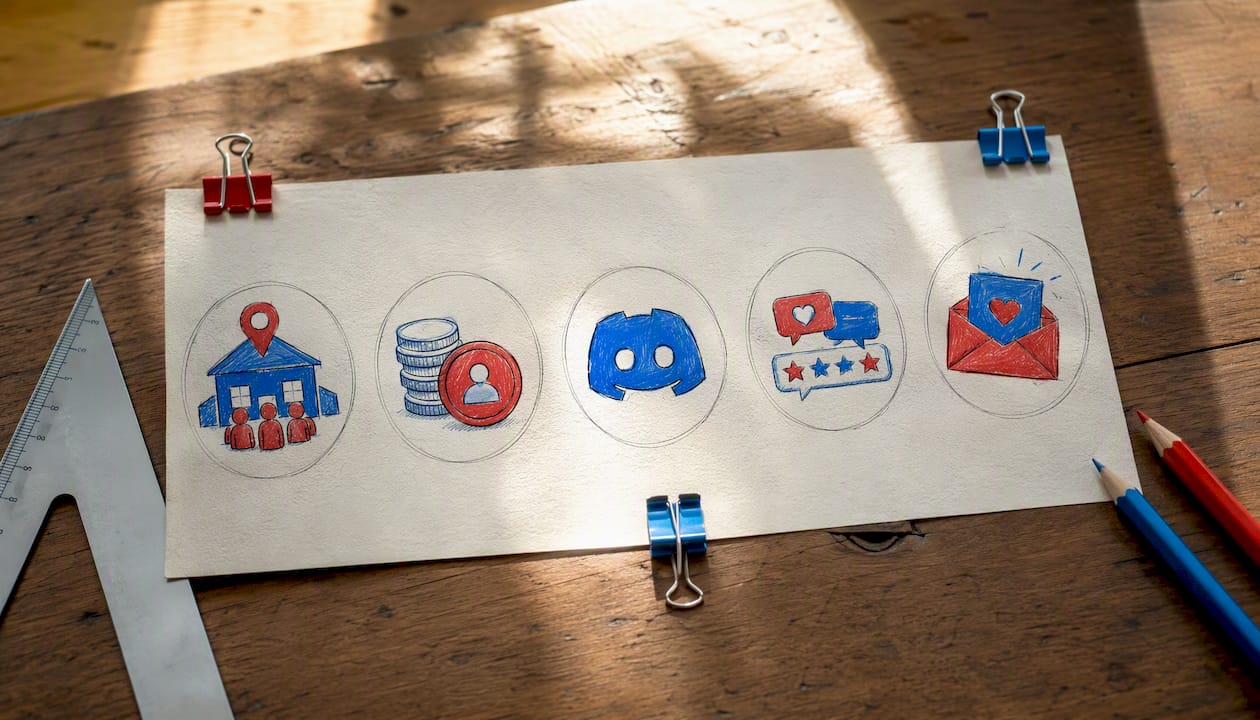
Pro Tip: Choose Discord over a Facebook group when your community is under 35, drop-driven, or needs private channels for different interest tiers. Facebook groups work better for older audiences and local geographic communities where members already know each other. The platform choice should follow the community’s existing behaviour, not your preference.
For a small DTC brand with limited resource, humanised fulfilment and a single gated channel are the lowest-cost entry points. For an artisan maker, local manufacturing transparency and in-person events deliver the strongest return. For a creator-led brand, Discord and co-creation drops are the natural combination.
For broader context on how branding strategies build lasting market presence, the principle is consistent: community works when it is structurally embedded in the business, not bolted on as a campaign.
A 90-day playbook for adapting these tactics to your brand
This sequence assumes you are starting from a small but engaged existing audience. Adjust the timelines if you are earlier or later in your growth curve.
Days 1–30: Discover and define
- Audit your existing customer base for the three to five people who buy repeatedly, refer others, and engage with your content. These are your founding community members.
- Define your community claim. Which of the six criteria (mission, reinvestment, co-creation, employment, gated space, membership) can you credibly meet within 90 days?
- Choose one platform. Do not try to run a Discord server and a Facebook group simultaneously at the start. Pick the one your best customers already use.
- Set a baseline measurement: repeat purchase rate, email open rate, and social engagement rate. You need a before figure to show progress.
Days 31–60: Pilot and onboard
- Open your gated space (Discord server or private group) and invite your founding members personally. A personal invitation converts at a far higher rate than a broadcast post.
- Run one co-creation moment: a poll on a new colourway, a vote on the next product, or a request for feedback on a prototype. Make the outcome visible — announce what the community chose and why.
- If you have a fulfilment operation, introduce one humanised element: a handwritten note, a named team member card, or a short video from the person who packed the order.
- Track early signals weekly: member join rate, message volume in the gated space, and any change in repeat purchase rate.
Days 61–90: Scale and measure
- Run your first exclusive drop or early-access event for community members only. Measure conversion rate versus your standard launch rate.
- Publish one piece of content that makes your community claim verifiable: a factory visit video, an impact update, a named employment story.
- Review the measurement table below and decide which metric to prioritise in the next quarter.
| Signal | What to measure | Healthy early benchmark |
|---|---|---|
| Member growth | New members per week in gated space | Steady week-on-week growth, no sharp drops |
| Active participation | Messages or votes per member per month | At least 20% of members posting or voting |
| Repeat purchase rate | Orders from community members vs non-members | Community members buying more frequently |
| Sentiment | Qualitative tone in the gated space | Positive, peer-to-peer discussion dominant |
For tracking which engagement metrics matter most for small brands, the repeat purchase rate and active participation ratio are the two that correlate most strongly with long-term community health.
For local manufacturing partnerships, the lowest-risk pilot is a single product line made in a named UK factory. You do not need to move your entire supply chain. One product with a verifiable postcode gives you the community claim and the PR hook without the operational risk.
Measurable local impact: what the evidence actually shows
The strongest community-focused brands in this list share one commercial advantage: their community claims are verifiable. That verifiability is what drives earned media, price resilience, and customer retention.
Community Clothing’s manufacturing footprint across 49 towns and cities in England, Scotland and Wales is a concrete, checkable figure. A journalist can call a factory. A customer can look up the postcode. That specificity is worth more than any amount of “ethically made” copy, because it cannot be faked.
Brilliantly Brave’s 100% profit reinvestment model creates a similar dynamic. The claim is auditable through the brand’s own reporting, which means it holds up to scrutiny in a way that vaguer social commitments do not.
Stand Out Socks links each purchase to a named employment outcome. The community benefit is not abstract — it is the person who packed your order. That directness is what produces the emotional bond that drives repeat purchases.
These measurable outcomes tie to commercial metrics in a consistent pattern:
- Verifiable local impact generates earned media without a PR budget, because journalists can report a specific fact.
- Employment and training stories create content that performs on social media without paid amplification, because they are genuinely interesting to share.
- Gated community engagement (as demonstrated by NeonThreads) produces higher conversion rates on drops because members feel the exclusivity is real.
- Co-creation (as demonstrated by Unfolded, which involved over 100,000 community members in design decisions) reduces inventory risk because products are validated before they are made.
The limitation worth noting: most of the impact figures available from these brands are self-reported. Where possible, cross-reference with Companies House filings, charity commission records, or third-party press coverage before citing a specific number in your own marketing.
How the examples were selected
The ten brands in this article were chosen against the six criteria defined in the second section. Every brand included meets at least three of those criteria, and the selection prioritises brands with at least one verifiable, public-facing metric (a job count, a manufacturing footprint, a membership model, or a profit reinvestment commitment).
Source types consulted:
- Brand websites and direct impact pages (primary source for all claims)
- Third-party press coverage (used to corroborate self-reported figures)
- Community pages and platform descriptions (Discord, membership sites)
- HBR research on brand community principles
Limitations of the sample:
- The list is weighted toward UK DTC and mission-led brands. Large retail brands with community programmes are not represented.
- Numeric metrics are unevenly available. Some brands publish detailed impact reports; others do not. Where a specific figure was not publicly available, only qualitative claims are made.
- The sample reflects brands that were publicly active and findable at the time of research. Newer or more local brands may be equally strong examples.
If you know of a UK brand that meets the criteria and is not on this list, the Greediersocialmedia team welcomes suggestions via the contact page.
What I would prioritise if I were starting today
The ten examples in this article cover a wide range of models, but three priorities stand out as the highest-return starting points for a small-to-medium UK brand.
First, open a gated space before you think you are ready. The brands that built the strongest communities started their Discord servers or membership clubs when their audiences were still small. A small, engaged founding group is far more valuable than a large, passive one. The community social media engagement guide covers the mechanics of setting this up without overcomplicating it.
Second, link purchases to a local outcome as quickly as possible. It does not have to be a factory or an employment programme. It could be a named supplier, a local charity that receives a percentage of each sale, or a training scheme for a specific group. The specificity is what matters. “We support our community” is forgettable. “Every pair of socks sold creates paid work for someone with Down syndrome” is not.
Third, run a co-creation drop in the first 30 days. Ask your existing audience to vote on something real: a colourway, a product name, a packaging design. Publish the result and make it clear that the community’s choice is what gets made. That single action demonstrates that membership has genuine influence, which is the thing that keeps people engaged long after the novelty of joining has worn off.
The lowest-cost experiment I would run in the first 30 days: a private Discord server, 20 founding members invited personally, and one vote on a real product decision. Total cost: zero. Potential upside: a founding community that feels ownership over what you make.
Greediersocialmedia can accelerate your early community signals
Building a genuine community takes time. The brands in this article spent months, sometimes years, earning the engagement they now have. But there is a practical problem at the start: a gated Discord server with three members does not feel like a community, and a social profile with minimal followers does not attract the founding members you need.
Greediersocialmedia helps UK brands solve the cold-start problem with targeted, real social growth on Instagram, Facebook, TikTok, YouTube, and Threads — delivered without needing your password, with UK-targeted options and instant delivery. The goal is not to replace organic community building. It is to give your brand enough visible credibility that the right people take you seriously from day one. A brand with genuine social presence attracts genuine community members faster.
For brands ready to move, the social media growth strategy for small businesses page sets out the options clearly. Start there, then build the community on top of the foundation.
Sources
- UK made sustainable, ethical clothing & accessories for men and women
- About Us | Brilliantly Brave
- Funky & Colourful Socks- Down Syndrome Awareness – Stand Out Socks UK
- Community | NeonThreads
FAQ
What are some examples of community focused UK brands?
Gymshark, Rapha, Community Clothing, Stand Out Socks, Brilliantly Brave, NeonThreads, Labre’s Hope, Joseph Cheaney & Sons, OUBAS, and Rosenberries are ten well-documented examples, each using a different model: creator-led, product-led, or mission-led.
What is a community interest company in the UK?
A Community Interest Company (CIC) is a legal structure for businesses that trade for social benefit rather than private profit, regulated by Companies House and the CIC Regulator. Brilliantly Brave and Labre’s Hope operate on similar principles, though not all mission-led brands are formally registered as CICs.
Which UK brands are known for strong local community ties?
Community Clothing (manufacturing across 49 UK towns and cities), Joseph Cheaney & Sons (Northamptonshire shoemaking), and OUBAS (Cumbrian knitwear studio) are among the clearest examples of brands whose local ties are structural rather than cosmetic.
How do community-focused brands differ from standard brands?
Community-focused brands tie commercial activity to a named group or place, make that connection verifiable (through job counts, manufacturing locations, or profit reinvestment figures), and build ongoing relationships with buyers rather than one-off transactions.
How can a small UK brand start building community on social media?
Open a gated space (a private Discord server or closed group), invite your 20 most engaged existing customers personally, and run one co-creation moment in the first 30 days. For building the initial social credibility that attracts founding members, UK-based social growth strategies can help establish the visible presence that makes the invitation worth accepting.