
Buying engagement tends to produce cleaner, more controllable metrics than engagement pods, but neither creates genuine buyer interest on its own. Pods trade reciprocal taps between members with no connection to your product, while bought packages add visible social proof without claiming to be real conversation. The only way to know if either tactic is working is to measure clicks, DMs and conversions, not likes.
TL;DR:
- Pods often reveal themselves through synchronized engagement, repeated generic comments, or follower surges without matching profile visits, clicks, saves, or direct messages.
- Track bio link clicks, direct messages, and conversions from the outset; rising likes without stronger saves, clicks, or retention signal weak audience interest.
- Pod visibility fades when reciprocal activity ends, while purchased counts can remain visible unless platforms purge flagged accounts; pods also carry coordinated behavior risks.
- Compare a small engagement package with a similar ad over one week, tracking bio link clicks and direct message inquiries, not follower or like counts.
Table of Contents
- What engagement pods are and how they operate
- How buying engagement works: likes, followers and views
- Pods versus buying: what each changes in analytics and how that maps to buyer intent
- How to tell if engagement on a post is from pods or bought sources
- Authentic alternatives and how to sequence them for conversion
- Our practical stance on using purchased engagement
- How we can help: relevant services and next steps
- FAQ
- Sources
What engagement pods are and how they operate
Engagement pods are groups of accounts, sometimes a small group in a WhatsApp or Telegram chat, sometimes large networks coordinated through an automated tool, who agree to like, comment on and share each other’s posts shortly after publishing. The goal is to trigger the early velocity that platform algorithms use to decide whether a post deserves wider distribution.
Pods generally take one of two forms:
- Manual groups where members manually like and leave generic comments on each other’s content, often within a set time window.
- Automated pod tools that schedule reciprocal engagement across a network of accounts without any human reading the post.
The mechanism works because most ranking systems treat early engagement velocity as a signal of quality. A burst of likes and comments soon after publishing can nudge a post into more feeds, which is precisely what pod members are paying for in time rather than money.
The problem is that pod members aren’t your audience. They haven’t seen your product, don’t know your offer and are reacting on a schedule, not out of interest. Successful engagement strategies centre on two-way interaction, with platforms rewarding content that sparks genuine conversation rather than reciprocal taps from strangers with no stake in what you sell. A comment like “Great post!” repeated across multiple accounts carries none of the signal that a real question or a saved post does.
There’s also a policy risk worth flagging. Coordinated inauthentic behaviour, which is how most platforms classify pod activity, sits against the terms of service for Instagram, TikTok and Facebook, and detection systems have become better at spotting the clustering patterns pods create.
How buying engagement works: likes, followers and views
Buying engagement means purchasing a package of likes, followers, views or comments from a provider, usually delivered to a specific post, video or profile within a set window after checkout. Delivery tends to fall into a few categories:
- Followers and subscribers added to a profile or channel, typically delivered gradually rather than all at once.
- Likes and post reactions applied to a specific piece of content shortly after it goes live.
- Views, including video and story views, which inflate watch counts without requiring any interaction.
- Auto-like and auto-follower subscriptions that apply engagement automatically to every new post for a set period.
Visible lifts may appear after an order, with delivery timing depending on the package and its volume. That speed is the appeal: a profile that looked thin can show a meaningfully larger follower count or like total after delivery.
What that buys you is perceived credibility. A new account with a small following may read as untested; one with a much larger following may read as established, and that first impression can affect whether a visitor decides to follow back, read your caption properly or click through to a bio link. Short-term reach can also benefit, since some ranking systems weight raw engagement counts when deciding whether to surface a post to non-followers.
What it doesn’t buy is intent. A bought like carries no information about whether that account has any interest in your product, service or message, because the “engagement” is a transaction between you and a provider, not between you and a prospective buyer. That distinction becomes the whole question this article is trying to answer.
Pods versus buying: what each changes in analytics and how that maps to buyer intent
The two tactics move different numbers and neither moves the number that matters most, which is purchase intent.
Pods tend to produce short-lived spikes in likes and comments that fade once the reciprocal window closes, because the engagement was manufactured for one post rather than built into an ongoing relationship with your audience. Bought packages tend to be more durable in raw count terms: a purchased follower total doesn’t disappear the way pod-driven engagement does, though the accounts behind it remain disengaged.
- Reach and discovery: pods create a brief algorithmic nudge; bought views and likes create a static credibility signal that persists on the post or profile.
- Engagement quality: pod comments are reciprocal and generic; bought likes carry no comment at all, so there’s no false conversation to mislead you about audience sentiment.
- Longevity: pod lifts fade as the group moves to the next post; bought counts stay visible indefinitely unless the platform purges flagged accounts.
- Policy exposure: both carry platform risk, but pods additionally involve coordinated behaviour from real accounts, which some detection systems flag more aggressively than static engagement purchases.
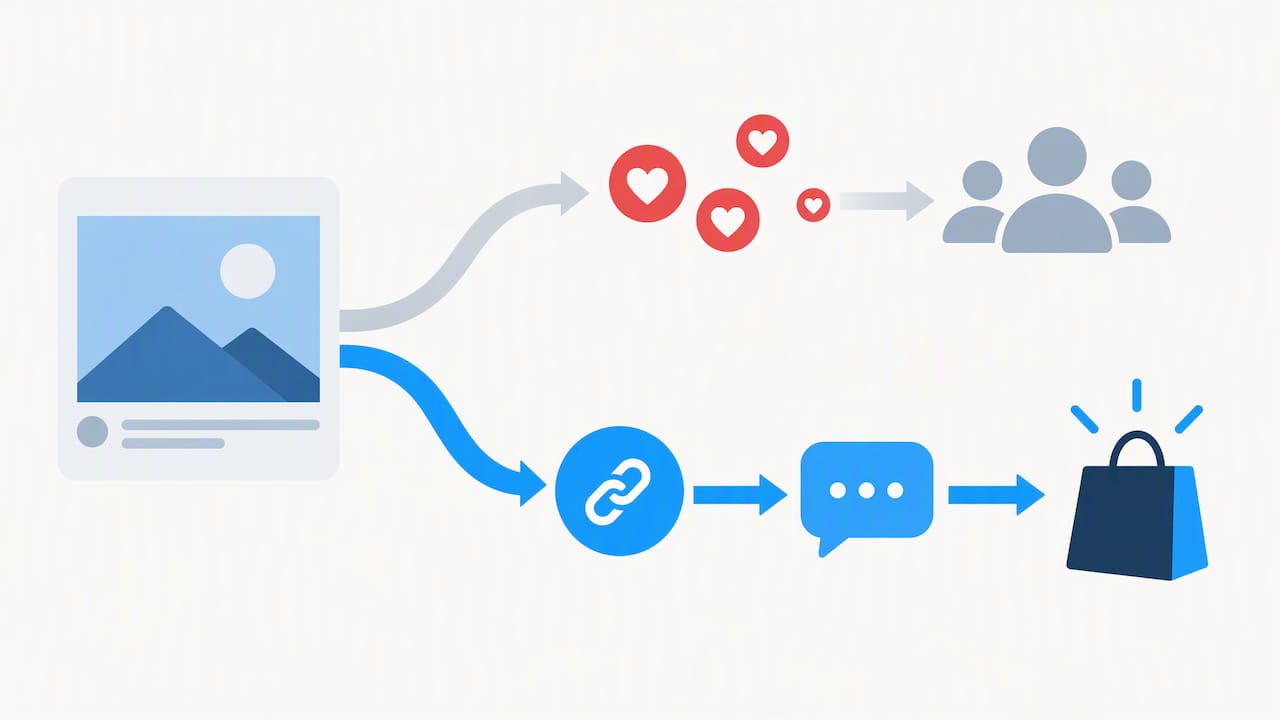
Neither tactic generates the signals that actually correlate with a sale. Click-throughs to a bio link, saves, shares to friends and direct messages asking about price or availability are the behaviours that precede a purchase, and both pods and bought engagement are silent on all of them. Interaction is the broader category that includes DMs, mentions and live participation, while engagement metrics like likes and views sit underneath it, meaning a healthy engagement count can exist without any of the interaction that predicts buying behaviour.
Timeline expectations differ too. Pod-driven visibility typically fades over time as the algorithmic boost from early velocity wears off and the group’s attention shifts elsewhere. Bought metric lifts are more stable but static: a purchased follower count can remain visible, even though it contributes nothing to sales. Marketers who track only vanity metrics will see both tactics “working” indefinitely; marketers tracking conversion funnels will see both flatten at the same point, which is the moment a real prospect has to decide whether to buy.
How to tell if engagement on a post is from pods or bought sources
A handful of patterns give away manufactured engagement before you ever check analytics.
- Look for timing clusters: a burst of likes or comments within a very short window, especially overnight, suggests automation rather than an audience reading your content as it’s published.
- Scan comments for repetition: generic phrases like “Nice!” or “Love this!” repeated across unrelated accounts with no reference to your actual post are a pod signature.
- Check profile uniformity: accounts with stock photos, no posts of their own, or follower counts wildly mismatched to their activity are typical of bought packages.
- Watch for sudden follower surges with no matching rise in profile visits, comments or DMs, which usually means the growth came from a purchase rather than discovery.
Beyond the visual checks, analytics tell the fuller story. Dwell time, click-through rate on bio links and save rate should move in roughly the same direction as your engagement count if that engagement is real; when likes climb but saves, clicks and retention stay flat, the gap is a strong clue. Audit tools built into most scheduling platforms can flag follower growth spikes that fall outside your normal range.
Pro Tip: Run a quick audit after any visibility push, comparing follower growth against bio-link clicks; a follower spike with no click movement is engagement that isn’t translating into interest.
The better habit is to stop trying to catch fake engagement after the fact and instead build verification into your reporting from day one: track click-through rate, DM volume and conversion rate as your core numbers, and treat likes and follower counts as context rather than evidence.
Authentic alternatives and how to sequence them for conversion
Tactics that create genuine buyer signals share one feature: they invite a response rather than simply registering a reaction.
- Reply to every comment and DM within a defined window rather than letting messages sit, since a prospect who gets a quick answer is far more likely to follow through.
- Run short content series that reward people for coming back, which builds the habitual attention that precedes a purchase decision.
- Use interactive formats like polls, question stickers and quizzes, which Sprout Social highlights as tools that create authentic community signals algorithms can trust.
- Choose collaborations and influencer partners for audience fit and a clear call to action rather than follower count alone.
Video formats deserve particular attention here. Choosing between Reels-style short video and other formats affects how much genuine interaction a post attracts, and practical comparisons of Reels versus TikTok are worth reviewing before committing a content calendar to one format.
Bought engagement still has a role, but only as a short-term amplifier you test against other spend. Run a small bought-engagement package on one post and a small paid ad budget on a similar post, then compare which one produces more bio-link clicks and DM enquiries over the same week. That A/B structure tells you whether bought metrics are earning their cost or just inflating a vanity number.
Pro Tip: Never run a visibility tactic, bought or organic, without a short funnel behind it: a clear bio link, one obvious call to action and a way to track what happens after the click.
Live interaction tools can sharpen this further. For events or launches, something like live polling and audience voting turns a one-off visibility spike into a measurable interaction readers actually participate in, which is closer to what converts than any passive like ever is.
Our practical stance on using purchased engagement
Purchased engagement can work or fail, depending entirely on what happens after delivery. We’ve supported customers through password-free, UK-targeted delivery, and a follower or like package alone isn’t a complete sales strategy.
Our recommendation is to pair any purchased package with conversion tracking from day one: set up click tracking on your bio link before the order lands, not after. Then commit to a short window of active response once the engagement appears, replying to every comment and DM that follows, because that’s the window when curiosity about a suddenly more visible profile is highest. Measure clicks and DMs against your baseline, not just the headline follower or like count. Used this way, purchased engagement becomes one input into a conversion plan rather than the plan itself.
— Irwin Lee
How we can help: relevant services and next steps
If you’ve decided a measured visibility boost fits your plan, we offer packages across Instagram followers, likes and video views, along with options for YouTube, TikTok and Facebook, plus auto-like and auto-follower subscriptions for ongoing coverage.
Every package arrives without needing your password, with UK-based support if anything needs sorting. We recommend setting up click and DM tracking before your order lands, then following up actively once it does, so the lift shows up in enquiries and not just in your follower count. Start with our Instagram engagement range and build your conversion tracking around it.
FAQ
What are engagement pods?
Engagement pods are groups of accounts that agree to like, comment on and share each other’s posts shortly after publishing, aiming to trigger the early engagement velocity that algorithms reward with wider distribution. Pod members rarely have any interest in the content itself, so the engagement reflects coordination rather than audience interest.
Is 10 likes on a post good?
Whether a particular number of likes is good depends on your audience size and what you compare it against over time; a healthier marker is whether engagement includes saves, comments and clicks rather than likes alone. Engagement is an umbrella metric covering likes, comments, shares, saves and clicks, so a single number in isolation tells you little about buyer interest.
What is a good posting frequency rule for Instagram?
There’s no single verified ratio that applies universally, as posting frequency guidance varies by platform update and account size; the more reliable approach is testing a consistent cadence against your own engagement and conversion data rather than following a fixed formula. Treat any specific numeric rule you see online as a starting hypothesis, not a confirmed standard.
What is the difference between interaction and engagement on social media?
Engagement covers measurable reactions like likes, comments, shares and saves, while interaction is the broader term that also includes DMs, mentions and participation in live content. Not all interaction shows up in engagement metrics, which is why tracking DMs and replies alongside likes gives a fuller picture of buyer interest.
Is it better to buy followers or use engagement pods?
Bought followers tend to produce more stable, visible counts, while pods produce short-lived spikes that fade once the reciprocal window closes, but neither reliably creates buyer intent without active follow-up. The stronger approach pairs either tactic with conversion tracking and a fast response plan, such as the packages available through buying real Instagram likes.