
These common content creator engagement mistakes quietly cost far more reach than most people realise.
Most creators losing engagement are making the same handful of errors. Weak hooks that lose readers in the first three seconds. Broadcasting to a faceless crowd instead of one specific person. Cross-posting identical files across platforms without reformatting. Ignoring technical metadata until a reach drop forces the issue. Chasing follower counts while ignoring comment rate, saves, and watch time. And, critically, treating engagement as a one-way broadcast rather than a conversation.
Quick fixes for each:
- Weak hook: Write the first line for one specific person, not a general audience.
- Broadcasting: End every caption with one direct question.
- Cross-platform copy-paste: Keep platform-specific export templates and reformat before uploading.
- Metadata neglect: Check titles, descriptions, and tags before every upload, not after.
- Vanity metrics: Track comment rate, save rate, and watch time per viewer weekly.
- Fake or low-quality engagement: Avoid it entirely; the algorithmic and reputational cost outweighs any short-term lift.
Key takeaways
Fixing engagement starts with diagnosing the right problem: most drops come from content clarity failures and technical errors, not algorithmic penalties.
| Point | Details |
|---|---|
| Fix hooks first | Rewrite your first line to address one specific person with one specific problem. |
| Run a 48-hour platform audit | Check export settings, metadata, and caption structure on your last 10 posts immediately. |
| Track comment and save rate | Replace follower count with comment rate and save rate as your primary weekly KPIs. |
| Follow the 30/60/90 plan | Triage technical issues in month one, run hook and CTA experiments in month two, scale wins in month three. |
| Greediersocialmedia | Offers authentic UK engagement packages (real followers, likes, views) to accelerate growth alongside organic fixes. |
Table of Contents
- Common content creator engagement mistakes: causes and fixes
- Platform technical pitfalls that quietly kill your reach
- How to measure engagement correctly
- Your 30/60/90-day plan to repair engagement
- Red flags: shortcuts that damage long-term growth
- Why engagement fails: the mindset behind the mistakes
- How to tailor engagement strategies to different demographics and niches
- Timing and frequency mistakes that suppress engagement
- How to respond to comments and messages to build community
- Why storytelling and authenticity drive engagement
- What most engagement advice gets wrong
- Greediersocialmedia can accelerate your recovery
- Sources
- FAQ
Common content creator engagement mistakes: causes and fixes
Content that tries to speak to everyone fails to engage anyone. The root cause is almost always the same: creators write for an imagined mass audience rather than a single, named person with a specific problem.
1. Treating engagement as a broadcast
Posting without responding, never asking questions, and measuring success by reach alone. The fix: reply to every comment in the first hour after posting, and build one question into every caption.

2. Writing for “everyone”
Generic content produces generic results. Write to one person. Name them in your head before you write a single word.
3. Weak hooks
The first line carries most of the weight. A hook that opens with context or background loses readers before the point lands. Lead with the tension, the result, or the specific problem.
4. No clear point of view
Content without a stance is forgettable. Take a position. Audiences share content they agree or disagree with, not content that sits on the fence.
5. Generic calls to action
“Like and subscribe” is noise. Low-friction, specific invitations work better: “Which of these have you tried? Drop it below.” One question, one reply, one conversation started.
6. Inconsistent cadence
Gaps in posting train the algorithm and your audience to ignore you. Pick a frequency you can sustain for 90 days and hold it.
7. Ignoring community management
Unanswered comments signal to the platform that your content does not generate meaningful interaction. Niche confusion and ignoring audience engagement are among the most common reasons growth stalls.
Pro Tip: Build a micro-CTA template: “If you’ve ever [specific situation], tell me [specific thing] below.” It takes 30 seconds to write and consistently outperforms generic asks.
Platform technical pitfalls that quietly kill your reach
Creators often blame the algorithm for reach drops that are actually self-inflicted. Technical mistakes such as incorrect export settings, wrong file formats, and metadata misuse are frequent causes of processing errors and monetisation problems.
YouTube checklist:
- Export as MP4, H.264 video, AAC audio. Any deviation risks processing errors.
- Never dump copyright-triggering phrases or third-party track names into descriptions.
- Check for processing warnings in YouTube Studio before publishing.
- Reused or lightly re-edited content can trigger automated flags; re-edit substantially.
Instagram and Facebook checklist:
- Use 9:16 for Reels, 1:1 for feed posts. Wrong ratios get cropped or suppressed.
- Captions over 125 characters get trimmed; put the hook in the first line.
- Hashtag abuse (30 identical tags on every post) can reduce distribution.
- Link shorteners in captions can trigger spam filters on Facebook.
TikTok checklist:
- Edit natively vertical from the start; cropped horizontal footage performs poorly.
- Use TikTok’s licensed sound library. Reuploading audio from other platforms risks removal.
- Reposting identical content without re-editing can negatively affect content quality signals to the distribution system.
YouTube’s AI detection has produced false positives that reduced distribution for established channels, which means a reach drop is not always your fault. Platform detection systems can act quickly and overturn rates can be low, so escalate via platform support when a drop looks anomalous.
Pro Tip: Watch your analytics for the first 48–72 hours after every upload. A sudden plateau in impressions that does not match your usual curve is the earliest signal of a distribution issue, not a content quality problem.
How to measure engagement correctly
Raw follower count tells you almost nothing about whether your content is working. The metrics that matter are the ones tied to actual audience behaviour.
Track these:
- Comment rate: Comments divided by reach. Meaningful conversation, not passive scrolling.
- Save and share rate: The strongest signals of genuine value. Saves indicate content worth returning to; shares extend reach organically.
- Watch time per viewer: On video platforms, this reveals whether your content holds attention or loses it at a predictable point.
- Reply rate on Stories: Direct replies indicate a warm, engaged audience.
- Conversion actions: Link clicks, profile visits, DM enquiries, and purchases.
Deprioritise: Raw likes (unless tied to a conversion funnel), total follower count, and impression volume without a corresponding engagement rate.
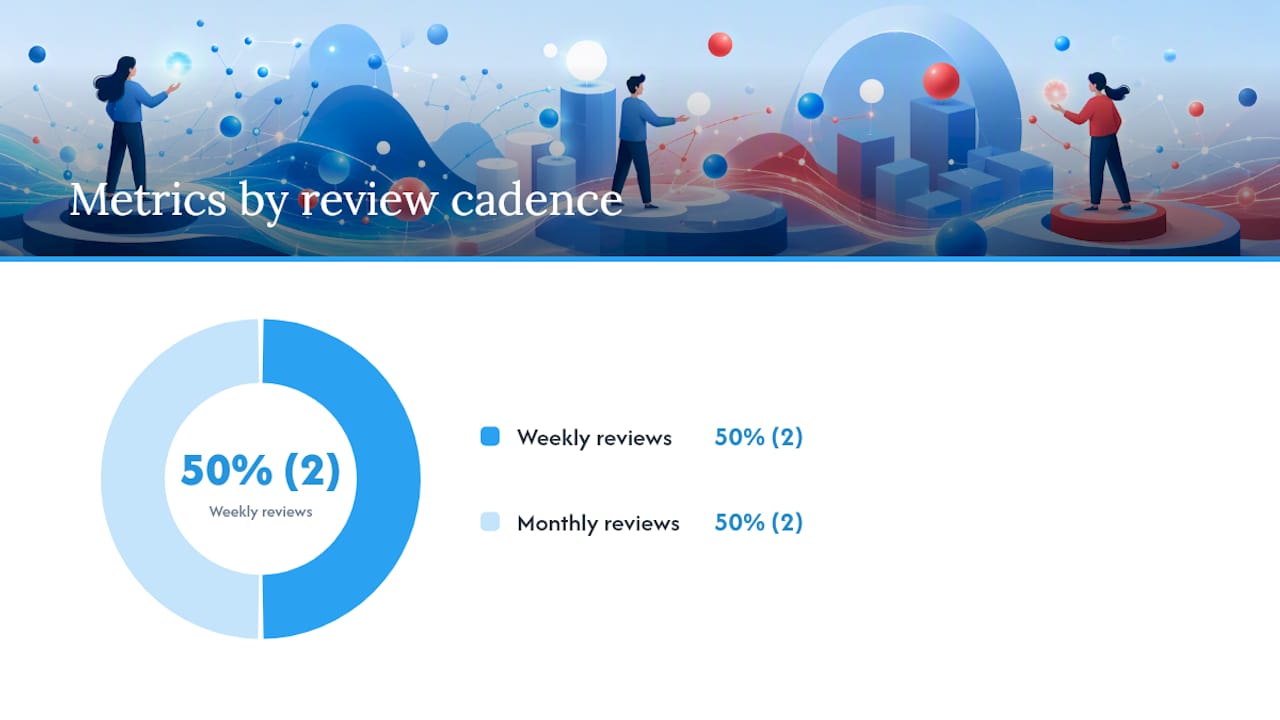
For a practical framework on audience engagement strategies and behaviour tracking, a weekly review of comment rate and save rate alongside a monthly review of watch time and conversion actions gives a clear picture without data overload.
| Metric | Review cadence | Why it matters |
|---|---|---|
| Comment rate | Weekly | Signals genuine conversation |
| Save/share rate | Weekly | Indicates content value and organic reach |
| Watch time per viewer | Monthly | Reveals content structure problems |
| Conversion actions | Monthly | Ties engagement to business outcomes |
Your 30/60/90-day plan to repair engagement
Days 1–30: triage
- Run a full technical audit: check export settings, metadata, and hashtag strategy on your last 10 posts.
- Identify your three lowest-performing posts and diagnose the hook, structure, and CTA.
- Rewrite hooks on scheduled content using the single-person framing.
- Set a posting cadence you can hold for 60 days.
- Respond to every comment on existing posts within 24 hours.
Days 31–60: experiment
- Run A/B tests on hooks: post two versions of the same topic with different opening lines and compare comment rates after seven days.
- Introduce one community ritual: a weekly question post, a poll, or a “this or that” Story.
- Test one new CTA format per week. Track reply rate.
- Use feedback loops to gather direct audience input on what content they want next.
Days 61–90: scale
- Document what worked: which hooks, CTAs, and formats produced the highest comment and save rates.
- Build a content template library from your winning formats.
- Set up a simple reporting dashboard: comment rate, save rate, watch time, and one conversion metric.
- Establish a daily 20-minute community hour: reply, engage with others in your niche, and monitor comments.
Red flags: shortcuts that damage long-term growth
Some tactics produce a short-term metric spike and a long-term penalty. Knowing which ones to avoid protects both your account and your credibility.
- Buying fake or low-quality engagement: Inflated follower counts with no corresponding engagement rate signal inauthenticity to both platforms and real audiences. The risks of fake versus authentic engagement are well-documented: account restrictions, demotion, and lost monetisation eligibility.
- Engagement pods: Coordinated reciprocal engagement can trigger platform detection and produces engagement from people outside your actual audience, distorting your data.
- Copyright misuse: Using unlicensed music or footage without proper licensing leads to copyright claims and automated takedowns, lost revenue, and content unavailability.
- Undisclosed paid promotions: In the UK, the Advertising Standards Authority (ASA) and the Competition and Markets Authority (CMA) require clear disclosure of paid partnerships. Failure to disclose is a legal risk, not just a reputational one.
- Overuse of link shorteners: On Facebook in particular, shortened links are frequently flagged as spam, reducing organic distribution.
Before purchasing any engagement service, read what buying real Instagram likes actually involves and what separates quality providers from low-quality ones.
Why engagement fails: the mindset behind the mistakes
Most engagement problems are not algorithmic penalties. They are failures of clarity and resonance. Creators who treat engagement as a campaign, a tactic, or a number to hit will keep cycling through the same fixes without lasting results.
The shift is straightforward: treat every piece of content as the start of a conversation, not the end of a production process. Anchor content on a single problem or feeling your audience recognises. That anchor is what drives meaningful comments and shares, not the posting frequency or the hashtag count.
Poor content structure compounds the problem. Over-explaining, burying the point, and ignoring scannability all reduce the chance a reader reaches your CTA. Short paragraphs, strong subheadings, and one clear question per post are not stylistic choices; they are structural ones that directly affect whether someone replies.
Pro Tip: Schedule a daily 20-minute community hour: reply to comments, engage with three to five posts in your niche, and check your DMs. Done consistently, this single habit builds more algorithmic goodwill than any posting frequency trick.
How to tailor engagement strategies to different demographics and niches
A fitness creator targeting 18–24-year-olds on TikTok needs a completely different approach from a B2B consultant targeting 40–55-year-olds on LinkedIn. The mistake most creators make is applying one content strategy across all audiences and wondering why it underperforms on some platforms.
Start by mapping your audience’s platform behaviour: when they scroll, what format they prefer, and what problems they are actively trying to solve. A younger audience responds to fast-cut video, trending audio, and direct peer-to-peer language. A professional audience responds to structured insight, data points, and a clear takeaway they can use at work on Monday.
Niche also shapes CTA design. A beauty creator asking “which shade would you pick?” gets replies because the question is low-effort and personally relevant. A finance creator asking “what’s your biggest money mistake?” gets replies because it is emotionally resonant. The link between engagement signals and audience behaviour is direct: the more precisely the CTA maps to the audience’s actual concerns, the higher the reply rate.
Timing and frequency mistakes that suppress engagement
Posting at the wrong time is a common, easily fixed error. Most platforms surface content to a percentage of your existing audience first; if that initial window produces low engagement, distribution to a wider audience is reduced.
Post when your specific audience is active, not when generic “best time to post” guides suggest. Check your platform analytics for the hours your followers are online and test posting 30 minutes before that peak. For UK-based audiences, Tuesday to Thursday between 7:00 PM and 9:00 PM tends to produce stronger engagement on Instagram and TikTok, though your own data always overrides a general benchmark.
Frequency mistakes cut both ways. Posting too rarely lets the algorithm and your audience forget you exist. Posting too often with thin content trains your audience to scroll past. Three to five posts per week of genuine quality consistently outperforms daily posting of filler content.
How to respond to comments and messages to build community
Responding to comments is not a courtesy; it is a distribution tactic. Platforms measure the depth of conversation a post generates, and a thread of genuine replies signals that content is worth surfacing to more people.
Reply within the first hour if possible. That window is when the platform is actively deciding whether to push the post further. A reply that asks a follow-up question extends the thread and keeps the post active in the feed.
For DMs and messages, speed matters more than length. A short, warm reply sent within two hours beats a detailed reply sent two days later. Use saved replies for common questions, but personalise the first line so it does not read as automated.
Never delete negative comments unless they violate community guidelines. A thoughtful public response to criticism demonstrates credibility and often generates more positive engagement than the original post.
Why storytelling and authenticity drive engagement
Audiences do not share information; they share feelings and experiences. A post that states a fact gets a nod. A post that tells a story about the moment that fact became real gets shared.
The structure is simple: set up the tension, show the moment of change, and land on the insight. A creator who says “here are five productivity tips” gets scrolled past. A creator who says “I lost a client because I ignored this one thing, and here is what I changed” gets read, saved, and shared.
Authenticity is not the same as oversharing. It means your content has a consistent voice, a clear point of view, and a willingness to be specific rather than safe. Specific details, real numbers, and named situations are what make content feel true. Vague generalities are what make it feel like every other post in the feed.
What most engagement advice gets wrong
The conventional wisdom says: post more, use more hashtags, follow trends. None of that addresses the actual problem.
Engagement is the outcome of a consistent audience experience, not a tactic you bolt on. Creators who treat it as a campaign, running a “community push” for two weeks and then reverting to broadcasting, see the same results every time: a brief spike, then a return to baseline.
The creators who build durable engagement do one thing differently. They treat every post as a contribution to an ongoing conversation with a specific person, not a broadcast to a metric. That shift changes how they write hooks, how they structure content, and how they respond to comments. Greediersocialmedia has supported over one million users since 2013, and the pattern holds: the accounts that grow sustainably are the ones that treat engagement as a daily standard, not a quarterly initiative.
Greediersocialmedia can accelerate your recovery
If you have fixed the technical errors, tightened your hooks, and rebuilt your cadence but still need a faster start, Greediersocialmedia offers authentic engagement packages for UK creators and small businesses, including real followers, likes, and views across Instagram, Facebook, TikTok, YouTube, and Threads, all delivered without requiring your password.
The difference from low-quality alternatives is straightforward: Greediersocialmedia delivers real engagement from real accounts, which means your metrics reflect actual audience behaviour rather than inflated numbers that distort your data and trigger platform penalties. Every package comes with rapid customer support and instant delivery.
Browse the social media growth tactics available for UK creators and choose the package that fits your current stage.
Sources
- 5 Common Mistakes To Avoid When Starting As A Social Media Creator
- Contentcreators
- Why Your Content Isn’t Getting Engagement (And How to Fix It) — Vyrable Blog | Vyrable
- Hobo
- YouTube’s AI slop detector incorrectly targets Kurzgesagt as other creators fear same fate – Dexerto
FAQ
What are the most common content creator engagement mistakes?
The most common errors are weak hooks, writing for a generic audience, ignoring comments, inconsistent posting cadence, and technical metadata mistakes that suppress reach.
How do I fix low engagement on Instagram or TikTok?
Audit your last 10 posts for hook strength, caption structure, and CTA specificity, then check export settings and hashtag strategy. Reply to every comment within the first hour of posting.
Are vanity metrics like follower count worth tracking?
Raw follower count is a poor indicator of engagement health. Comment rate, save rate, and watch time per viewer are more reliable signals of whether your content is genuinely resonating.
Is buying engagement ever safe for UK creators?
Buying low-quality or fake engagement carries real risks: platform demotion, distorted analytics, and potential monetisation loss. Authentic engagement packages from reputable providers, such as those offered by Greediersocialmedia, use real accounts and avoid these penalties.
How long does it take to recover engagement after a drop?
A focused 30-day triage covering technical fixes, hook rewrites, and consistent community management typically produces measurable improvement in comment and save rates within four to six weeks.