
Buying Facebook likes is not generally a criminal offence in the UK, but how you present those likes can be. The practical rule is simple: never use bought engagement to imply genuine customer approval or satisfaction, because that can breach consumer protection law and the CAP Code. The purchase itself sits in a grey area; the marketing claim built on top of it is where the legal risk actually lives.
TL;DR:
- CAP Code rules 3.44 and 3.46, effective April 6, 2025, prohibit fake reviews and misleading review information when businesses feature engagement in marketing.
- Meta removes bought likes, and low quality engagement can reduce organic reach, distort lookalike audiences, and raise acquisition costs; regulator action is separate.
- Audit posts, ads, and landing pages for unverifiable endorsements; remove or relabel them, disclose incentives, and keep dated records of corrective action.
- Choose providers with clear pricing, delivery terms, refund policies, and support, and never share passwords because page likes do not require account access.
Table of Contents
- What UK law and regulators say about fake engagement
- How Meta treats bought likes and the technical fallout
- How bought likes reach your page and the risks that follow
- Where regulatory enforcement actually bites
- The effect on ads, reach and long-term growth
- Lawful alternatives that actually build an audience
- Our approach to managed engagement and staying compliant
- What non-compliance can cost a UK business
- Checking a provider before you buy engagement
- Your rights when you buy social media engagement
- What actually matters here, and what the industry gets wrong
- Ready to build visible traction on Facebook?
- FAQ
- Sources
What UK law and regulators say about fake engagement
The Digital Markets, Competition and Consumers Act 2024 gave the Competition and Markets Authority stronger powers to act against unfair commercial practices, including fake and misleading reviews. Alongside this, the Advertising Standards Authority added rules 3.44 and 3.46 to the CAP Code in April 2025, prohibiting fake consumer reviews and the misleading publication of review information. Together these rules target the presentation of engagement as authentic endorsement, not the act of purchasing it.
The CMA can issue formal directions, require undertakings or impose fines on businesses that breach these rules, while the ASA can ban ads and refer persistent offenders to Trading Standards. For a small business, the practical response is straightforward:
- Never publish or display fake reviews, likes or comments as if they came from real customers.
- Disclose any incentivised or paid-for content clearly, using labels such as “Ad” or “Gifted”.
- Remove any existing content that could be read as a fabricated endorsement.
How Meta treats bought likes and the technical fallout
Meta runs ongoing anti-fraud systems that look for unnatural engagement patterns: sudden spikes, accounts with no profile history, and repeated activity from low-engagement profiles. Commentary on these systems describes a shift from removing individual accounts to dismantling entire networks of coordinated inauthentic activity, which is exactly the kind of behaviour bought-like campaigns often resemble.
The result for a business page is often short-lived:
- Bought likes often vanish relatively quickly as detection sweeps remove them.
- Pages that rely on non-human engagement can see reduced organic reach as platform signals treat the account as low-quality.
- Regulator enforcement and platform enforcement operate separately: Meta can suspend a page for policy breaches while the CMA or ASA pursues a business for the marketing claims made using that engagement.
Both systems matter, and neither replaces the other.
How bought likes reach your page and the risks that follow
Most bought-like services draw from one of three sources: automated bot networks, click farms staffed by low-activity human accounts, or reseller panels that mix both. None of these produce people who will ever buy from you, comment meaningfully or share your content.
- Bot-driven likes often come from accounts with no posts, no friends and no profile photo, visible immediately in your page’s audience insights.
- Click-farm likes can look more human but rarely engage again, leaving a page with high like counts and flat comment or share activity.
- Mixed-panel orders sometimes blend real and fake accounts, making the drop-off harder to spot until reach and conversion data are reviewed together.
The commercial damage shows up quietly: skewed engagement rates, wasted ad budget when you later target “engaged” audiences that do not exist, and a reputational risk if a customer or journalist notices thousands of likes from accounts with no followers. Checking your audience demographics against your actual customer base is a fast way to catch the mismatch.
Where regulatory enforcement actually bites
The CMA’s fake reviews guidance sets out banned practices in detail: submitting or commissioning fake reviews, hiding negative reviews, and failing to disclose incentives given in exchange for positive feedback. These examples extend naturally to likes and comments presented as unprompted customer approval.
The ASA’s remit is wider than many businesses assume. According to ASA guidance on fake consumer reviews, user-generated content can fall within the CAP Code once a business adopts or incorporates it into its own marketing, including liking, sharing or featuring it on a website or in an advert. A like sitting quietly on a personal post is unlikely to attract scrutiny; the same like screenshotted into a sales page is a different matter.
The CAP Code’s rules 3.44 and 3.46, added on 6 April 2025, make the publication of fake or misleading review information a breach in its own right. That means the exposure is not limited to the original act of buying engagement but extends to every piece of marketing that leans on it afterwards.
- Audit any page content, ads or landing pages that reference like counts, reviews or testimonials.
- Remove or relabel anything that cannot be verified as genuine and unincentivised.
- Keep a record of what was changed and when, in case a regulator asks for evidence of corrective action.
The effect on ads, reach and long-term growth
Facebook’s ad tools build lookalike audiences from your existing engagement. When that base is full of bot accounts or inactive profiles, the lookalike audience inherits the same low quality, and campaigns built on it tend to underperform from the start.
- Bought likes can produce a visible short-term spike in page totals with no matching rise in comments, shares or website clicks.
- Poor-quality audiences skew the metrics used to judge ad performance, making it harder to tell which creative or targeting actually works.
- The combined effect is often a higher cost per acquisition, since budget gets spent reaching people who were never going to convert.
Lawful alternatives that actually build an audience
Replacing bought likes does not mean slower growth, it means growth that holds up under scrutiny. A handful of tactics cover most of what a UK small business needs.
- Run targeted Meta ad campaigns with a clear objective (reach, traffic or conversions) rather than a vanity like count.
- Use giveaways with transparent entry terms, referral incentives, or review requests that clearly disclose any reward offered.
- Draft influencer and creator contracts that require an “Ad” or “Gifted” label on every sponsored post, with a right to review content before it goes live.
- Commission professional photography for your page and ads; a professional photo for your London business profile often lifts engagement more reliably than inflated like counts, because it builds the kind of visual trust that makes people stop scrolling.
Pro Tip: Keep a one-page contract checklist for every creator partnership: disclosure wording, posting deadline, usage rights and a clause confirming no fake engagement will be used to promote the content.
Our guide on buying social media engagement safely walks through contract wording and labelling practice in more depth.
Our approach to managed engagement and staying compliant
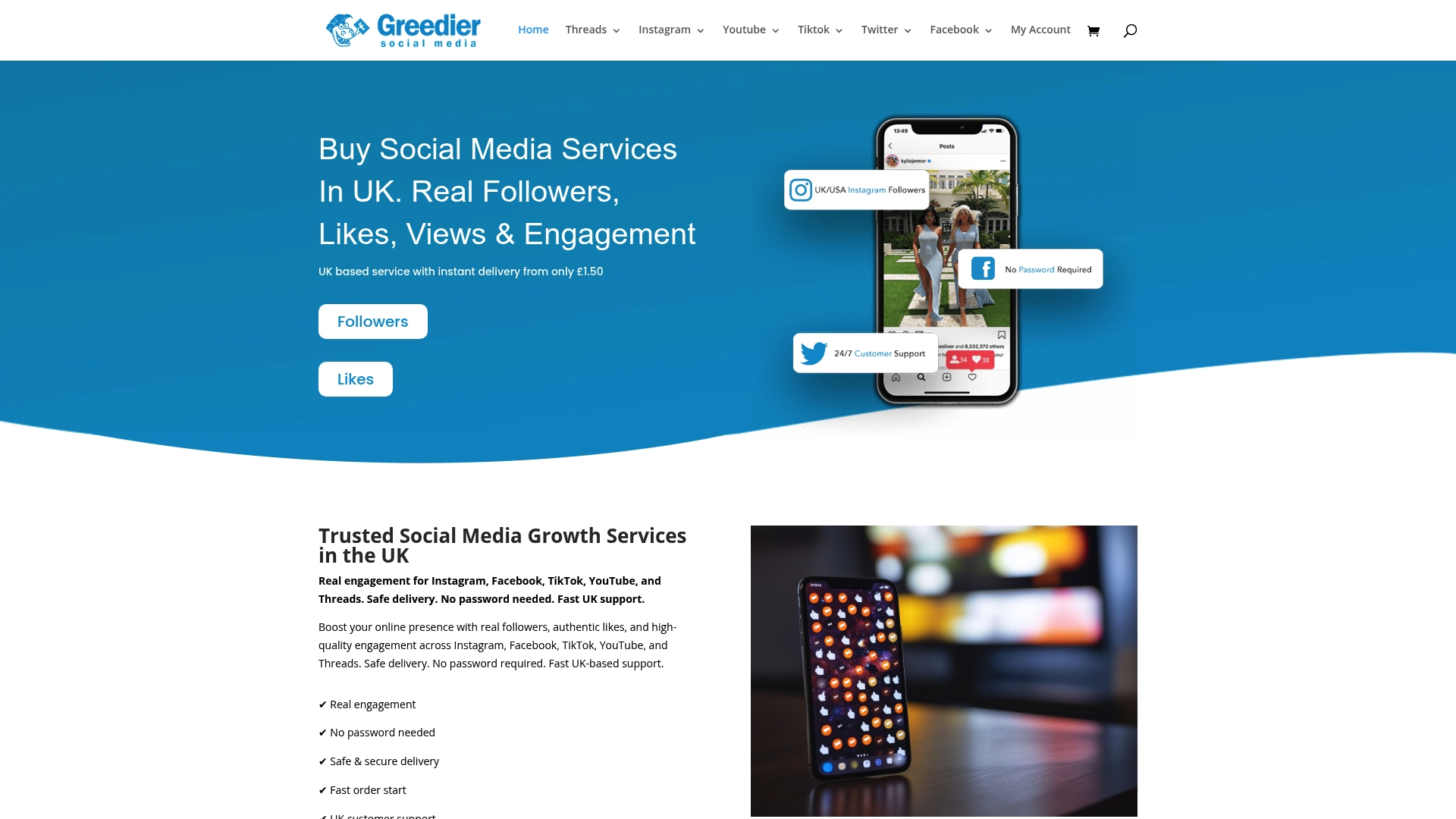
We built our Facebook services around UK-targeted delivery, password-free order processing and fast UK-based support, aiming to give business pages visible traction without asking for account access. We see purchased engagement as one input among several, not a substitute for the disclosure and labelling practices that UK rules require.
We recommend pairing any engagement order with the same compliance habits regulators expect from organic marketing:
- Keep engagement activity separate from any customer review or testimonial claims made in ads.
- Label sponsored or incentivised content clearly, regardless of where the underlying engagement came from.
- Monitor page insights regularly to catch unnatural patterns before they affect ad performance.
Our article on the risk of buying Facebook page likes in 2026 sets out these practices in more detail for UK business owners.
What non-compliance can cost a UK business
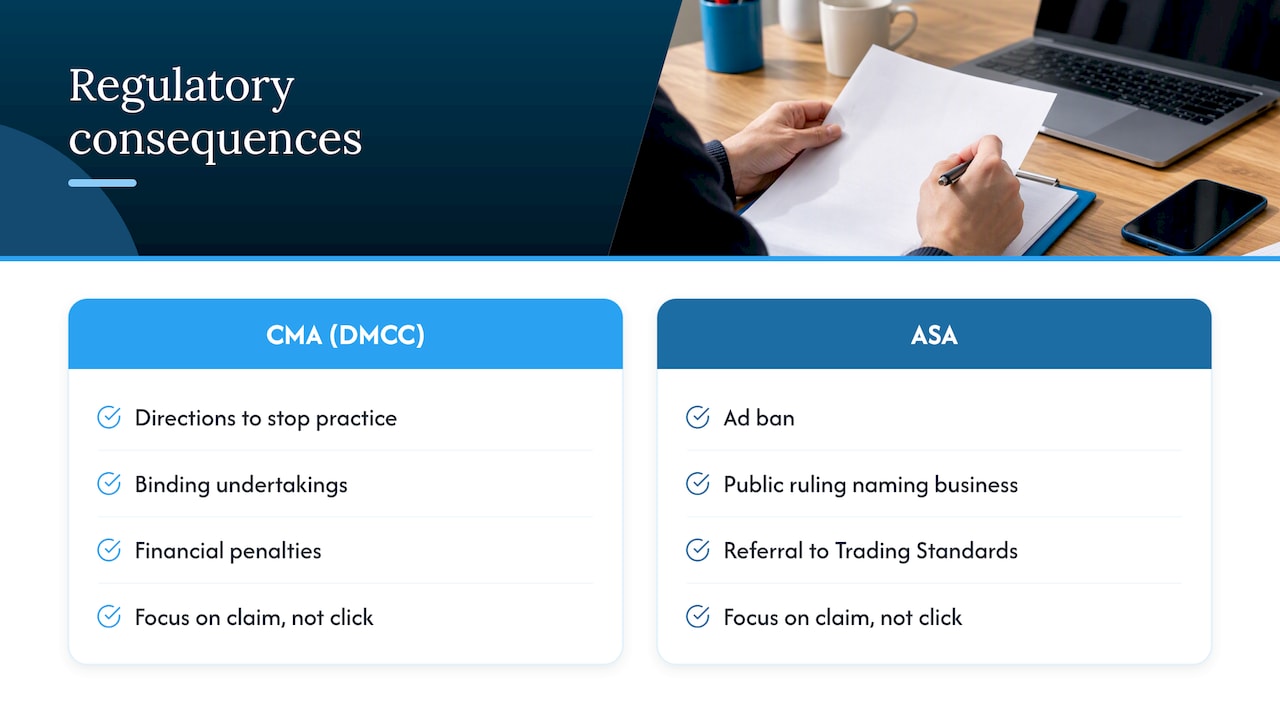
The financial and reputational exposure for misusing bought engagement in marketing sits with consumer protection and advertising law, not with the purchase itself. Under the DMCC Act 2024, the CMA’s unfair commercial practices guidance allows the regulator to issue directions requiring a business to stop a practice, accept binding undertakings, or face financial penalties for breaches of consumer protection law.
The ASA operates on a different track. A successful complaint can result in an ad being banned, a public ruling naming the business, and in persistent cases, referral to Trading Standards for further action. For a small business, a published ASA ruling can do more lasting damage to customer trust than any fine, since it is searchable and often picked up by local press.
Both regulators focus on the claim, not the click. A business that buys likes but never references them in marketing faces a different risk profile to one that screenshots a like count into an advert or product page. The safest position is to treat any engagement number used publicly as a claim that must be defensible, in the same way a price or a product specification must be accurate.
Keeping records of what was purchased, where it was used and when any corrective action was taken gives a business something to show a regulator if a complaint ever arises, and it is far cheaper than dealing with an investigation after the fact.
Checking a provider before you buy engagement
Not every seller of Facebook likes operates the same way, and the quality difference shows up quickly in your analytics. A few checks before ordering can save a wasted purchase.
Look for a provider with a UK-facing website, clear pricing and a described delivery method rather than vague promises of “real” engagement with no explanation. Check whether the provider asks for your account password: a legitimate service should never need it, since page-level actions like likes and follows do not require login credentials. Read the refund or replacement policy carefully, since reputable providers will typically replace engagement that drops within a stated window rather than leaving you with no recourse.
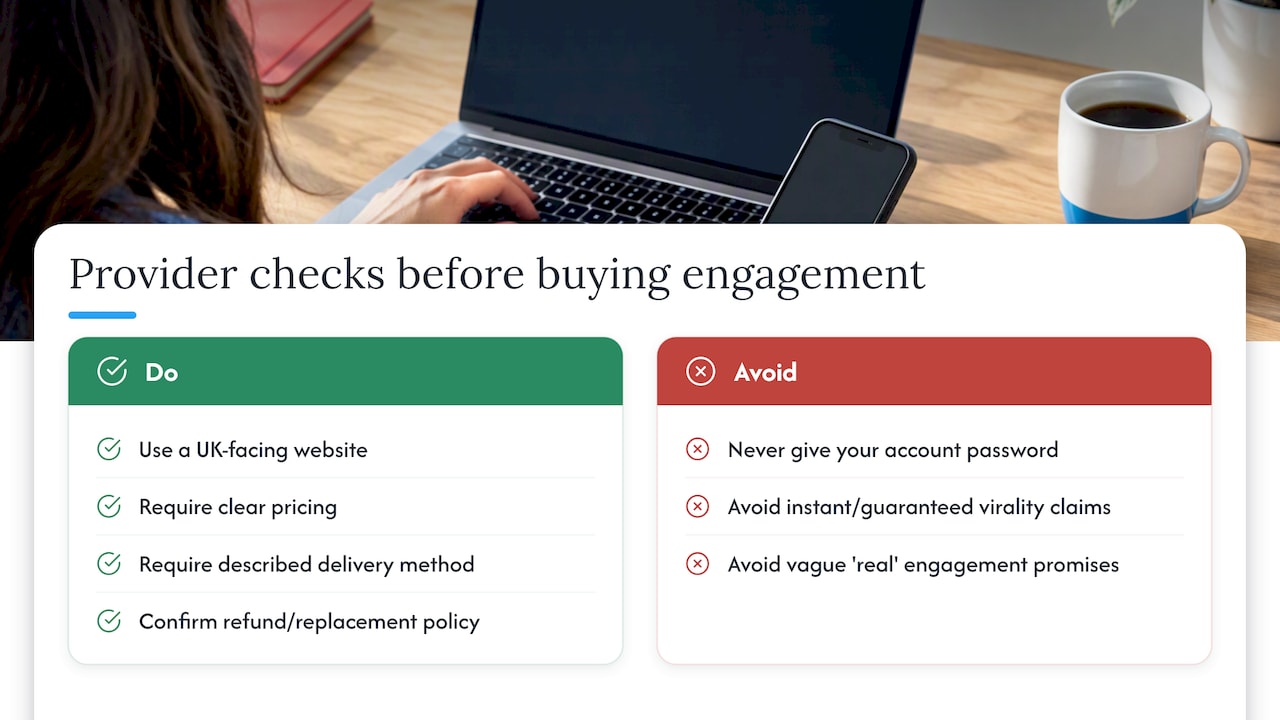
It is also worth checking how a provider describes delivery speed and account safety, since providers that overpromise unrealistic results (instant, guaranteed virality, for example) are often the ones using the lowest-quality bot networks. A provider that is upfront about using UK or USA-targeted accounts, with a stated support channel and a clear product category page, is generally easier to evaluate than one hiding behind generic marketing claims.
Our Instagram and Facebook product pages set out pricing and delivery details upfront, which is the standard any provider should be judged against.
Your rights when you buy social media engagement
Purchased engagement is a consumer transaction like any other online purchase, and standard consumer protection principles apply to it. If a provider promises a specific number of likes, a delivery timeframe or a guarantee, that promise forms part of the contract, and failing to deliver it can be treated as a breach under general consumer contract law.
Businesses paying for engagement services are entitled to accurate product descriptions, clear pricing with no hidden fees, and a working method of contact for support or disputes. Where a provider fails to deliver as described, a buyer typically has the same recourse as with any other online purchase: a request for correction, replacement or refund through the provider directly, or escalation to a payment provider if the service was never delivered.
These rights sit separately from the CMA and ASA rules covering how you use engagement in marketing. One governs the transaction between you and the provider, the other governs what you tell your customers afterwards. Keeping the two distinct helps avoid the common confusion that buying likes is itself illegal: the purchase is a commercial transaction, and the marketing claim is the regulated activity.
What actually matters here, and what the industry gets wrong
Most advice on this topic treats “is it legal” as a yes-or-no question, when the honest answer is that the law cares about what you say, not what you buy. That framing gets lost because it is less satisfying than a clean verdict, but it is the one that actually protects a business.
The bigger gap in conventional advice is the assumption that compliance means avoiding purchased engagement altogether. It does not. It means never letting a like count, a review or a comment stand in for a genuine customer endorsement in your marketing. A business that buys engagement to build initial page presence while keeping its ad claims and testimonials honest is in a fundamentally different position to one that screenshots fake numbers into a sales page.
If there is one priority worth acting on first, it is auditing what is already on your page and in your ads before adding anything new. Fix the labelling and disclosure gaps that exist today, then decide what engagement strategy, paid or organic, fits the business you actually want regulators and customers to see.
— Irwin Lee
Ready to build visible traction on Facebook?
We offer UK-targeted Facebook page followers, page likes and post likes, delivered without ever asking for your password, backed by UK-based support if anything needs sorting. If you want a managed starting point for page visibility while you tidy up disclosure and labelling elsewhere, our Facebook product category sets out current packages and pricing.
Whatever you order, keep it separate from any customer testimonial or review claim in your ads, and get in touch with our support team if you want advice on fitting purchased engagement into a compliant marketing plan.
FAQ
Is buying Facebook likes illegal in the UK?
Buying Facebook likes is not generally a criminal offence in the UK. The legal risk arises when bought likes are presented in marketing as genuine customer endorsement, which can breach the CAP Code and consumer protection rules.
What happens if Facebook detects bought likes on my page?
Meta’s anti-fraud systems typically remove non-human engagement once detected, which means bought likes often disappear within days or weeks. In some cases, pages showing persistent unnatural activity can face reduced reach or account restrictions.
Do I need to disclose that I paid for engagement?
You do not need to disclose a like purchase itself, but you must disclose any paid-for or incentivised content used in marketing, labelling it clearly as “Ad” under GOV.UK endorsement guidance. The disclosure requirement applies to the marketing claim, not the underlying engagement number.
What should I check before choosing a provider that sells Facebook likes?
Check that the provider never asks for your account password, publishes clear pricing and delivery terms, and offers a replacement or refund policy if engagement drops. A UK-facing support channel and a transparent product page are good signs of a legitimate service.
Can bought likes affect my Facebook ad performance?
Yes, because bought likes can skew the audience data Facebook uses to build lookalike audiences for ad targeting. This often leads to higher cost per acquisition, since campaigns end up reaching people who were never genuine prospects.