
Auto likes deliver a short burst of social proof but rarely build lasting growth on their own, and they carry real policy risk. Meta’s rules prohibit buying or exchanging engagement, and UK advertising rules add a disclosure layer for paid promotion. Choosing a supplier with no-password delivery, UK support and controlled pacing lowers that risk, though it never removes it entirely.
TL;DR:
- Instagram weighs time spent, comments, saves, and profile visits more heavily than passive likes, so bought likes rarely expand reach without active engagement.
- Meta prohibits bought engagement and may reduce reach or restrict accounts; disclose boosted commercial posts, and remember gradual, varied delivery only lowers detection risk.
- A small boost best fits a new account, regular creator schedule, or product launch, but avoid it when trust or direct sales dominate.
- Choose a supplier that requests no password, offers UK targeting and refund terms; test a small order, then monitor reach and comments for a week.
Table of Contents
- What auto likes are and how delivery patterns work
- Does a like boost actually move Instagram’s algorithm?
- Platform rules, risks and UK disclosure expectations
- Who should consider auto likes, and a safe-use checklist
- How we approach auto likes responsibly
- A fair view of what auto likes can and can’t fix
- Getting started with Greedier Social Media
- FAQ
- Sources
What auto likes are and how delivery patterns work
Auto likes are a programme or subscription that sends likes to your posts automatically, either as a one-off burst on a single piece of content or as an ongoing service that tops up every new post you publish. The mechanics matter more than the marketing copy suggests.
Delivery pattern is the main variable:
- One-off bursts push a set number of likes to a single post, often within minutes, aimed at an immediate social proof effect.
- Subscription delivery adds likes gradually to every new post over weeks or months, which tends to look more natural than a single spike.
- Pacing and variability (spreading delivery across hours rather than seconds) affects how the activity reads to Instagram’s detection systems.
Vendors typically promise social proof, consistency and time saved on manual engagement. Social proof and time saved are reasonable claims for a one-off order. Consistency is only realistic with a genuine subscription model, such as the Instagram Auto Likes subscription, where likes are scheduled to match your posting rhythm rather than arriving all at once.
Does a like boost actually move Instagram’s algorithm?
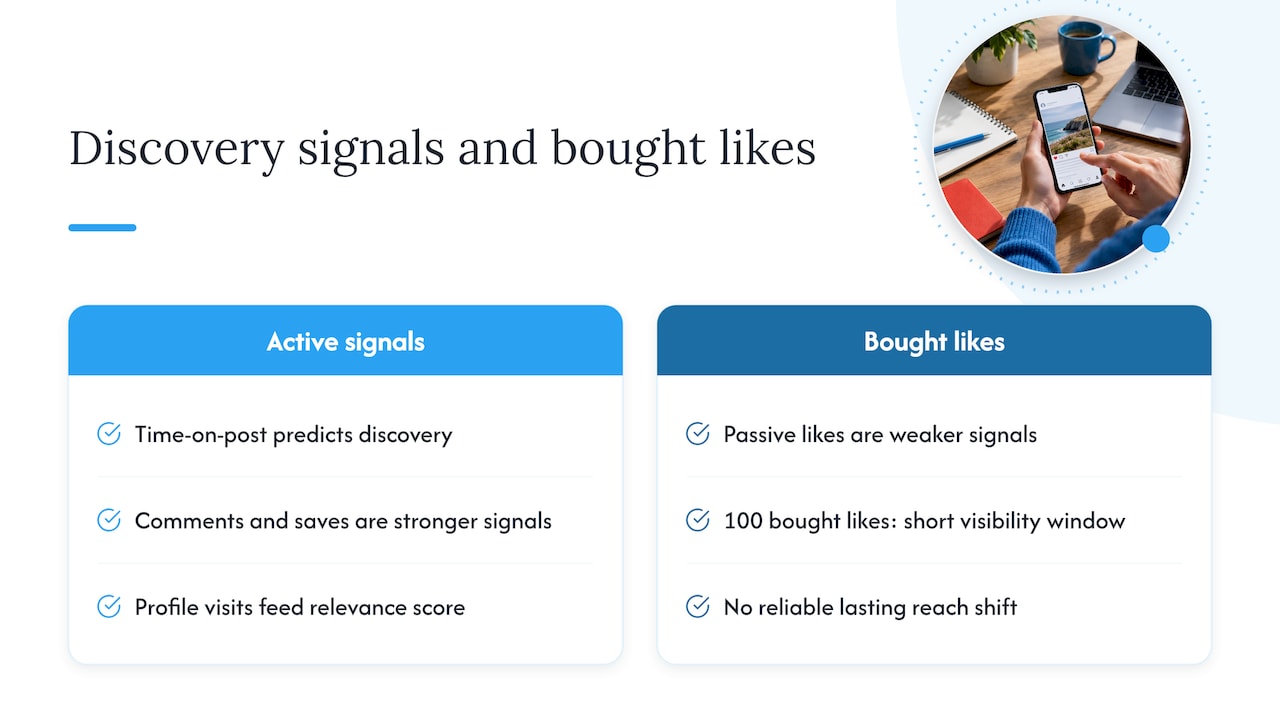
Instagram’s own transparency material explains that ranking relies on many signals, not likes in isolation. Time spent on a post, comments, saves and profile visits all feed into the relevance score that decides whether content gets shown beyond your existing followers.
One sourced finding stands out: Meta’s ranking documentation identifies time-on-post and active engagement, such as comments and saves, as stronger predictors of discovery than passive likes alone. That distinction explains why a sudden flood of likes rarely translates into the kind of reach a creator hopes for.
A like count can still create a useful first impression. A new post that shows 150 likes within the first hour looks more credible to a human scrolling past it than one sitting at three, and that credibility can encourage real visitors to pause, watch longer or leave a comment. That is where the plausible upside sits: auto likes nudge perception, and perception occasionally nudges behaviour.
What they do not reliably do is replace the comments, saves and watch time that Instagram’s systems weight more heavily. A post can carry a hundred bought likes and still fail to reach new audiences if nobody saves it, rewatches it or comments on it. Our own analysis of bought likes and algorithmic impact found that a batch of 100 purchased likes tends to produce a short window of extra visibility rather than a lasting shift in reach.
The practical takeaway: a like boost can plausibly create momentum when it’s paired with content strong enough to earn comments and saves on its own. On weak content, it usually just sits there as a number.
Platform rules, risks and UK disclosure expectations
Meta’s policy is explicit on this point. Its spam and inauthentic behaviour rules list buying, selling or exchanging engagement, including likes, as disallowed conduct, and enforcement can mean reduced reach or account restrictions. That risk sits alongside the UK’s own advertising expectations.
Key facts to weigh before buying:
- Meta’s inauthentic behaviour policy treats bought engagement as spam, with enforcement ranging from throttled reach to account action.
- The ASA’s 2024 influencer disclosure report found only around 57% compliance with ad-labelling rules among sampled content, which shows how often paid promotion goes unlabelled even without auto likes involved.
- Bought engagement that forms part of a paid promotional campaign can trigger the same disclosure duty as a sponsored post, so it is worth labelling clearly if the boosted content is commercial.
- Steady, variable delivery is harder for automated detection systems to flag than a single large spike landing within seconds.
The practical mitigation is straightforward: favour gradual, varied delivery over one huge burst, disclose paid promotion where it applies, and watch your account for sudden reach drops or warning notices after any order.
Who should consider auto likes, and a safe-use checklist
Auto likes make the most sense for a handful of situations: a brand-new account that needs an initial credibility signal before organic traffic arrives, a creator trying to keep a consistent look across a regular posting schedule, or a small product launch that benefits from an early show of interest. They make far less sense for regulated adverts, campaigns where a direct sale is the only measure of success, or any account where trust is the entire product, since a credibility gap discovered later costs more than it saves.
Before ordering from any supplier, check for:
- No-password delivery, so you never hand over account access.
- UK-capable targeting, so engagement looks relevant to your actual audience.
- Variable, controlled pacing rather than one instant lump delivered in seconds.
- Visible customer support you can reach if something goes wrong.
- Published refund or guarantee terms stated clearly before checkout.
Our checklist for buying Instagram likes covers the same ground in more depth for readers comparing several vendors.
Pro Tip: Pair any bought engagement with one genuine call to action in your caption, such as asking a direct question, so real comments start arriving alongside the boosted likes.
How we approach auto likes responsibly
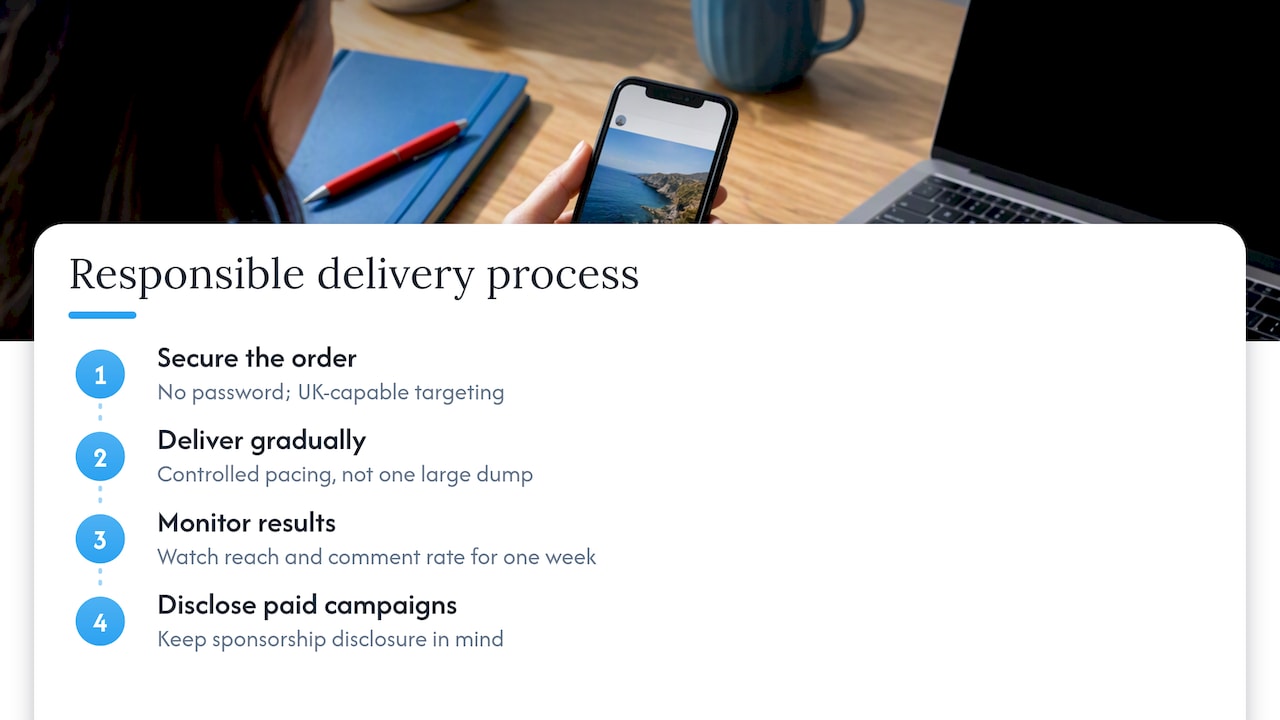
Auto likes are delivered without requiring your password, with UK-capable targeting and pacing options designed to look natural rather than instant. The approach is built specifically around safe, controlled delivery rather than a single large dump of activity. After any order, we recommend watching your reach and comment rate for the following week and keeping sponsorship disclosure in mind if the boosted post is part of a paid campaign.
A fair view of what auto likes can and can’t fix
Auto likes are a cosmetic boost, not a growth strategy. Used sparingly, with honest disclosure where a post is commercial, they can give a new account or a single launch post the kind of first impression that encourages real visitors to engage. Used as a substitute for content that earns comments and saves, they just inflate a number that Instagram’s own ranking signals treat as secondary. The responsible path is to treat them as one small input alongside content worth commenting on, not the whole plan. Readers weighing this should check a supplier’s delivery practices and reach out to support with specific questions before committing to a larger package.
— Irwin Lee
Getting started with Greedier Social Media
The auto likes service is built around the checklist above: no password requested at any point, UK-capable targeting, and adjustable delivery pacing rather than one instant spike. This combination suits creators and small brands seeking a credibility boost without handing over account access or triggering obvious detection patterns.
A sensible first step is a small order rather than committing to a full subscription straight away:
- Browse Instagram likes and followers packages to compare one-off pricing from £0.99.
- Try a single small order first, then watch your reach and comment rate for a week before scaling up.
- Check the Auto Instagram Followers service page if you want ongoing delivery rather than a one-off boost.
If you are building longer-term reach through content rather than numbers alone, a partner resource on turning engagement into leads is worth a look once your package has landed.
FAQ
Is 1,000 likes on Instagram a lot?
It depends entirely on your follower count and niche: a high number of likes relative to followers signals strong engagement, while the same number on a very large follower account is less remarkable. Context matters more than the raw figure.
How much does 1,000 likes on Instagram cost?
Pricing varies by vendor and delivery speed, and our Instagram likes category lists one-off packages from £0.99 up to £189.95 depending on quantity and post type. Check the exact package total before ordering, since larger quantities carry proportionally different per-like pricing.
How do you get auto likes set up on a post?
You typically choose a subscription-style package, link the Instagram account or post you want covered, and the service delivers likes automatically to new content without requiring your password. Our Auto Instagram Likes plans start from £9.99 per month for this kind of ongoing delivery.
How can you increase your chances of reaching 1,000 likes?
Strong content that earns comments and saves does more for discovery than likes alone, since Instagram’s ranking signals weight active engagement more heavily than passive likes. Combining organic tactics, covered in our guide on increasing Instagram likes organically, with a modest initial boost tends to work better than relying on either approach alone.
Sources
- About
- How Instagram ranking works — Meta transparency
- Influencer ad-disclosure on social media: Instagram and TikTok report (ASA, 2024)