

A larger audience can make an account seem more influential without strengthening its connections. The psychology of high follower counts involves perceived popularity, visibility and interaction quality, not just the number itself. A high count can provide social proof, but it doesn’t guarantee that followers will see or respond to posts.
It’s natural to see a growing audience as progress. Follower numbers are visible and easy to compare, while trust and meaningful engagement take more effort to assess. This difference can shape how people judge an account and feel about their own growth.
This article explains how recommendation algorithms can affect reach, why authenticity matters as an audience grows, and what follower counts can and can’t reveal about relationships. You’ll learn how to weigh visibility against genuine connection, and when a large number offers useful social proof without being a complete measure of influence.
Key Takeaways
- Read engagement patterns alongside audience growth to understand what helps your posts reach people.
- Keep your content recognisably yours as your audience expands; genuine interaction gives followers a reason to stay connected.
- Balance the reach of a larger audience with the time and attention needed to build closer relationships.
- Use follower totals as one signal of social proof, not as a stand-in for meaningful responses or influence.
1. Algorithmic amplification and engagement feedback loops
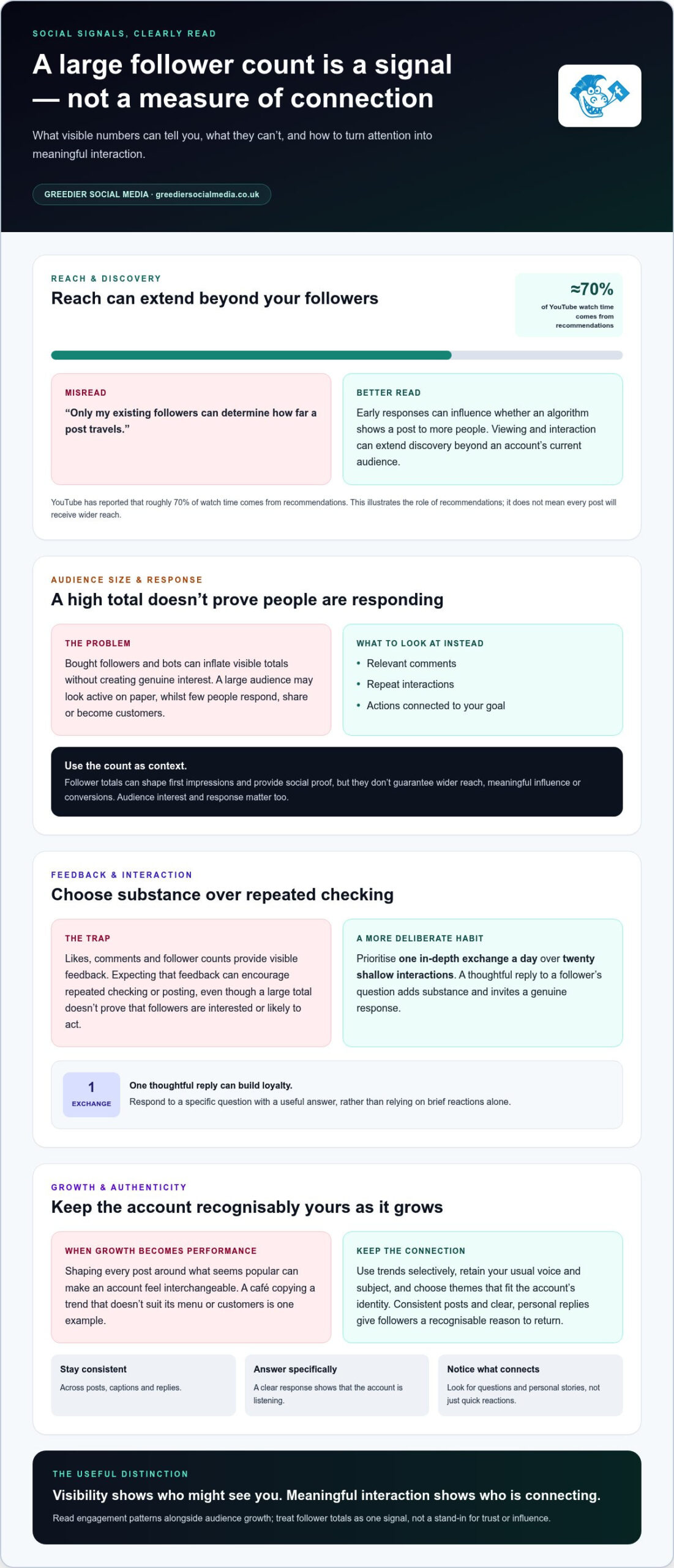
A post’s early response can influence whether a social media algorithm shows it to more people. YouTube has reported that roughly 70% of watch time comes from recommendations, illustrating how discovery can extend beyond an existing follower base. Reach can therefore grow through viewing and interaction, not simply through the size of an account’s audience.
Likes, comments and follower counts can feel rewarding because they provide visible social feedback. People sometimes call this a “dopamine hit”, but the practical point is that expecting feedback can encourage repeated checking or posting. A large follower total may feel validating, yet it doesn’t prove that every follower is interested or likely to act.
Does follower count affect engagement, reach and social influence? It can shape first impressions and provide social proof, while engagement and content relevance help determine whether people respond. A high count alone doesn’t ensure wider reach, meaningful influence or conversions. These depend on whether the audience cares about the post and takes a useful next step.
Bought followers and bots can inflate visible totals without creating genuine interest. This mismatch can make engagement rates and audience analytics harder to interpret: a post may appear to reach a large community, while few followers respond, share or become customers. Treat the count as context, then look for relevant comments, repeat interactions and actions tied to your goal.
Use engagement deliberately. To see more posts about a subject, interact with relevant content. Scrolling past unwanted posts may help reduce similar content in your feed. Prioritise one in-depth exchange a day over twenty shallow interactions. A thoughtful reply to a follower’s question can build loyalty more effectively than brief reactions because it adds substance and invites a genuine response.
To avoid seeing more posts recommended by algorithms, don’t engage with them. Even if a post interests you, scroll past it quickly to see less of that content.
2. Authenticity and meaningful connection
On Instagram, an authentic account feels consistent across its posts, captions and replies. For example, a bakery sharing daily specials can show the people making them, explain ingredients and answer questions plainly. This gives followers a recognisable reason to return. A polished image can attract attention, but a personal detail or useful response helps turn attention into familiarity. That connection comes from what the account shares and how it responds, not from follower totals alone.
Performance can creep in when creators shape every post around what seems popular. A café might copy a trending format only to find it doesn’t suit its menu or customers. Repeating that approach can make the account feel interchangeable. The psychology of high follower counts can intensify this pressure, making creators feel they must perform for a growing audience. Use trends selectively: keep a format if it helps explain something, but retain your usual voice and subject. Authenticity doesn’t mean sharing everything. It means choosing what fits the account’s identity and keeping expectations clear.
Community grows through repeated, recognisable exchanges. Reply to a follower’s specific question, acknowledge a useful suggestion and follow up when you make a change. If someone asks whether a dish contains an ingredient, a clear answer is more meaningful than a generic heart emoji. These replies show that the account is listening and give other followers a reason to join in, making the page feel less like a broadcast and more like a shared space.
Try a simple routine: choose a few themes that reflect your work, write captions in your natural voice, then respond thoughtfully to relevant comments. Review which posts prompt questions or personal stories, not just quick reactions. Understanding the psychology of high follower counts can help creators keep attention on the community they want to serve. Keep using formats that bring the right people into conversation, and drop those that encourage attention without connection. If visible engagement is part of your Instagram plans, explore Instagram engagement options as one element of your wider approach.
3. The trade-off between audience size and intimacy
High follower counts can make creators feel more visible, but also more exposed to judgement. Each new follower may feel like approval, while losing a follower can feel personal. Self-affirmation theory describes self-judgement across six categories, including roles, values, group identities, goals and relationships. This helps explain why audience changes can feel connected to identity, not just account performance.
Do high follower counts increase perceived credibility and attractiveness? They can act as a popularity cue, making someone with a large audience seem more credible or appealing at first glance. But the count doesn’t establish expertise or trust. A specialist with a smaller, focused community may earn greater confidence through useful advice and relevant discussion.
Creators can protect their identity by defining their audience before chasing growth. For a local café, that might mean deciding whether posts are for nearby customers, home bakers or food enthusiasts. Check which posts prompt useful questions, then adapt themes without abandoning the account’s purpose. Audience growth takes consistency: repeating relevant subjects gives people a reason to follow, while constant changes can blur what the creator stands for.
Micro-influencers often build an audience around a defined interest, such as cycling routes or independent fashion. A narrower audience can make replies feel more personal, though size alone doesn’t prove stronger trust. Neil deGrasse Tyson and Kylie Jenner illustrate how millions can follow people for very different reasons. Compare audience relevance, recurring discussion and creator expertise rather than treating one scale as a universal measure.
Use a simple research routine: review comments and questions, note recurring interests, then test content that serves those needs. A creator discussing UK walking routes, for example, could compare local trail advice with general fitness posts. Keep the themes that attract the intended audience and encourage conversation. This balances growth with a recognisable identity, so the community grows without losing its focus.
4. Follower count versus relationship quality
People value accounts with many followers because a large number offers visible social proof. It can suggest that others found the account worth following, reducing uncertainty for someone discovering it. But this shortcut says little about the relationship behind the number. A local bookshop’s smaller audience might ask questions, share recommendations and return, while a much larger audience may remain passive.
Follower totals are therefore useful context, not a complete measure of influence. One LinkedIn creator with 5k followers reports that posts sometimes struggle to reach 100 impressions. That example shows why audience size and actual exposure can diverge. For a brand, compare growth with meaningful signals: relevant comments, direct messages, repeat engagement and actions connected to its goals.
Bought followers can inflate totals and distort analytics. If an account gains followers who aren’t interested in its subject, the visible count may rise without a matching increase in relevant responses. That makes it harder to judge which content resonates. Look for patterns instead: do people ask informed questions, return to later posts or discuss a product after seeing it?
Relationship quality comes from consistent behaviour, not a single public metric. Reply to a specific comment, answer direct messages thoughtfully and use a giveaway to invite participation that fits the account. For example, a gardening brand could ask followers what they’re growing, then respond with practical advice. These exchanges give followers a reason to engage as people, rather than simply adding to a total.
Use follower count to understand first impressions, then assess whether the audience responds in ways that matter. If you want to build visible social proof on Instagram, explore Instagram Followers as one part of your wider approach. Keep relationship quality in view: an impressive total cannot replace useful conversations, relevant interest or trust earned over time.
Greedier Social Media: Instagram Followers
Greedier Social Media offers Instagram Followers for people seeking to increase their account’s visible audience. This may suit a profile where a higher follower count supports its social proof, alongside relevant content and genuine audience interaction. Followers alone don’t create trust or guarantee reach, so consider how this metric fits your wider goals.
For a broader engagement approach, Greedier Social Media also offers Instagram Likes, Auto Instagram Followers and Auto Instagram Likes. Choose the metric that matches your objective, and assess it alongside meaningful responses and relationship quality. These services support specific Instagram metrics rather than replacing the work of building an authentic community.
Visit Greedier Social Media to explore its Instagram follower options.
Choose the next step that fits your account
Let your goal guide your next step. If you want to strengthen an account’s visible presence, decide which metric supports that aim, then measure progress against the responses that matter to your audience. The psychology of high follower counts is a useful lens: it helps separate the impression a number creates from the relationships you want to build.
For Instagram, Greedier Social Media offers Instagram Followers, Instagram Likes and Auto Instagram Followers. Consider these options when you want support with those specific account metrics, while continuing to focus on relevant content and genuine interactions. The right measure serves your purpose, not simply the one that looks largest.
Take a considered next step and contact Greedier Social Media to explore its Instagram options. Keep your priorities clear, and build an online presence that reflects the community you want to reach.
Frequently Asked Questions
How do follower counts affect self-esteem and social comparison?
Follower counts can affect self-esteem when people use them to judge their popularity or progress. Comparing your account with a friend’s may make your own growth feel inadequate, even when your goals differ. Try measuring progress against your previous content instead: note what you’ve learned, which topics you enjoy sharing and whether your online activity still fits your priorities.
What are the mental health risks of chasing social media followers?
Chasing follower growth can become stressful if it takes too much attention or makes your mood depend on account performance. For example, repeatedly checking numbers during family time can make it harder to be present. Set a practical boundary, such as reviewing account activity at a planned time, and take a break if posting begins to interfere with daily routines or wellbeing.
How do influencers cope with pressure to maintain a large following?
Influencers can reduce pressure by setting goals they control, such as publishing content they value or replying to audience questions during designated work periods. A travel creator might plan posts around useful destination advice rather than reacting to every change in engagement. It can also help to separate personal time from account tasks and talk with someone trusted when online demands feel difficult to manage.