
Understanding why responding to comments builds local trust explains a big part of local reputation online.
Public replies build local trust because they show real people watching, responding and fixing things in front of an audience who lives nearby and talks to each other. A comment answered within hours signals competence; one left ignored signals indifference, and neighbours notice the difference faster than any advert could tell them.
- Perceived responsiveness: a fast reply reads as “someone’s actually running this place.”
- Social proof for neighbours: people scrolling your page see problems solved in real time, not just promised.
- Local word-of-mouth surfaces: comments often contain the exact questions your next ten customers have.
- Reduced reputational risk: nearly 73% of social media users switch to a competitor when a brand ignores their comment or query.
Start small: pick one platform, set a reply deadline, and work through this week’s backlog before writing anything else.
Key Takeaways
Consistent, timely public replies build local trust by proving responsiveness, competence, and follow-through in front of an audience that talks to its neighbours.
| Point | Details |
|---|---|
| Speed builds trust | Replying within 2 to 4 hours signals competence before a customer even reads the answer. |
| Ignoring comments costs customers | Nearly 73% of users switch to a competitor when a brand doesn’t reply to their comment. |
| Public proof beats promises | Showing the fix, not just apologising, is what actually rebuilds confidence after a complaint. |
| Consistency compounds reputation | Regular replies over months build far more trust than occasional bursts of engagement. |
| Visibility amplifies your replies | Greediersocialmedia helps local businesses grow the audience watching those trust-building replies happen. |
Table of Contents
- Why responding to comments builds local trust: the mechanisms
- When should you reply publicly, and when should you move private?
- How should you handle negative comments and early crisis signs?
- What workflow and tools actually work for small teams?
- What does the evidence actually show about reply behaviour?
- Your seven-step checklist for this week
- How are local businesses actually building trust in their comments?
- Does consistent engagement actually change local reputation over time?
- What legal and ethical lines matter when replying publicly?
- A quick reply that turned a comment into a regular customer
- How Greediersocialmedia helps you build on every reply
- Sources
- FAQ
Why responding to comments builds local trust: the mechanisms
Trust doesn’t come from the words in a reply. It comes from what the reply proves. When you answer a comment, you’re demonstrating three things at once: that you’re present, that you’re competent, and that you follow through. Local audiences weigh all three more heavily than strangers online do, because they might walk past your shop tomorrow.

Ambient familiarity is the effect where repeated, low-friction interactions (a reply here, a thank-you there) make a business feel known rather than anonymous. It’s less about grand gestures and more about consistent small ones. Research from Trust for Civic Life backs this up directly: taking visible action alongside other community members builds far more trust and belonging than talk alone. A reply that shows you did something, fixed an order, adjusted a booking, credits far more trust than one that just says the right words.
Social proof does the rest of the work. Because 66% of people trust consumer opinions more than corporate messaging, every public exchange under your posts functions as a review nobody asked for but everybody reads.
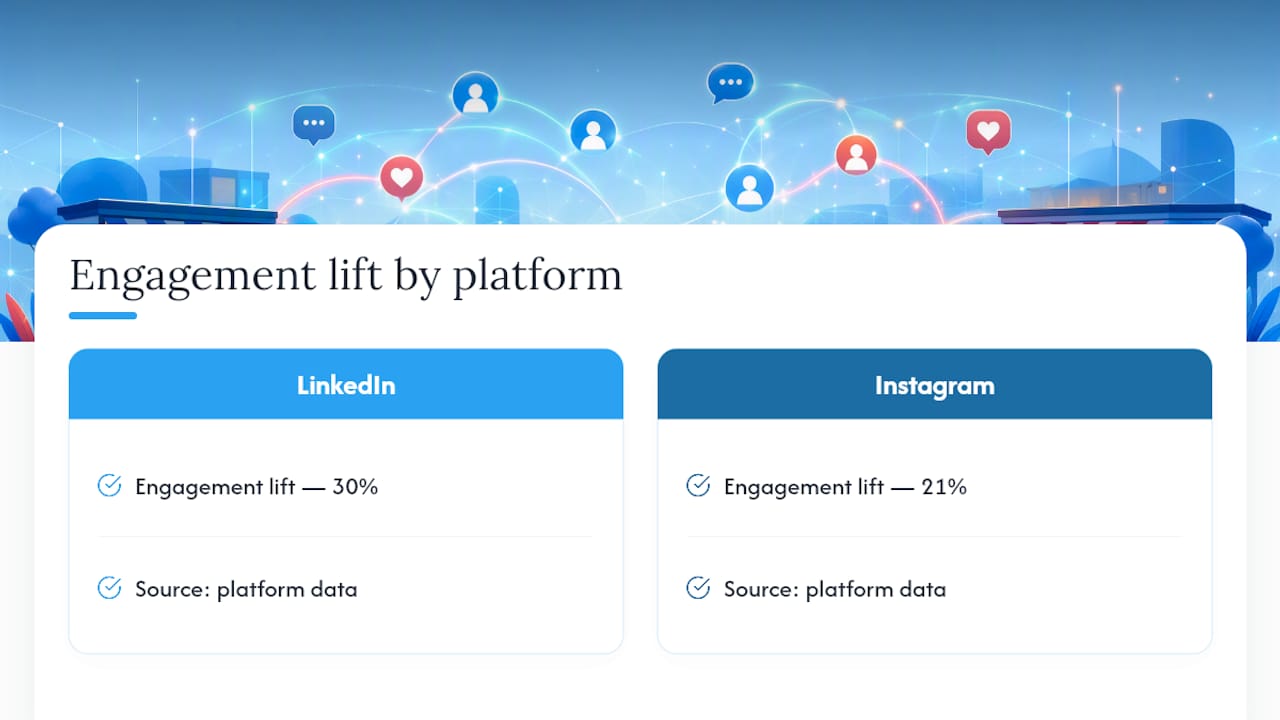
Platforms reward this behaviour too. Buffer’s analysis of millions of posts found that replying correlates with materially higher engagement and longer visibility for the post itself, with a separate breakdown reporting lifts of LinkedIn +30%, Instagram +21%, Facebook +9%, and Twitter +8% when creators engaged with their own comment sections.
Four reply types do most of the heavy lifting:
- Thank-you replies: cheap to write, high in warmth, and they reward repeat commenters.
- Direct answers: opening hours, stock, pricing, these close the loop fast and reduce phone calls.
- Escalation replies: acknowledge publicly, then move detail to DM or email.
- Evidence-of-action replies: “Fixed, refunded, done” carries more weight than any apology on its own.
When should you reply publicly, and when should you move private?
Timing and judgement matter as much as tone. A reply that lands too late looks like an afterthought; one that airs private details in public can cause a second problem on top of the first.
Recommended SLAs:
- First public acknowledgement within 2 to 4 hours during business hours.
- Full answer or resolution within 24 hours.
- Formal follow-up or closure confirmation within 48 to 72 hours for anything escalated.
Reply publicly when:
- The question is general (hours, pricing, availability).
- Praise or simple thanks needs acknowledging.
- A factual correction benefits everyone reading the thread.
Move private when:
- Personal data, order numbers, or addresses are involved.
- A refund or compensation figure needs discussing.
- The issue is complex enough that public back-and-forth would drag on.
Four templates cover most scenarios:
- Thank-you: “Thanks so much for this, it genuinely makes our day. Hope to see you again soon!”
- Quick factual answer: “We’re open until 6pm today, and yes, we’ve got that back in stock now.”
- Complaint escalation: “Sorry to hear this, that’s not the experience we want you to have. Could you drop us a DM with your order number so we can sort it properly?”
- Repair and follow-up: “Update: we’ve refunded this in full and adjusted our process so it doesn’t happen again. Thanks for your patience.”
Pro Tip: Keep a shared document of approved phrasing so tone stays consistent even when three different people are answering comments across a week.
For a small team, the owner or a single trained staff member should own replies during the first few months. Once volume grows, a named community manager with a documented fallback (a second trained staff member who covers holidays and sick days) keeps response times steady.
How should you handle negative comments and early crisis signs?
Not every negative comment is a crisis, but every one deserves triage before you react.
- Assess volume: one complaint is feedback; a dozen in an hour is a pattern worth investigating.
- Check legitimacy: is this a genuine customer issue or a competitor, troll, or bot account?
- Judge escalation risk: could this spread beyond your page (screenshots, local groups, press)?
- Watch amplification: is the comment getting shares or replies of its own?
The de-escalation formula that works consistently: acknowledge, apologise where warranted, act, follow up. Skipping the “act” step, apologising without changing anything, is the fastest way to lose credibility with people watching.
- Take detail private once a refund, compensation, or personal information enters the conversation.
- Post a public correction when misinformation is spreading, even if the original comment was deleted.
- Keep public statements short, factual, and consistent across every platform you’re active on.
A simple public-statement template: “We’re aware of the issue raised here and are looking into it directly. We’ll share an update once we’ve confirmed the details.” Post it fast, then follow through visibly.
Pro Tip: Never delete a fair complaint just to tidy your feed. An unanswered deletion often does more damage than the original comment ever did.
What workflow and tools actually work for small teams?
A five-step workflow keeps comment management sane without needing a dedicated department: monitor, tag, reply, escalate, close. Monitoring means checking notifications daily, not weekly. Tagging separates simple questions from complaints needing a manager’s eye. Closing means going back to confirm the issue is actually resolved, not just replied to once.
Track four metrics, all measurable from native platform data or a spreadsheet:
- Response time: hours from comment to first reply.
- Resolution rate: percentage of flagged issues actually closed out.
- Sentiment trend: rough read of whether comments are getting warmer or colder over a month.
- Comment-driven leads: enquiries that started as a comment and turned into a booking or sale.
For tools, match the function to your budget. Native platform notifications work fine at low volume. A unified inbox tool helps once you’re managing three or more platforms. A simple CRM or spreadsheet can log recurring questions, which is exactly the kind of intelligence that turns comments into content ideas worth building future posts around. A canned-reply store (even a shared document) speeds up common answers without making them feel robotic.
Automation should draft, never finish, sensitive replies. Save it for FAQs and use humans for anything emotional or specific. If your community includes multiple local dialects or languages, write templates in the phrasing your customers actually use, not textbook translations.
Pro Tip: Read your last fifty comments aloud. If any reply sounds like it came from a call centre script, rewrite it in your own local voice.
What does the evidence actually show about reply behaviour?
The numbers are consistent enough to act on. Nearly 73% of social media users say they’ll switch to a competitor if a brand ignores their comment, and engagement studies show replying correlates with genuinely higher reach, not just goodwill.
- Buffer’s analysis found posts where creators reply see materially higher overall interaction.
- Platform-specific lifts reported by Social Media Today ranged as high as 42% in aggregated samples.
- Academic work on business pages found firm responses directly shape user engagement patterns and perceptions of the brand.
For a local business, that means resource spent on timely replies isn’t a soft investment. It’s closer to retention spend, protecting customers you already have from walking to the shop next door.
Your seven-step checklist for this week
- Set up notifications across every platform you post on so nothing sits unseen for days.
- Write your SLA: 2 to 4 hours for first reply, 24 hours for resolution.
- Draft four reply templates (thank-you, factual answer, escalation, follow-up).
- Assign one owner and one fallback person for reply duty.
- Run a test day: reply to everything within your new SLA and note what breaks.
- Measure response time and resolution rate after seven days.
- Adjust templates and timing based on what actually took longest.
Check that phrasing matches how your local audience actually speaks before rolling templates out widely; a template that reads stiff in translation undoes the trust you’re trying to build.
How are local businesses actually building trust in their comments?
A family-run café that replies to every “is this gluten-free?” comment within the hour tends to build a queue of regulars who never had to phone ahead. A locksmith who posts “sorted, thanks for flagging it” under a complaint about a delayed callout does more for their reputation than five-star reviews alone, because the fix is visible to everyone browsing the page.
Independent gyms often use comments to run informal customer service: someone asks about class times, the reply comes within minutes, and the next commenter sees a business that answers rather than one that just posts. Local repair shops that reply publicly with “bring it in, we’ll take a look free of charge” turn a single sceptical comment into a walk-in customer, and the exchange sits there as proof for the next hesitant person.
None of these examples involve big budgets. They involve consistency and honesty about what happened after a complaint, not just what was promised. A community engagement approach built around this kind of visible follow-through tends to outperform occasional grand gestures, because trust compounds from repetition, not from one impressive reply.

The through-line across every example is the same: the business acted, said so publicly, and let the comment section carry the proof. That’s a far stronger local signal than a polished advert ever manages.
Does consistent engagement actually change local reputation over time?
Single replies help in the moment. Consistency changes how the whole community perceives you. A business that answers every comment for a month starts to feel dependable in a way that occasional bursts of engagement never quite achieve, because familiarity builds through repetition, not intensity.
This connects directly to the ambient familiarity concept covered earlier: the more often someone sees you respond, the less risk they associate with trying your business for the first time. Over several months, that shows up as shorter decision times for new customers and more comments that read like recommendations rather than questions (“just went here after seeing how quick they replied to someone else”).
The inverse is also true and less forgiving. A business that replies diligently for two weeks and then goes quiet for a month doesn’t just lose momentum, it raises questions about whether anyone’s still actually running the page. Local audiences notice absence faster than they notice presence, because the previous responsiveness set an expectation.
Practically, this means treating reply management as an ongoing habit rather than a campaign with a start and end date. A local social media marketing approach that bakes in reply time as a daily task, rather than something squeezed in when there’s spare capacity, is what actually sustains the trust built in the first few weeks. The businesses that keep the habit are the ones whose reputation compounds; the ones that don’t tend to plateau at whatever trust they’d already built and slowly lose ground to more consistent local competitors.
What legal and ethical lines matter when replying publicly?
Public replies carry real obligations, not just tone considerations. Anything resembling a health, safety, or medical claim in a reply (for a food business, a beauty salon, a fitness studio) needs to be accurate; a casual “yes, totally safe for everyone” reply can create liability if it turns out to be wrong for a specific customer.
Personal data is the most common misstep. Never confirm order details, addresses, payment information, or account specifics in a public thread. If a commenter posts their own personal information publicly, the polite and correct response is still to move things to a private message rather than repeating those details back.
Defamation risk runs both directions. Don’t accuse a commenter of lying or being a competitor without solid grounds, and don’t let a public reply imply guilt about a supplier or third party before you’ve confirmed the facts. If a legal dispute is genuinely underway (a formal complaint, a chargeback, a solicitor’s letter) stop replying publicly about specifics and take the entire conversation offline.
Transparency matters too. If a reply comes from an automated system, don’t dress it up as a personal message from the owner. And be consistent: deleting only the negative comments while leaving positive ones up is the kind of pattern that, once spotted, damages trust far more than the original complaint ever would have.
A quick reply that turned a comment into a regular customer
A local bakery once had a customer comment that their delivery arrived squashed. Instead of a generic apology, the reply named the exact fix, a replacement sent that afternoon, and asked what flavour they’d like next time. That customer became a monthly regular, and the thread itself became proof for everyone else scrolling past.
That’s the pattern worth repeating: specific, fast, and followed through in public.
How Greediersocialmedia helps you build on every reply
Replying builds the trust; visibility gets more people into your comments to build trust with in the first place. Greediersocialmedia is the alternative to a slow, DIY growth grind for local businesses: instead of waiting months for organic reach to catch up with your reply effort, you get real followers, likes, and views delivered instantly and without ever handing over a password.
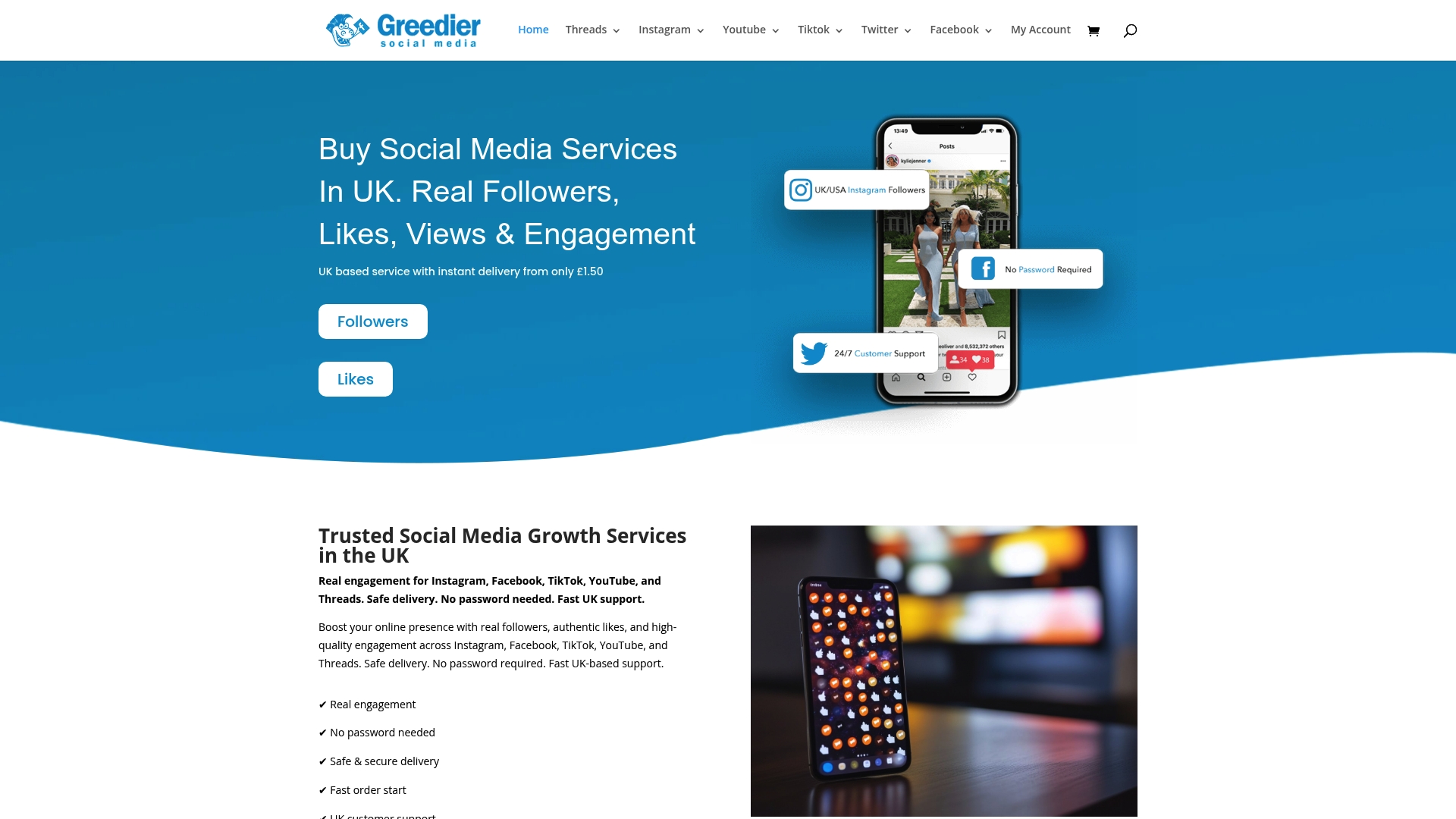
That matters because a reply thread only works as social proof if people actually see it. More genuine engagement around your posts means more eyes on the responsiveness you’re already putting in, and more local customers arriving already inclined to trust you. Greediersocialmedia has supported over a million clients since 2013, helping small businesses turn steady engagement into real local authority. If you’re ready to give your comment sections a bigger audience to prove themselves to, take a look at our social media growth tactics and get started this week.
Sources
- Social Media Comments: 4 types & how to reply | Brandwatch
- Replying to your comments on Facebook boosts engagement | Buffer
- Responding to post comments can have a big impact on overall performance | Social Media Today
- Trust for Civic Life — The local advantage (report)
- Why the comment section matters more than reach | BrandNation
FAQ
Why does replying to comments build local trust?
Public replies show responsiveness, competence, and follow-through, which matters more to local audiences because they may interact with your business again soon.
How quickly should a local business reply to comments?
Aim for a first acknowledgement within 2 to 4 hours and full resolution within 24 hours for most issues.
Should negative comments be deleted?
No. Deleting fair complaints without responding often damages trust more than the original comment did; address it publicly or move detail to a private message instead.
Can automation handle comment replies?
Automation works well for simple FAQs, but complaints and emotional comments need a human response to feel genuine.
Does engagement actually affect how many people see a post?
Yes. Platform data shows replying to comments correlates with higher engagement, with reported lifts as high as 30% on LinkedIn and 21% on Instagram.
How can businesses get more visibility for their engagement efforts?
Services like Greediersocialmedia help local businesses grow their audience with real followers, likes, and views, giving reply efforts a bigger stage to build trust on.