

The most expensive ring isn’t automatically the best choice. The pros and cons of buying engagement rings depend on your budget, how you want to shop and the reassurance you need before you buy. The familiar suggestion to spend at least three months’ salary is a rule of thumb, not a measure of what suits every couple.
It’s understandable to want a ring that feels special without stretching your finances. Budget, convenience, in-person inspections, warranties and certificates can all affect your decision, but each has limits. Knowing what each option can and can’t tell you makes it easier to compare them.
Shopping in a store lets you see and try on rings, while online browsing makes it possible to explore options from home. The sections ahead compare these routes and other buying choices, so you can weigh the trade-offs and decide which approach fits your priorities.
Key Takeaways
- Review the relevant platform’s rules before paying for engagement, and understand that legality and platform compliance are separate considerations.
- Weigh the risk of account action or reduced reach against the short-term appeal of higher engagement numbers.
- Look for patterns in account activity and engagement quality to spot signals that interaction may not be genuine.
- Choose between purchased engagement, paid advertising and organic growth based on whether your priority is visible metrics, targeted promotion or audience development.
Is buying social media engagement legal in the UK?
Buying social media engagement is not enough, by itself, to determine whether a specific arrangement is lawful in the UK. The details matter: what you buy, how it is delivered and how you use the resulting figures. For example, buying Instagram likes for visibility is different from presenting those likes as evidence of genuine customer demand. Consider the whole activity, not just the payment.
Start by identifying the service and its source. Does it supply likes, followers or views? Does it explain how it delivers that engagement? These details help distinguish a straightforward paid service from conduct that could involve deception or unauthorised access. Never share your password to increase a public engagement count. Greedier Social Media provides real engagement, and no password is needed.
Next, consider what you tell other people. A business using engagement figures in a pitch, sponsorship proposal or customer-facing claim should avoid implying that purchased activity proves real interest. A high like count alone, for instance, does not show that viewers read a post, trust a brand or intend to buy. Keep claims about audience response accurate, and distinguish visible metrics from evidence of genuine customer behaviour.
Finally, separate legal questions from platform rules. A service may be available to buy, yet its delivery or use may still conflict with the relevant platform’s terms. Before proceeding, read the rules for the account and feature involved, then consider the service description and how you plan to use the figures. If a transaction involves misleading claims, unauthorised access to someone else’s account or a payment dispute, seek advice specific to those facts. The practical takeaway is to assess the method, the claims and the intended use, rather than assuming every purchase has the same legal status.
Can buying engagement lead to account suspension or reduced reach?
Yes. Purchased engagement can expose an account to platform action, including removal of inauthentic activity, restrictions or suspension. The outcome depends on the platform’s rules and the activity it identifies. For example, a sudden influx of likes from accounts that show little genuine activity may look different from steady interaction by people who regularly engage with your posts.
Reduced reach is a separate concern. If a post receives likes but little meaningful response, the visible count may not reflect real audience interest. That mismatch makes engagement figures less useful for judging which content resonates. An Instagram post with a high like count but few comments, saves or genuine conversations, for instance, doesn’t show whether it reached likely customers.
Account access adds another risk. A service that requests your password creates an avoidable security concern, particularly if the same password protects other accounts. Keep login details private, use the platform’s security settings and review account alerts. If you notice unfamiliar logins or unexpected changes, secure the account promptly and remove access you don’t recognise.
Before buying, assess the delivery method and the pattern you expect to see. Ask whether activity will arrive gradually or in a sudden burst, and whether the service requires account access. Then compare the result with your usual engagement: a sharp change in likes without a corresponding shift in comments or audience activity deserves attention. A larger count isn’t proof of stronger reach or customer interest.
For an Instagram account, weigh the value of a visible metric against potential account and reputation risks. If your priority is genuine conversation, focus on content and interactions that invite replies from relevant people. If you’re considering purchased engagement, understand what the service delivers and how it fits the platform’s rules before proceeding.
How can you tell whether social media engagement is fake?
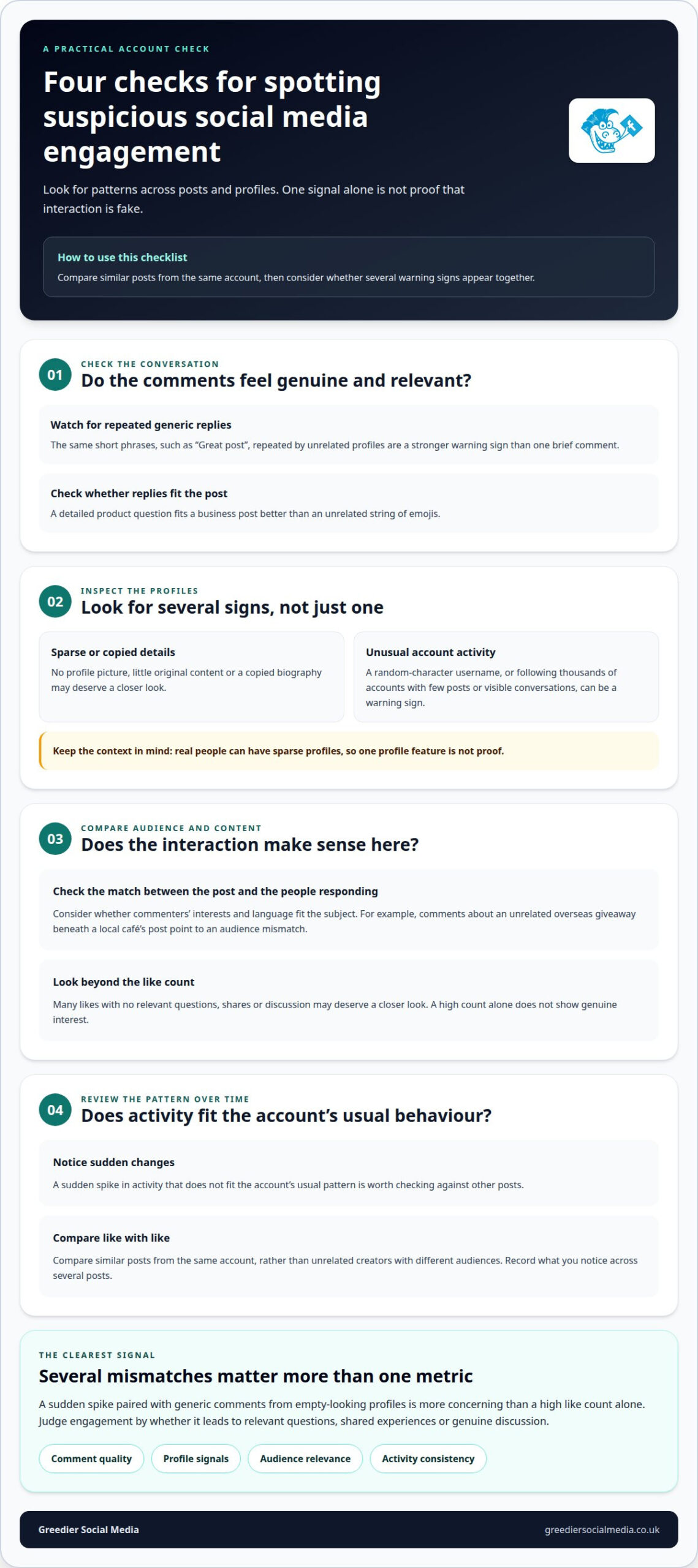
Look for patterns across an account’s posts, rather than judging one like or comment. A single short reply can be genuine; repeated comments such as “Great post” from unrelated profiles are a stronger warning sign. Check whether the interaction relates to the post. A detailed question about a product fits better than an unrelated string of emojis beneath a business announcement.
Review the profiles interacting with the content. An account with no profile picture, little original content and a username made of random characters may be suspicious. So may a profile that follows thousands of accounts but has few posts or visible conversations. These signals are more useful together than alone. Real people can have sparse profiles, so don’t treat one feature as proof.
Compare the engagement with the content and audience. A local café receiving comments about an unrelated overseas giveaway may have an audience mismatch. A post with many likes but no relevant questions, shares or discussion also deserves a closer look. Compare similar posts from the same account, not unrelated creators with different audiences.
- Read the comments: repeated generic phrases can signal low-quality interaction.
- Inspect profiles: look for copied biographies, no posts or irrelevant profile activity.
- Check relevance: compare commenters’ interests and language with the post’s subject.
- Review consistency: look for sudden changes in activity that don’t fit the account’s usual pattern.
Use these checks together. A sudden spike on an Instagram post, paired with generic comments from empty-looking profiles, is more concerning than a high like count alone. Record what you notice across several posts, then compare the patterns. Don’t assume every quiet commenter is fake, or that a polished profile proves genuine interest.
Finally, judge engagement by its usefulness. If a post attracts people who ask relevant questions, share their experience or explore the business, those actions offer more context than a public count. Activity that looks inauthentic often adds numbers without meaningful interaction. The quality and relevance of responses matter more than appearance alone.
How does buying engagement compare with paid ads and organic growth
These approaches serve different purposes. Buying engagement can raise visible numbers, such as likes or followers, but a higher count doesn’t prove customer interest. Paid advertising promotes content to an audience selected through the platform’s advertising tools. Organic growth builds through useful posts, consistent publishing and interactions with people who choose to follow. A local bakery, for example, might share a new-menu post to invite genuine questions and visits.
Paid ads offer a campaign-based way to promote a specific message. A bakery could advertise a new menu to people in its area, then assess responses such as clicks or enquiries. Results depend on the advert, audience and campaign settings. Advertising doesn’t automatically create lasting interest; the content and offer still need to matter to the people who see them.
Organic growth takes ongoing work. A small shop might share product demonstrations, answer comments and post customer updates. These actions can help attract people interested in its products, but building an audience takes consistent effort. Unlike a purchased engagement count, replies and questions can also reveal what followers want to know, giving the business useful direction for future content.
Compare the options by the outcome you need. If the goal is to promote a time-sensitive event, paid advertising offers a direct promotional route. If you want to develop customer relationships, organic content and conversation are more relevant. If you’re considering buying engagement, weigh the visible metric against the limited evidence it provides about genuine interest. Keep your objective clear, then assess outcomes such as relevant enquiries, meaningful comments or visits, rather than judging success by one public number.
Choose the route that fits your aim and capacity. For a clearer view of engagement options, explore the available approach before deciding what suits your social media goals.
People planning a surprise proposal should find out whether their partner is comfortable with second-hand jewellery. Diamond engagement rings are often associated with the commitment and union of engagement.
Greedier Social Media
Greedier Social Media offers engagement options for businesses weighing whether to buy social media metrics. Instagram Followers and Instagram Likes can support goals centred on those visible figures, while Auto Instagram Followers and Auto Instagram Likes provide ongoing engagement options. These services don’t replace organic content, paid advertising or genuine customer interaction. Use the distinctions in this guide to decide whether purchased engagement fits your priorities, and consider what you want the numbers to achieve before choosing an option.
If your aim is to add Instagram followers or likes, explore the relevant service and weigh it against your wider social media goals. For more information about the available options, contact Greedier Social Media.
Choose the next step that fits your goals
Before making a decision, define what you want your social presence to do next. A stronger profile impression, wider awareness and meaningful customer conversations are different aims, so they call for different measures of progress. Choose a clear outcome first, then decide which approach supports it without losing sight of trust and relevance.
The pros and cons of buying engagement become clearer when you know what success means for your account. Set a practical benchmark, such as attracting relevant enquiries or building a more active community, and review whether your activity supports it. Weigh the pros and cons of buying engagement against that purpose, not just visible numbers.
If you’re ready to explore an engagement option that fits your social media aims, contact Greedier Social Media today. Take the next step with a clear goal and a considered plan.
Frequently Asked Questions
What does buying engagement mean on social media?
Buying engagement means paying for social media metrics, such as likes or followers, rather than earning every interaction through content alone. For example, a creator might purchase likes for a particular post or followers for an account. The precise service varies: check whether it concerns a post, a profile or another metric, and consider how that figure relates to your wider business objective.
What are the pros of buying social media engagement?
The main appeal is a quicker change to visible profile or post metrics. For a new creator preparing a launch, a larger follower count may make a profile look more established at first glance. It can also offer a straightforward way to target a specific metric. These are presentation benefits, though, and don’t establish whether people will watch, enquire or become customers.
What are the risks and downsides of buying engagement?
Purchased metrics can make performance reporting harder to interpret. If a campaign gains likes but no relevant enquiries, it may be unclear whether the content or audience needs work. A brand planning its next launch could then base decisions on a misleading picture of engagement. Consider accurate analytics, audience trust and long-term customer relationships alongside any short-term change in visible numbers.