

A popular-looking Instagram feed comes from a steady rhythm, not a burst of posts. If you’re learning how to look popular on Instagram, aim to post daily and leave at least six hours between photos. Avoid sharing three images in a row, as this can make followers more likely to leave.
A consistent presence makes your profile feel active, while relevant posts give people a reason to stop, follow and join the conversation. But posting alone won’t do all the work. Your profile, hashtags and interactions also shape the impression visitors get.
This guide explains how to create a recognisable feed, choose relevant hashtags and write a profile that gives people a clear reason to follow. You’ll also learn how to cross-promote posts and engage with followers in a genuine way. Start with a manageable schedule, then build habits you can maintain.
Key Takeaways
- Build a recognisable feed with a consistent visual style and a posting rhythm you can maintain.
- Choose five to 10 relevant hashtags to help the right people discover your posts.
- Make your profile description clear and useful so visitors quickly understand what you share.
- Cross-promote selected Instagram posts on other social networks to introduce your profile to new audiences.
- Keep conversations active by replying to comments, answering questions and engaging thoughtfully with others’ posts.
1. Posting consistently without overwhelming followers
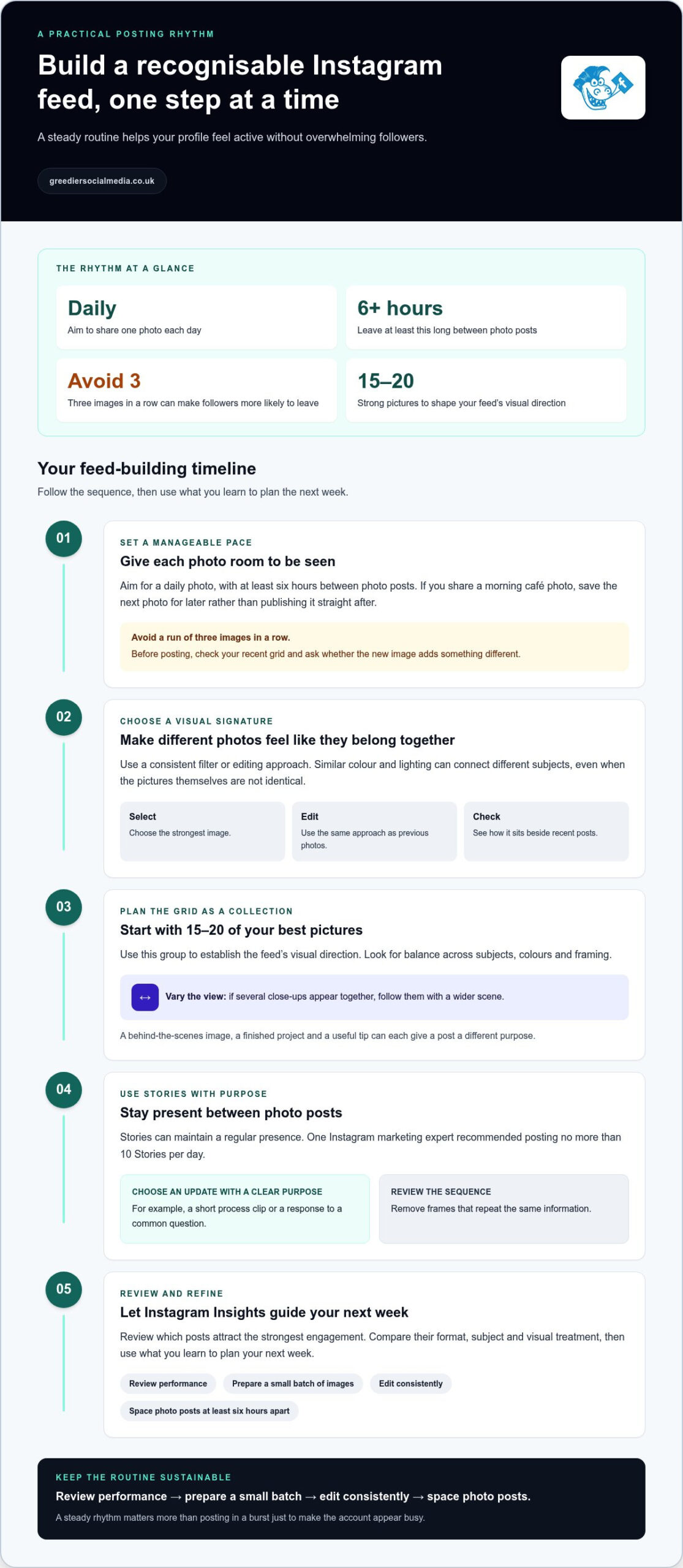
A dependable posting rhythm makes your profile feel active without flooding followers’ feeds with content. Aim to share a photo daily, leaving at least six hours between photo posts. This gives each image room to be seen. For example, if you post a morning café photo, save your next photo for later rather than publishing it straight after.
Spacing matters because a run of three images in a row can make followers more likely to leave. Before publishing, check your recent grid and consider whether another post adds something new. A behind-the-scenes image, a finished project and a useful tip can each serve a different purpose. Avoid posting all three together just to make your account appear busy.
Consistency also comes from the way your photos look. Choose a filter or editing approach and use it across your Instagram images. If you share bright food photography, for example, keep the colour and lighting treatment similar from one meal to the next. A steady visual style helps visitors recognise your posts in the feed and makes your profile grid feel considered.
Set a simple editing routine before you post. Select the strongest image, edit it using the same approach as your previous photos, then check how it looks beside your latest posts. Keep the subject clear and avoid changing the style for every upload. Your pictures don’t need to be identical: a repeating colour palette or similar lighting can connect different subjects, such as a product close-up and a workshop scene.
Plan the feed as a collection rather than judging each image alone. Start by selecting 15-20 of your best pictures to establish its visual direction. Look for a balance of subjects, colours and framing. If several close-ups appear together, follow them with a wider scene. This gives the grid variety whilst keeping its overall appearance consistent.
Stories can maintain a regular presence between photo posts, but avoid overwhelming followers with a long sequence. One Instagram marketing expert recommended posting no more than 10 Stories per day. Choose updates with a clear purpose, such as a short process clip or a response to a common question. Review the sequence before sharing, and remove frames that repeat the same information.
Finally, use Instagram Insights to review which posts attract the strongest engagement. Compare their format, subject and visual treatment, then use what you learn to plan your next week. Keep the routine simple: review performance, prepare a small batch of images, edit them consistently and space photo posts at least six hours apart. Daily posting then becomes easier to sustain.
2. Using relevant and trending hashtags
Hashtags help describe a post and make it easier for people interested in that subject to find. Choose five to 10 relevant hashtags for each Instagram post. For a photograph of a flat white, combine the subject, setting and community, such as #CoffeePhotography, #FlatWhite and a tag used by local café fans. Each should accurately match the image and the audience you want to reach.
Relevance matters more than adding a long string of popular tags. A broad hashtag may attract attention from people with little interest in your content. Instead, choose terms that describe the post, your niche or its setting. For a coastal photograph, a focused set could include a beach photography tag, a nature community tag and a term describing the image’s subject.
Before adding a hashtag, search for it on Instagram and inspect the posts shown under that term. Check whether they share your subject, style or audience. If a tag mainly shows unrelated posts, leave it out. For example, a home baker should favour cake-decorating or baking-community tags over a trending tag about an unrelated event. This keeps each hashtag relevant to the image.
Community hashtags can connect your post with people who share an interest. A running club might use its established group tag, while a maker could create one for a particular photo style. Keep a custom tag short and easy to spell, then invite followers to use it when sharing similar images. Check that the wording is clear and distinct before adding it to your posts.
Trends can be useful when they genuinely fit your content. Look at current conversations in your niche, then use a trending hashtag only if your post contributes meaningfully. A popular tag isn’t a shortcut to the right audience. If the trend doesn’t match the image, it can make the caption feel disconnected and distract from the post itself.
Instagram removed the option to follow hashtags from the app at the end of 2024. Treat hashtags as descriptive discovery cues, not as a way to build a following around a tag. Review your choices as your content changes. Keep a small working list for recurring themes, such as products, locations or tutorials, and select the best-fitting five to 10 for each post.
Finally, assess whether your hashtags attract the kind of attention you want. Compare posts with different relevant combinations, noting the subject and audience each tag is meant to reach. If a community tag brings people who comment on your work, keep it in rotation. Remove tags that don’t fit the post, even if they seem popular.
3. Writing an engaging Instagram profile description
Your profile description should tell visitors what you share and why it matters. Use a clear phrase, such as “Ceramic artist sharing studio process and finished pieces.” Add a simple next step, such as inviting visitors to browse your latest work. Keep the wording direct and make sure it reflects the photos and Reels on your profile. A focused bio helps people decide quickly whether your account matches their interests.
Understanding how to look popular on Instagram starts with making your account easy to understand and explore. Instagram recommends posts and Reels using signals such as a viewer’s activity, previous interactions with an account and information about the content. A clear profile helps visitors recognise what you offer, while relevant posts give interested people a reason to engage.
Use Instagram Insights to review which posts receive the strongest engagement. Compare their subjects, formats and captions, then feature successful themes in your profile description. For example, if practical gardening Reels attract saves and comments, describe your account as sharing hands-on gardening advice. Review similar accounts’ public posts and audience responses for topic ideas, but develop your own angle instead of copying their captions or format.
There isn’t one good engagement rate for every account size. One comparison puts Instagram’s engagement rate at 0.70% among social networks, but that figure isn’t a benchmark by follower count. Assess your likes, comments, saves and shares against your account’s usual results. Compare similar content and audience sizes where possible, then look for meaningful changes over time.
To encourage more genuine likes, comments, saves and shares, make each post useful or easy to respond to. Ask a specific question in a caption, such as “Which plant would you put beside a north-facing window?” Share a checklist people can save, or offer a clear tip worth sending to a friend. Reply thoughtfully when people contribute, so the conversation continues beyond the first comment.
Grow your audience without fake engagement by publishing useful content for a defined audience, using relevant hashtags and joining conversations in your niche. Visit accounts whose work naturally overlaps with yours, leave a considered comment and answer questions on your own posts. Instagram Stories can feature polls, question prompts or a brief look at your process, giving followers a simple way to take part.
If you’re considering how to look popular on Instagram, focus on genuine audience signals rather than numbers alone. Buying followers or joining engagement pods can distort your metrics, since inflated counts may not represent people who care about your content. A high follower count paired with few relevant comments can give visitors a confusing impression. Use Insights to see which content reaches the people you want, then refine your profile and posts accordingly.
4. Promoting Instagram photos on other social networks
Cross-promotion introduces your Instagram profile to people who already follow you elsewhere. Share selected images on Facebook, Threads or another suitable social network, then make your Instagram account easy to find. Add a short invitation explaining what followers will see there, such as new product photographs or behind-the-scenes studio updates. Tailor the caption to each platform instead of copying it word for word.
Choose images that suit the audience on each platform. A finished cake photograph might work on Facebook, while a series showing its decoration process could work better as Instagram Stories. A post shared on Cosmopolitan’s Instagram account brought its writer seven followers. This example shows how exposure to an established audience can help people discover an account, though results depend on the post and audience.
Improve image quality before sharing. Use natural light near a window, wipe your smartphone camera lens and check that the main subject is in focus. For a handmade product, photograph one clear detail and one wider view. A dedicated camera can offer more control over focus and exposure, but a modern phone can also produce useful images when the scene is bright and uncluttered.
Keep editing consistent across images. Adobe Lightroom can help you adjust brightness, colour and contrast, while Canva can help you prepare a clean graphic around a photograph. Make small edits, then compare the finished image with the original. If editing changes the colour of a product, reduce the adjustment so the image remains an accurate representation.
Feed-planning apps can help you preview how images look beside one another before publishing. Arrange a draft sequence with varied subjects, such as a product close-up, a customer setting and a workshop detail. Check that repeated colours or compositions don’t make the grid feel monotonous. Use a third-party tool for planning and editing, then review the final image and caption in Instagram before posting.
For UK giveaways and paid promotions, make the commercial relationship and entry conditions clear to your audience. Put the disclosure somewhere people will notice, such as in the post or near the start of its caption, and use Instagram’s paid partnership label when relevant. For example, state that a product was gifted and explain the giveaway’s entry steps plainly. Clear presentation helps people understand why the post exists and what participation involves.
5. Interacting with followers
Conversation makes an Instagram account feel active and welcoming. Set aside time after each post to read comments, like thoughtful responses and answer questions. If someone asks where you found a particular picture, give a useful detail rather than a generic thank you. Specific replies show that a real person is paying attention and give others a reason to join in.
Use captions to invite comments that are easy to answer. Ask one focused question, such as “Which colour would you choose for this kitchen?” A clear prompt gives followers a starting point and helps you understand their preferences. Avoid asking several unrelated questions at once, as this can make it harder for people to decide what to say.
Respond to comments with more than a single emoji when a proper answer would help. For a question about a recipe, share the ingredient or cooking step being discussed. If a comment raises a broader topic, answer briefly and invite the person to explain their view. Keep replies relevant to the original post, and avoid sharing sensitive personal details in public comments.
Interaction should extend beyond your own profile. Find accounts that genuinely connect with your interests, then leave considered comments on their recent posts. For example, a florist could respond to a photograph of a seasonal arrangement by naming a flower combination they liked. Avoid repetitive comments or follow-for-follow messages, as they don’t create meaningful conversation.
Instagram Stories offer simple ways to hear from followers between feed posts. Use a poll to ask which design they prefer, or add a question prompt about a topic your audience cares about. Instagram Stories disappear from view after 24 hours, so use that format for timely questions, quick updates or a short follow-up to a recent picture. Share the responses that add value, while protecting private details.
Broadcast channels can support ongoing updates for people who choose to follow them. Instagram reports that creators and their fans exchange over 1.5 billion messages on broadcast channels every month. Use a channel to share relevant announcements or ask for feedback, rather than repeating every feed post. Make each update useful, then pay attention to the replies and reactions it receives.
Review your interactions regularly. Note which questions prompt detailed replies, which Stories polls receive participation and which comments lead to useful discussions. Use those patterns to shape future posts, not to force a conversation that doesn’t suit your audience. If you want to build your profile’s visible audience alongside genuine conversations, explore ways to grow your Instagram audience.
Greedier Social Media: Instagram Followers
Greedier Social Media offers Instagram Followers for people who want to strengthen the visible audience around an established profile. Consider this option alongside the practical steps above, such as regular posting, clear profile information and genuine interaction. A larger follower count can affect first impressions, but relevant content and real conversations still shape how visitors understand your account.
Greedier Social Media also offers Instagram Likes, Auto Instagram Followers and Auto Instagram Likes. Choose the option that best matches your goal, whether you want to build visible audience numbers or add likes to posts. Keep your content and community engagement central to your wider Instagram approach.
For more information, visit greediersocialmedia.co.uk.
Make your next Instagram move with purpose
If you’re working out how to look popular on Instagram, focus next on the impression your profile leaves after someone discovers it. Choose one clear goal for your next post, such as starting a useful conversation or encouraging people to explore your work. Then review the responses and use what you learn to shape your next step.
For another way to build visible social proof, Greedier Social Media offers Instagram Followers, Instagram Likes and Auto Instagram Followers. These options can complement your own content and audience interaction rather than replace them. Consider which offering best matches your current Instagram goal.
Contact Greedier Social Media to explore the available Instagram options. Keep refining your approach, stay consistent and give your audience a reason to come back.
Frequently Asked Questions
What profile changes help make an Instagram account look polished and popular?
Use a clear profile photo, a recognisable name and a concise description that tells visitors what they’ll find. For example, a home baker could mention celebration cakes and custom designs. Keep your profile image and bio aligned with your recent content. Pin a few representative posts, such as a customer favourite, an introduction and a useful guide, so visitors can explore your account quickly.
How often should you post on Instagram to grow engagement?
Aim for one photo post daily if you can maintain its quality and relevance. Leave at least six hours between photo posts instead of publishing several together. If daily posting stretches your time or lowers the standard of your content, use a schedule you can sustain and review responses in Instagram Insights. Saves, comments and shares can help you judge whether your posting rhythm suits your audience.
What are the best times to post on Instagram in the UK?
There isn’t one best posting time for every UK account. Your audience’s routine matters more than a general recommendation. Check Instagram Insights to see when your followers are active, then test different slots that suit them, such as lunchtime or after work. Compare similar posts and note their reach and engagement. Keep the time zone in mind if your followers live outside the UK.
Which Instagram hashtags and keywords help people discover posts?
Choose five to 10 hashtags that accurately describe the image, niche or setting. For a pottery post, for example, use relevant pottery and local arts terms rather than unrelated trending tags. Add useful search phrases naturally to the caption too, such as “hand-thrown ceramic mugs”. Specific wording helps visitors understand the post and may connect it with searches that match its subject.
How can Instagram Stories, Reels and collaborations increase reach?
Use Stories for quick updates, polls or questions that invite a response. Create Reels to show a process in motion, such as how a florist builds a seasonal bouquet. A collaboration post can feature a relevant creator, customer or business, introducing your content to both audiences. Choose partners whose interests match yours, and agree on a clear shared topic so the post feels useful to both communities.