

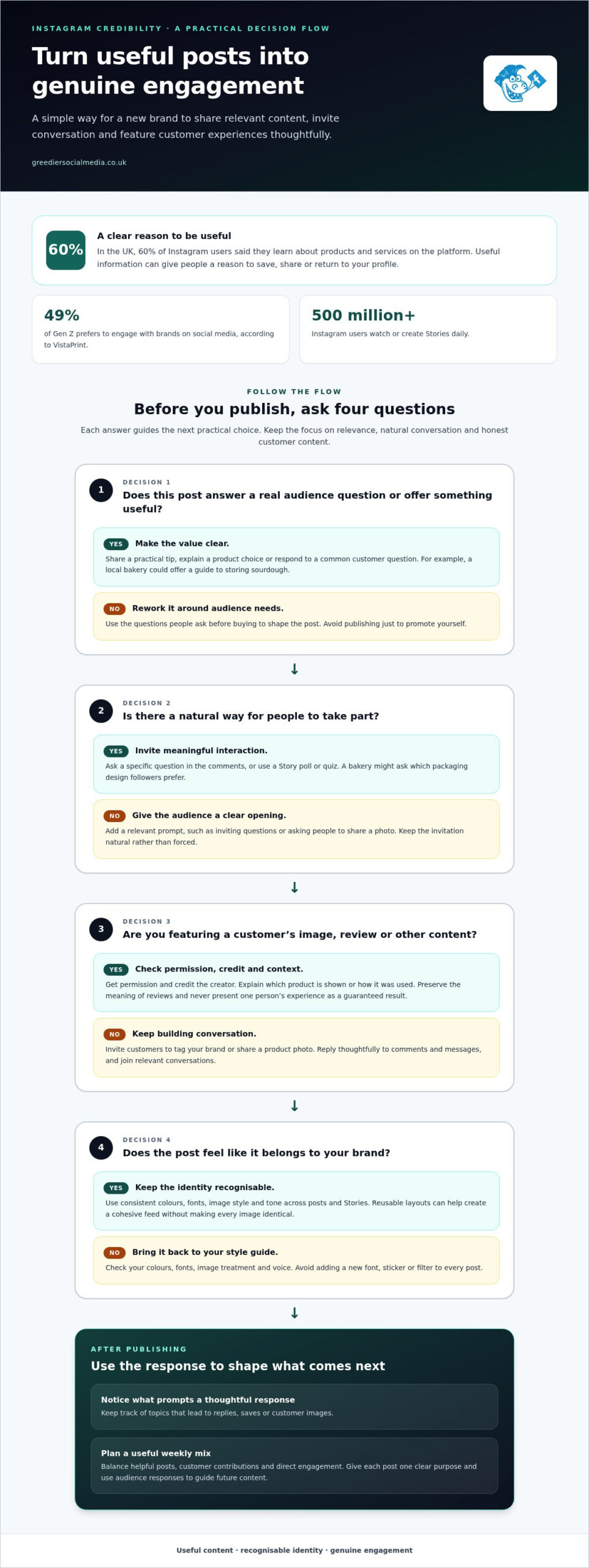
In the UK, 60% of Instagram users said they learn about products and services on the platform. Building Instagram credibility for new brands starts with giving those users a clear reason to trust and follow you: useful posts, a recognisable identity and genuine engagement. A polished profile helps, but consistency and relevance are what make it feel credible.
Starting from scratch can make every post feel like it has to prove your brand belongs. You don’t need to imitate established accounts or promote yourself constantly. Focus on answering real audience questions, keeping your visual style and tone consistent, and responding thoughtfully to comments and messages.
This guide explains how to build trust through audience engagement, user-generated content and informative posts, while creating a consistent Instagram identity. It also covers using Stories and audience feedback, plus common mistakes that can weaken credibility. You’ll find practical ways to make your profile more useful, recognisable and reassuring to potential customers.
Key Takeaways
- Use polls, quizzes and thoughtful replies to turn passive followers into an engaged community.
- Keep your profile image, colours, fonts and tone consistent so people can recognise your brand across Instagram.
- Create useful posts from audience questions, then use Instagram Insights to understand what resonates.
- Build trust by responding clearly, sharing genuine customer content with permission and keeping claims honest.
- Avoid inconsistent visuals, overly promotional posts and engagement tactics that make your brand feel less authentic.
1. Engaging followers and featuring user-generated content
There’s no fixed follower count a new brand needs to look credible on Instagram. A smaller, relevant audience can still signal trust when followers receive useful content and see the brand respond. Instead of chasing a particular total, check whether your profile clearly explains what you offer and your posts encourage meaningful conversation.
To attract genuine followers, make each post useful to the people most likely to care about your brand. VistaPrint reports that 49% of Gen Z prefers to engage with brands on social media. For example, a local bakery could share a practical guide to storing sourdough, then invite followers to ask questions in the comments. Reply with specific answers, join relevant conversations and make each invitation to engage feel natural.
Use Instagram Stories to make that interaction easier. More than 500 million Instagram users watch or create Stories daily. Share a behind-the-scenes view of preparing an order, explain a product choice or show a new process in progress. Add a poll to ask which packaging design followers prefer, or use a quiz to test their knowledge. These simple prompts give people a clear way to take part.
Customer images and other user-generated content can connect your profile with real experiences. Invite customers to tag your brand or share a photo using your product. Get permission and credit the creator before featuring their content. Add context, such as which product is shown or how it was used, rather than reposting an image without explanation. A genuine review can provide useful detail, but preserve its meaning and don’t present one person’s experience as a guaranteed result.
Design tools can help you create cohesive posts without making every image identical. In Canva, for example, make reusable layouts for product tips, customer features and announcements. Set choices for colours, fonts and image style, then use them across posts and Stories. Plan ahead to give your feed a recognisable rhythm. A product demonstration might follow a customer question, then lead into a behind-the-scenes Story.
Use a simple weekly plan to balance useful posts, customer contributions and direct engagement. Before publishing, check that each post has one clear purpose and a specific next step, such as answering a question or inviting someone to share a photo. Afterward, note which topics prompt thoughtful replies, saves or customer images. Use those responses to shape your next posts, keeping content connected to real audience interests rather than guesswork.
2. Defining a consistent brand identity and tone of voice
Choose a recognisable identity before filling your Instagram profile with posts. Write a short style guide covering your purpose, audience, visual choices and tone of voice. For example, a British skincare brand might sound clear and reassuring, using plain language to explain how its products fit into a routine. Apply those choices across captions, Stories, Reels and direct messages so every interaction feels connected.
Keep your profile details consistent across platforms. Where possible, use the same username and profile image on Instagram and your other social accounts. Matching details help people identify your business when they switch platforms or search for your name. Check that your biography, contact details and description reflect the same offer, too. A different logo or unclear account name can make visitors wonder whether they’ve found the right profile.
Set a simple visual system that’s easy to repeat. Choose one or two bold primary colours, then add a few softer shades for backgrounds or accents. Limit posts and Stories to one or two fonts, and use the same logo placement where it suits the design. Record these choices, along with image treatments and messaging, in a style guide. It gives anyone creating content a practical reference instead of relying on memory.
Choose one branded element to repeat across your content. It could be a distinctive colour border, a recurring illustration or a recognisable way of framing product photos. For example, a UK coffee roaster could use the same coloured tasting-note card in each coffee guide. Keep the element noticeable but restrained. If every post adds a new font, sticker and filter, your visual identity becomes harder to recognise.
Curate your feed to make its overall impression clear. Preview upcoming posts together before publishing, then adjust images that clash or repeat the same composition. A nine-image grid can help a product-led brand plan a balanced mix of product shots, useful information and brand details. Use the grid as a planning aid, not a rule: each post should still make sense when someone sees it outside your profile.
Keep your tone as consistent as your visual style. Choose a few voice traits, such as direct, warm and knowledgeable, to guide captions and replies. For example, a specialist retailer can explain a product feature in everyday language instead of switching between technical jargon and exaggerated claims. Review drafts together, remove phrases that don’t sound like the brand, and check that your profile description and posts tell the same story.
3. Using informative posts to provide audience value
In the UK, 60% of Instagram users said they learn about products and services on the platform. Give them information they can use, not just polished product announcements. A homeware brand could explain how to choose curtain measurements, then turn common questions into follow-up posts. Useful detail gives the audience a reason to save, share or return to your profile. It’s a practical foundation for Instagram credibility for new brands.
Build your content strategy around the questions customers ask before buying. A bicycle shop might create a carousel explaining how to check tyre pressure, with each slide covering one clear step. A food business could share ingredient details or a simple serving suggestion. Keep advice specific, accurate and easy to follow. These examples show what your brand knows without turning every post into a sales pitch.
Use storytelling to make useful information feel human. A small ceramics studio, for example, could show how a mug goes from sketch to finished piece, explaining each decision along the way. A short caption can describe what changed during production and why. This gives followers a concrete view of your process and creates a stronger connection than a product image alone.
Let audience feedback guide what you publish next. Look through comments and direct messages for recurring questions, then create a post that answers them clearly. Instagram Insights can help you track audience behaviour and content performance. Compare which posts earn saves, shares, replies or profile visits. If a maintenance guide gets more saves than a broad product announcement, develop another practical guide on a related topic.
Use Reels to demonstrate information that benefits from movement. A florist could show how to trim stems, arrange a small bunch or prepare flowers for a vase. Add readable on-screen text to make the steps clear, and include details in the caption for viewers to revisit. Keep each Reel focused on one idea. A concise demonstration is easier to follow than several unrelated tips in one clip.
Turn those observations into a repeatable strategy. Record each post’s topic, format and audience response, then use the notes to plan future content. If followers ask how a product is made, create a process Reel; if they ask how to use it, publish a step-by-step carousel. Respond to comments with helpful answers instead of copied sales lines. Consistently answering real questions supports Instagram credibility for new brands and keeps content focused on audience needs.
Keep advice grounded in what people need. Use comments and direct messages to spot follow-up questions, then let them inform new posts and future topics.
4. Building brand trust and rapport through Instagram
Instagram credibility works alongside, not instead of, trust built elsewhere. TikTok can introduce a brand through short videos, Facebook can support community updates, and a brand website can explain products in more detail. Keep names, claims and contact details consistent across platforms. When someone moves from an Instagram post to your website, they should recognise the same business and message.
Build trust through clear, consistent actions. State what your business does in your profile, answer direct messages with relevant information, and correct errors openly. If a delivery update changes, for example, post an accurate update rather than leaving customers to guess. A cohesive experience across captions, replies and website details helps followers know what to expect from your brand.
Clearly and prominently label paid partnerships and gifted products. Use plain wording such as “Ad” or “Gifted” where people will notice it, rather than hiding it among hashtags. The UK Advertising Standards Authority banned a beauty blogger’s paid promotional post from appearing again in its existing form because the payment was not clearly disclosed. Clear labelling helps audiences recognise when content involves a commercial relationship.
Instagram verification can provide an identity signal, but a badge doesn’t prove product quality or replace useful information. Meta Verified is a paid subscription, and its UK cost depends on the subscription option and purchase route. Treat verification as one profile detail, not a substitute for accurate claims, responsive service and consistent communication with customers.
Make your profile easy to assess. Explain your offer in the biography, use a recognisable profile image and keep recent posts relevant to your audience. Answer questions in comments with specific details, then move sensitive order issues into direct messages. For example, a café can respond publicly with menu information while handling an individual booking query privately.
Use customer feedback to show how your brand responds, not just what it sells. If a customer raises a concern, acknowledge it respectfully and explain the next step without sharing private details. Feature genuine reviews with permission, preserve their original meaning, and don’t present one customer’s experience as typical. These practices make social proof more transparent and help build rapport over time.
Trust also depends on making it easy for interested followers to take a useful next step. VistaPrint reports that 36% of consumers buy directly through social media, so a clear path from product discovery to purchase can support sales as well as confidence. More than 150 million people had conversations with businesses through Instagram Direct each month. A third of messages to businesses through Instagram Direct began with an Instagram Story, making story replies a practical place to offer relevant details and answer questions. Respond promptly and make sure any product information in a reply matches what customers can find elsewhere.
Instagram launched shoppable posts in March, allowing retailers to add product information and prices and link through to buy. Use these features to clarify what is available, while keeping descriptions accurate and avoiding pressure in replies. Paid promotion can also bring people to a profile, but clicks alone do not establish trust: the average click-through rate for Instagram ads is around 1.02%. Make the destination useful, with consistent claims and clear ways to ask questions. When customers can understand an offer, get a thoughtful response and choose how to proceed, the interaction can strengthen rapport beyond a single post.
5. Instagram branding mistakes
Don’t treat follower count as a complete measure of trust. Instagram had more than 800 million users worldwide, but a large audience alone doesn’t explain what a brand offers. For example, a profile with many followers and unanswered questions can feel less credible than a smaller, informative account. Make the bio, recent posts and contact route work together, so visitors can quickly understand the business and its next step.
Hashtags can help describe a post, but irrelevant strings make captions harder to read. A café sharing a guide to its seasonal menu should choose tags related to its food, local area or customers. Avoid copying the same block onto every post. Review each tag before publishing, remove anything unrelated, and make sure the caption is useful even if nobody taps a hashtag.
Another mistake is losing your brand personality by copying every popular format. A financial advice account that suddenly adopts a jokey dance trend may confuse followers if the humour doesn’t suit its usual voice. Trends can be a creative starting point, not a replacement for your message. Before joining one, ask whether it helps explain your offer, answer a customer question or show how your business works.
Vague claims can also weaken trust. Replace phrases such as “the best in the UK” with specific, supportable details. A bakery could describe its sourdough process, while a clothing brand could explain how a garment fits. Don’t turn one customer comment into a universal promise. If a post contains an error, correct it clearly and update the caption so followers aren’t left with conflicting information.
A feed that changes style from post to post can make a business hard to recognise. Before publishing, compare a new image with recent content for colour, lighting and layout. Check that the logo is legible and text is easy to read on a phone. Avoid a row of identical promotional graphics, too. Mix announcements with useful explanations, product details and real examples of your work.
Finally, don’t post without a clear action or ignore the response. If a Reel demonstrates a product, tell viewers what useful detail the caption adds. If someone asks a question, answer it directly instead of sending a generic sales reply. Track which posts prompt meaningful comments or saves, then adjust the next topic. For a practical next step, explore ways to grow your Instagram audience alongside useful, consistent content.
Greedier Social Media: Instagram Followers
Greedier Social Media offers Instagram Followers for brands looking to support their profile’s audience growth. It also offers Instagram Likes, Auto Instagram Followers and Auto Instagram Likes. These options may suit a brand with a clear profile and useful content that wants to build social proof alongside its ongoing audience engagement.
Use growth services as a complement to the trust-building steps above, not as a replacement for helpful posts, genuine conversations or honest customer feedback. A relevant profile and consistent content give visitors context for the activity they see. Consider Instagram Followers to support audience growth, or Instagram Likes to add engagement to posts.
For Instagram growth options, explore Greedier Social Media’s Instagram services.
Make your next step count
Strong Instagram credibility for new brands grows through choices repeated over time. Treat each post as part of the experience people have with your business, from their first profile visit to a later question or purchase. Keep listening as your audience changes, and let its real needs guide what you create next.
When you’re ready to support your profile’s growth, Greedier Social Media offers Instagram Followers, Instagram Likes and Auto Instagram Followers. These services can complement your content work, while useful posts and genuine audience interaction remain central to building trust.
Choose a manageable next step today. Review your profile, plan a helpful post or decide whether an audience-growth service fits your current priorities. A clear, steady approach gives your brand room to build recognition without losing its own voice.
Contact Greedier Social Media today to explore your next step. Keep showing up with purpose, and your brand can build a more credible presence over time.
Frequently Asked Questions
What Instagram profile elements make a new brand look trustworthy?
A clear biography, recognisable profile image and working contact route help visitors assess a brand quickly. State what you offer and who it’s for in your bio. A website name or relevant location detail can add context, while pinned posts can answer common questions, introduce your products or show how customers use them. Check that your account name matches your other official profiles so visitors can identify the right business.
What are the risks of buying Instagram followers for a new brand?
The main risk is a gap between follower numbers and meaningful audience activity. If a profile attracts followers who don’t respond to its content, comments and enquiries may not grow with the count. That imbalance can make the account’s social proof less persuasive to potential customers. Consider what you want the numbers to achieve, and assess them alongside relevant interactions, customer conversations and business outcomes.
How can new brands measure trust and credibility from Instagram analytics?
Look beyond follower growth. Instagram Insights can help you compare content performance and audience behaviour. Check whether profile visits lead to website taps, enquiries or product questions, and whether people save or share useful posts. For example, a product guide that prompts specific questions may signal stronger consideration than a post that attracts views alone. Review results by content type, then use the patterns to refine future posts and calls to action.