

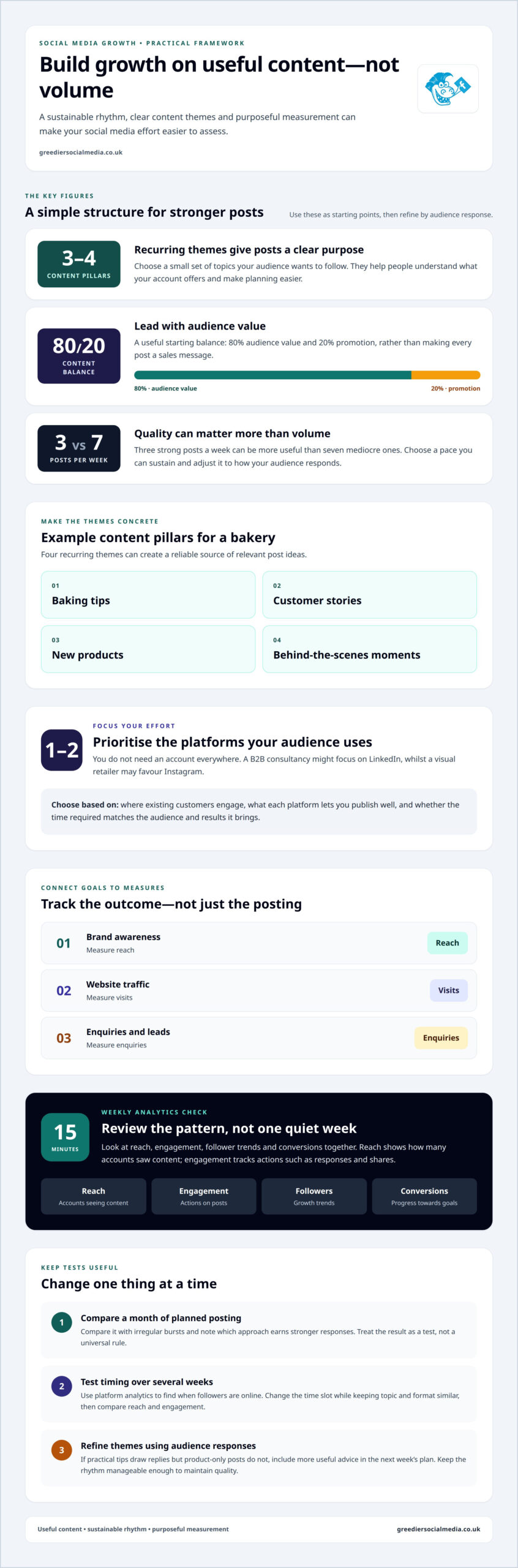
Posting more often isn’t always the fix for stalled social media growth. If you’re asking why your social media isn’t growing, start by looking at content quality, posting frequency and performance trends. Three strong posts a week can be a more useful starting point than seven mediocre ones, but the right pace depends on what you can sustain and how your audience responds.
It’s frustrating to put time into posts and see little change in reach or followers. If you’re asking why your social media is not growing, look beyond posting frequency: your content needs to interest the right audience, and your metrics need to show whether it is reaching and engaging them.
This guide shows how to build content around recurring themes, choose a sustainable posting rhythm and read analytics without overreacting to one quiet week. Use these steps to spot what may be holding growth back and decide what to adjust next.
Key Takeaways
- Use a small set of recurring content themes to give your posts a clear purpose and make them more relevant to your audience.
- Build a publishing rhythm you can maintain, then adjust it based on how people respond rather than posting for the sake of volume.
- Choose platforms and goals that fit your audience, and track whether your activity supports awareness, traffic or enquiries.
- Review reach, engagement, follower trends and conversions together to spot what needs attention before changing your whole approach.
1. Using stories and content pillars to connect with audiences
Start with three or four content pillars: recurring themes your audience wants to follow. A bakery, for example, might share baking tips, customer stories, new products and behind-the-scenes moments. These themes focus your posts, help followers understand what the account offers and give you a reliable source of ideas when planning feels difficult.
Prioritise useful content over volume. Three strong posts per week can serve your audience better than seven mediocre ones. A practical guide, a relevant story or a well-made product demonstration gives people a reason to stop, respond and share. A useful starting balance is 80% audience value and 20% promotion, rather than making every post a sales message.
Improve each post by opening with a clear hook and delivering on it quickly. A short Reel could start with a common customer problem, then show one useful solution. Add captions and a direct prompt that invites meaningful replies. Use Stories to show the people behind a business, or a carousel to break advice into simple steps.
Repurpose the core idea, not the finished post. Turn a customer question into an Instagram Reel, a LinkedIn text post and a set of Instagram Stories. Adapt the length, wording and format to each platform instead of sharing identical content everywhere. A single idea can reach different groups when each version fits how they use that channel.
For organic follower growth, share relevant content consistently, join conversations in your niche and reply to comments. Make posts useful enough to share, and give your account a recognisable point of view. This helps interested people discover you and gives them a reason to follow.
Choose a posting rhythm you can maintain, then use audience responses to refine your content pillars. If practical tips draw replies but product-only posts do not, include more useful advice in next week’s plan. Keep your stories relevant, and make sharing worthwhile for the people you want to reach.
2. Posting consistently without sacrificing quality
A consistent schedule helps followers know when to expect useful content and makes your strategy easier to assess. Compare a month of planned posting with irregular bursts, then note which approach earns stronger responses. Treat the result as a test, not a universal rule.
Choose a frequency you can sustain without rushing. If producing five quality posts takes too much effort, reduce the schedule and protect time for developing ideas, editing and replying. For teams short on creative resources, partnering with an agency such as LYFE Studio for subscription-based design work can help keep visual standards high. A steady flow of useful content is more practical than posting heavily one week and going quiet the next. Save time by drafting captions together or recording several clips in one session.
Publishing time may matter because people need to be active to see and respond to your content. Review your platform analytics to find when your followers are online, then test different time slots against your usual schedule. Compare reach and engagement across similar posts. Don’t assume one popular time suits every account or audience.
Keep timing tests controlled. Publish at a consistent time for several weeks, then change the slot while keeping the topic and format similar. This makes it easier to judge whether timing or content affected responses. Track the effort involved, too: a schedule your team cannot maintain is unlikely to last as marketing priorities change.
For a practical next step, set a weekly calendar with planned formats, draft deadlines and time for replies. If Instagram audience visibility is one of your goals, explore Instagram growth options as part of your wider plan.
3. How Often Should a Business Post on Social Media?
Set a clear purpose before choosing platforms. Your social media strategy might aim to build brand awareness, drive website traffic or generate enquiries. Choose a measure for each goal: track reach for awareness, visits for traffic and enquiries for leads. This keeps you focused on the biggest gaps instead of treating every post as a growth test.
Prioritise one or two platforms where your audience is active. A B2B consultancy might focus on LinkedIn, whilst a visual retailer may favour Instagram. Review where existing customers engage and what each platform lets you publish well. You don’t need an account everywhere. Spreading effort across channels your audience rarely uses can weaken the consistency of your overall plan.
Algorithms rank and recommend posts using signals that help estimate what is relevant to each viewer. These may include past interactions and how people respond to a post. Useful content that earns genuine engagement has a better chance of reaching interested users, although ranking systems differ by platform and can change.
Captions and relevant keywords give both platforms and people context about a post. Hashtags can group content by topic, but they won’t make an unrelated post relevant or guarantee reach. Write a clear caption that naturally names the subject, then use only hashtags that genuinely fit.
Use multiple platforms when each supports a clear goal. Adapt a campaign idea for Instagram and LinkedIn, for example, rather than copying identical posts. Compare the time required with the audience and results each channel brings. A wider presence can extend visibility, but it adds work and may dilute the quality of your posts.
Paid promotion can help when organic posts aren’t reaching enough of the intended audience. Match the platform and campaign to a specific goal, then assess whether paid reach brings relevant visits or enquiries. Working with authentic messengers through an agency like Advocators can also extend your visibility to audiences who genuinely align with your mission. Set a budget that fits your wider marketing plan. Promotion can support distribution, but it cannot replace a clear offer or content that gives people a reason to stop scrolling.
4. Measuring reach, engagement, follower growth and conversions
Review your analytics weekly for 15 minutes, rather than reacting to one disappointing week. Reach shows how many accounts saw content; engagement tracks actions such as likes, shares, saves and comments. Follower growth shows whether your audience is expanding, while conversions connect social activity to outcomes such as website visits or enquiries. If you’re trying to understand why your social media isn’t growing, compare these measures rather than relying on one total.
Review your strongest posts, weakest posts and follower growth trends together. Instagram analytics, for example, can show which posts performed well and when they were published. Compare similar formats and topics. If a Reel reaches more people but gets few comments, try a clearer prompt or a stronger connection to your offer.
Separate visibility from meaningful response. If reach rises but people aren’t joining the conversation, check whether the post gives them a reason to respond. If engagement is steady but follower growth stalls, make sure new viewers can quickly understand what your account shares. When asking why your social media is not growing, track conversions too: likes alone don’t show whether social media supports your business goals.
Buying followers can raise the displayed count without attracting people interested in your business. Engagement rates then become harder to interpret, because the audience number may grow faster than relevant interactions. Engagement pods can also create activity that doesn’t reflect genuine interest. Focus on comments and conversations with your intended audience, not just totals.
Keep a simple weekly record of reach, engagement, follower changes and conversions. Note each post’s format, topic and publishing time alongside the results. Look for patterns across several weeks before changing your strategy: audience behaviour, content performance and platform distribution can all affect reach. This gives you a clearer basis for deciding what to repeat, improve or stop.
If follower numbers are one part of your growth plan, explore Instagram follower options alongside content and performance tracking.
Greedier Social Media
Greedier Social Media offers paid engagement options for businesses looking to support their Instagram presence. Instagram Followers and Instagram Likes can complement a wider growth plan when you’re working to strengthen profile visibility and social proof. Auto Instagram Followers and Auto Instagram Likes are also available for those seeking ongoing engagement options.
Use paid engagement alongside relevant content and regular performance reviews. Check reach, comments and conversions to understand whether your wider social media activity connects with the right audience. Paid engagement does not replace content that gives people a reason to follow or interact.
Explore Greedier Social Media’s Instagram engagement options and choose the service that fits your goals.
Turn your next post into a clear test
If you’re still asking why your social media isn’t growing, make your next step a focused experiment. Choose one account goal and one change to test, such as a different opening line or a clearer invitation to comment. Keep the rest of the post consistent, then record the result. You’ll learn without rebuilding your whole approach after every post.
Use what you learn to make deliberate decisions. A stronger response may point to a format or message worth developing; a weaker one can show where the idea needs work. Keep your business objectives in view, and treat follower numbers as one signal, not the full measure of progress.
Greedier Social Media offers Instagram Followers, Instagram Likes and Auto Instagram Followers. If these options fit your goals, contact Greedier Social Media to discuss your next step.
Build steadily, learn from each test and keep moving forward with purpose.
Frequently Asked Questions
How Often Should a Business Post on Social Media?
Post at a pace your team can maintain while keeping each update relevant. A professional services firm, for example, might share a useful LinkedIn insight on a regular weekday instead of publishing rushed daily updates. Make sure your schedule leaves time to reply to comments and prepare upcoming content. If quality slips or replies go unanswered, reduce the workload and reassess.
Why Is My Social Media Reach Declining?
Reach can fall when audience interests shift, a format attracts less attention or platform distribution changes. Compare posts with similar topics and formats before drawing conclusions. If video views dip while carousel reach stays steady, for example, the issue may be with that format rather than the whole account. Also review posting gaps, content relevance and audience activity.
Why Is Your Social Media Growth Stalling?
Growth may stall if existing followers have little reason to share your posts or recommend your account. Review what a new visitor sees first: does your profile explain who it helps and what it offers? A clear bio, recognisable profile image and useful pinned posts can help interested visitors decide whether to follow. Check that your recent content delivers on that promise.
What are the most common reasons social media accounts stop growing?
Repetitive content, unclear positioning, inconsistent activity and limited interaction can all drain momentum. A café that posts only menu photos, for example, may give people little reason to return or share its updates. Add customer questions, staff knowledge or useful information to broaden the reasons people engage. Check that each post serves a distinct audience need.
How often should I post on Instagram, TikTok, Facebook and LinkedIn to grow?
There’s no single posting schedule for every platform or business. A small retailer might use Instagram for product demonstrations, TikTok for short, informal clips, Facebook for community updates and LinkedIn for business expertise. Start with the channels your audience uses, then adapt your posting pace to each format and your capacity. Review results by platform rather than assuming one schedule works everywhere.
Which metrics should I track to diagnose why my account is not growing?
Track profile visits, follows from those visits, shares, saves, comments and completed actions such as enquiries. These measures can show where interest fades. If posts attract profile visits but few follows, clarify the account’s value in its bio and pinned content. If people follow but rarely interact, check whether new posts match the expectations that brought them in.