
The practical answer to how to make my brand look bigger online is to make every interaction feel recognisably yours. Use the same logo, two to three core colours and two fonts across your profiles, then keep a steady rhythm with two to four posting slots you can sustain for eight weeks. Consistency helps your brand look considered, even before your audience knows its full story.
A bigger online presence does not necessarily mean posting more or being everywhere. A clear visual identity and reliable activity can make your business feel more established without adding noise. Give people a consistent experience, from their first glance at your profile to the way you respond and share content.
This guide sets out practical steps for building that consistency. You’ll learn how to engage the right audience, create a recognisable visual style and choose a posting schedule you can maintain. Together, these habits can help your brand look more cohesive and credible online.
Key Takeaways
- Shape content around your audience’s needs, then build conversations by responding to comments, messages and mentions.
- Use two to three core colours and two fonts consistently so your profiles and posts feel like one recognisable brand.
- Choose two to four posting slots you can sustain, then keep to that rhythm for eight weeks before reviewing it.
- Prioritise the platforms your audience uses, and assess each one by how well it supports your goals and brand credibility.
1. Social media strategy and audience engagement
Start by identifying your three main customer groups. Map each group’s needs, interests and online behaviour before choosing platforms. A café, for example, can share menu updates, opening information and customer stories. Build three content pillars around expertise, proof and personality. Give each pillar three to five themes, then review them monthly and remove topics that no longer help your audience.
Engagement helps turn a profile into an active brand presence. Reply to comments, messages and mentions, and ask questions that invite specific responses. A bakery could ask followers to vote on its next seasonal cake. Respond to useful suggestions and share customer-created content with permission. Track engagement, reach and conversion rates to see which conversations prompt action. Use the results to refine future posts, rather than simply chasing likes.
Make your bio answer three points: what you offer, who you help and what action to take. Add a link hub with three top actions, such as browsing services, reading customer reviews or getting directions. Refresh Instagram highlights monthly so newcomers can find FAQs, customer proof and product details. For paid campaigns, target audiences by demographics, interests and behaviours. Compare image, video and carousel formats to learn which creative earns relevant responses. Test one message variation at a time, then compare click-through and conversion results.
In the UK, make advertising recognisable, clearly disclose paid influencer relationships and avoid misleading consumer claims. Keep evidence for factual claims, and distinguish genuine customer opinions from paid endorsements.
Start affordable improvements with time rather than media spend: refine your bio, answer comments and turn customer questions into post ideas. Use a repeatable hook, three bullet points and a clear call to action. Review performance monthly before deciding whether paid promotion is worth your budget.
2. Consistent brand colours, logo and typography
Build a simple brand kit before designing more posts. Choose two to three core colours and record their exact values for repeat use. Select two fonts, one for headings and one for body text. Apply them to profile graphics, website banners and social templates. A florist, for example, might use the same green background and heading font on Instagram and its booking page. Repetition makes separate touchpoints feel connected.
Set clear logo rules, too. Keep one primary version and a simplified option for small spaces, such as profile pictures. Leave clear space around the mark, and avoid stretching or recolouring it, or placing it over busy imagery. Check how it looks on phone and desktop screens. A logo that remains legible in a small Instagram avatar is more useful than a detailed design that disappears when reduced.
Use a short checklist before publishing each design: are the colours from your palette, are the fonts consistent, and is the logo easy to recognise? Save approved layouts as reusable templates. For example, create one for customer reviews and another for product announcements. This keeps visual decisions manageable while letting each post serve a different purpose.
Common tactics that undermine trust include changing logos and colours between profiles, using copied images, making exaggerated claims and presenting fabricated reviews as genuine. Keep customer proof accurate, use imagery you have permission to share and make claims you can support. Consistent design should not disguise what the business actually offers. Clear details and a recognisable identity work better together than visual polish alone.
Review your main profiles side by side and fix mismatches, such as an old logo on Facebook or a different heading font on Instagram. Use the same brand kit for new content. This simple process gives your brand a more coherent appearance without requiring a redesign for every post.
3. Consistent social posting schedules
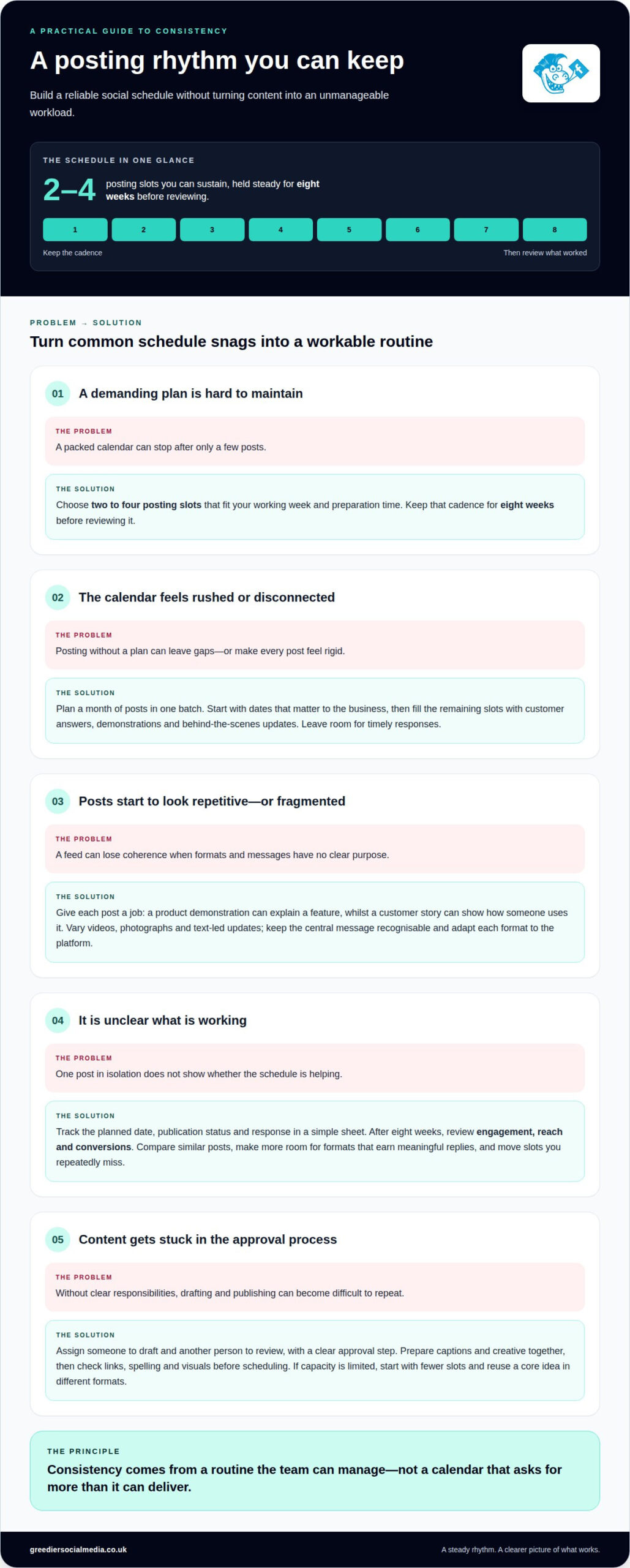
Choose two to four posting slots you can sustain, then keep that cadence for eight weeks. A manageable schedule is more useful than a demanding plan that stops after a few posts. Pick slots that fit your working week and the time needed to prepare thoughtful content. Record each slot in a calendar, alongside its platform and format. This turns an intention into a repeatable task.
Plan a month of posts in one batch. Start with dates that matter to your business, such as a product launch, seasonal offer or local event. Fill the remaining slots with useful content, including answers to customer questions, demonstrations and behind-the-scenes updates. Leave room for timely responses, so the calendar guides activity without making every post feel rigid or disconnected.
Give each scheduled post a clear purpose. A product demonstration, for example, can explain a feature, while a customer story can show how someone uses it. Vary formats across your calendar with short videos, photographs and text-led updates. Keep the central message recognisable, but adapt the execution to each platform’s layout. This creates variety without making your feed look fragmented.
Use a simple tracking sheet to record the planned date, publication status and response. Review engagement, reach and conversions after eight weeks. Compare similar posts rather than judging a single result in isolation. If a format consistently earns meaningful replies, make more room for it. If you repeatedly miss a slot, move it to a time your team can manage.
Build a practical workflow around the calendar. Assign one person to draft, another to review, and set a clear approval step before posts go live. Prepare captions and creative together, then check links, spelling and visuals before scheduling. A small business with limited capacity can start with fewer slots, reuse a core idea in different formats and expand when the process feels manageable. Consistency comes from a routine the team can maintain.
4. Which social media platforms are best for building a credible brand in the UK?
The strongest platform is the one your intended customers use and where your business can contribute consistently. A UK tradesperson might prioritise Facebook for local updates, whilst a visual retailer could use Instagram to present products. A business selling expertise might find LinkedIn useful for sharing professional insights. Choose based on audience behaviour and the content you can sustain, not platform popularity alone.
Instagram suits brands with strong visual material, such as product photographs, demonstrations and behind-the-scenes clips. TikTok can support short, informal videos that show a process or answer a common question. YouTube gives businesses space for longer tutorials and detailed explanations. Match the format to the message: a quick fitting tip may work as a short video, while a detailed guide needs room to explain each step.
Facebook can help UK businesses maintain a page for updates, local information and customer conversations. LinkedIn is more relevant when your audience includes professional contacts or other businesses. Threads can support brief, conversational updates. These roles are starting points, not fixed rules. A local consultancy, for example, could share expertise on LinkedIn and publish customer-focused updates on Facebook.
Test your choice with a focused review. Select the platform where your audience is most active, publish relevant content, and track reach, engagement and conversions. Compare results with your business goal. If Instagram brings useful product enquiries, prioritise it; if LinkedIn prompts meaningful business conversations, invest effort there. Avoid opening profiles everywhere if you can’t keep them current.
Keep the experience credible across each chosen channel. Use a complete profile, accurate business details and a clear route to your website or next action. Check that recent posts reflect the same business customers meet elsewhere. To strengthen your Instagram presence, explore Instagram audience growth options alongside useful content and genuine engagement.
Greedier Social Media: Instagram Followers
Greedier Social Media offers Instagram Followers for brands looking to strengthen the visible audience around an active profile. This can complement consistent visuals, useful posts and genuine interaction, rather than replace them. A clear profile and relevant content give visitors context about your brand, while audience growth can support a fuller first impression.
Consider this option when your Instagram presence is organised and you want to build on it. Greedier Social Media also offers Instagram Likes, Auto Instagram Followers and Auto Instagram Likes. Choose an option that fits your profile goals, while keeping your focus on content people can understand and engage with. For a considered next step, visit greediersocialmedia.co.uk.
Build recognition one deliberate choice at a time
If you’re asking how to make my brand look bigger online, begin with the impression you want people to remember. A stronger presence doesn’t need to imitate a large corporation. It needs to feel considered, credible and recognisable wherever potential customers encounter it.
Choose one improvement to carry forward this week. You might refine your profile, plan your next posts or give your Instagram audience a clearer first impression. Keep the change aligned with your business and assess whether it supports the trust you want to build. Progress comes from choices that fit together, not from trying to appear bigger than you are.
For Instagram audience growth, Greedier Social Media offers options including Instagram Followers, Instagram Likes and Auto Instagram Followers. Explore the service that fits your next step, or contact Greedier Social Media to discuss your goals. Keep building with purpose, and let a consistent presence speak for your brand.
Frequently Asked Questions
How can a small business make its brand look more established online?
A practical answer to how to make my brand look bigger online is to make every customer touchpoint complete and current. Add a clear description of your offer, accurate contact details and an easy way to enquire on your website and social profiles. A freelance accountant, for example, can explain their services and answer a common client question, helping visitors understand the business before they make contact.
How do consistent branding and visual identity improve a brand’s online presence?
For anyone considering how to make my brand look bigger online, consistent visual cues help people recognise a business across different places. Apply your identity beyond social posts, including to email signatures, invoices and presentation documents. A homeware shop, for example, can carry its visual style from an Instagram post to an order confirmation. That continuity makes the customer experience feel connected rather than assembled from unrelated pieces.
How can customer reviews, testimonials and case studies make a brand appear more trustworthy?
Customer evidence gives prospective buyers specific experiences to consider, rather than asking them to rely only on your claims. Ask customers for honest feedback, then display it with enough context to explain the product or service involved. A case study can describe the customer’s initial challenge, the work completed and the outcome they report. Keep quotes accurate and avoid presenting one experience as typical of every customer.