
Niche targeted followers are people who follow you because your subject genuinely matters to them: a local baker’s regulars, a retro gaming channel’s collectors, a physio’s clients. They are worth more than a large, vague count because they comment, share and buy. You get them by defining one specific audience, choosing the platform where it already spends time, posting content that speaks to it, and measuring engagement instead of the headline number.
This guide walks through each step for UK businesses and creators, then shows where a paid boost to your visibility can sit alongside the organic work.
TL;DR
- A niche audience is defined by shared interests and needs, not by follower size, and a smaller, focused following often works harder than a big general one.
- Start with research: demographics, lifestyle and attitudes, then one clear persona you write for.
- Pick the platform by where your audience is. In the UK, Instagram and YouTube skew younger, while Facebook leans slightly older.
- Judge success by comments, shares and saves, and label any paid partnership clearly as an ad.
- Paid followers can add early visibility, but the niche content is what makes the right people stay.
Table of Contents
- What niche targeted followers actually are
- Why a focused audience beats a bigger, vaguer one
- Step 1: Define your niche audience
- Step 2: Choose the platform where your audience already is
- Step 3: Create content that attracts and keeps the right people
- Where a paid boost fits
- Our perspective
- Keep growth honest: labelling paid content
- Measure what matters
- Common mistakes to avoid
- FAQ
- Sources
What niche targeted followers actually are
A niche follower is defined by what they care about, not by how many people share their demographic. Marketing commentators at WARC make the same point about creators: niche influencers are defined by their specialisms rather than follower size, and their communities can give brands grass-roots awareness and highly engaged audiences.
That matters because social platforms reward interaction. Ten thousand people who ignore your posts do less for you than a thousand who reply, save and tag a friend. A niche audience gives the platform a clear signal about who your content is for.
Some examples of niches, from broad to sharp:
- Broad: fitness. Thousands of accounts compete for the same people.
- Narrower: home workouts for new mums.
- Niche: pelvic-floor-safe strength sessions for postnatal mums in the UK.
The sharper the description, the easier it is to know what to post, who to talk to and what a good follower looks like. If you want a deeper walk-through of the targeting side, our guide on how to target a niche on social media covers it step by step.
Why a focused audience beats a bigger, vaguer one
There are three practical reasons to aim for niche followers rather than any followers.
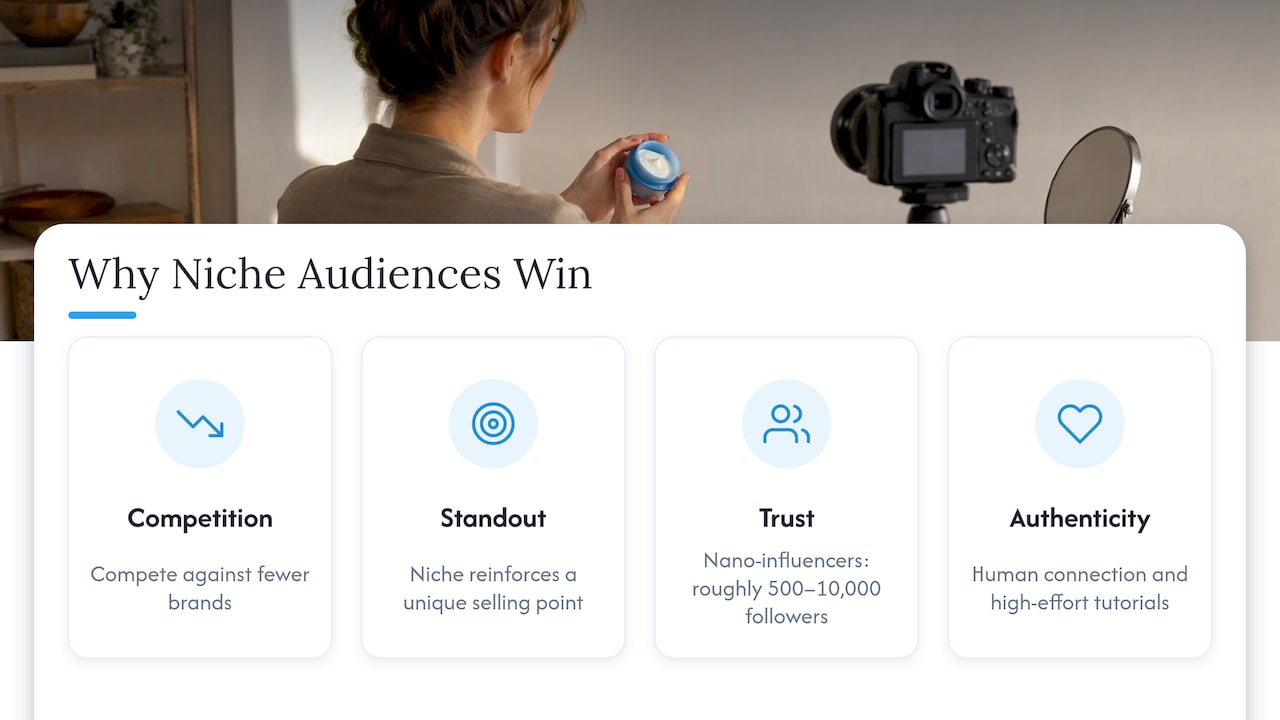
You compete against fewer brands. Sprout Social notes that niche marketing lets businesses compete against fewer brands and make better use of their marketing spend through relevant campaigns that can drive conversions. For a small UK business without a national budget, that is the difference between being heard and being buried.
You stand out in a crowded market. The same source points out that a niche reinforces a unique selling point, so you are not one more generic voice in a sea of similar accounts.
You can build real trust. Shopify’s guidance on small creators explains that nano-influencers, with roughly 500 to 10,000 followers, tend to cultivate personal connections and loyalty in niche communities because their size allows direct interaction. The lesson for your own account is the same: being close to a small group usually beats being distant from a large one.
This also fits what UK audiences say they want. Mintel’s 2026 report on UK content creators finds that influencer fatigue and scepticism toward inauthentic content leave the biggest opportunities in authenticity, human connection and high-effort content such as tutorials.
Step 1: Define your niche audience
Before you post anything, write down who the audience is. The Northern Ireland government’s business advice service recommends defining your audience through demographics, lifestyle and attitudes, using social media polls, surveys, customer interviews and online analytics to understand needs, wants and behaviour, and then building customer personas from what you learn.
A workable process looks like this:
- List what you already know. Who buys from you or watches you now? What do they ask in messages and comments?
- Ask them. A story poll on Instagram, a short survey link in your bio or a five-minute call with three regular customers will tell you more than guessing.
- Look at the numbers. Your platform analytics show age bands, locations and the times your followers are online.
- Add the “why”. Bazaarvoice makes the case that quantitative research shows patterns while qualitative research such as one-to-one interviews explains the reasons behind them. You need both.
- Write one persona. Give them a name, a job, a worry and a goal. Then ask of every post: would this person stop scrolling?
Go beyond age and postcode. Two 35-year-olds in Leeds can have completely different reasons for following a gardening account. One wants cheap tips for a rented balcony, the other wants rare perennials. Your niche is the shared reason, not the shared age.
For more on splitting a broad audience into workable groups, see our guides to types of audience segmentation on social media and audience targeting on social media. If you serve a local area, neighbourhood targeting strategies show how to get specific about place.
Step 2: Choose the platform where your audience already is
The government’s Business Academy advises choosing a platform by where your target audience is and which platforms best support your goals and content strategy, not by what is fashionable.
UK usage data helps. Ofcom’s Online Nation report shows that YouTube and Instagram skew towards 18 to 34-year-olds, while Facebook and Messenger are slightly weighted towards users aged 35 and over.
A rough guide to matching niche and platform:
| Your niche audience | Likely best fit | Why |
|---|---|---|
| Younger shoppers, beauty, fashion, food | Instagram, TikTok | Visual, short-form, discovery-driven |
| Tutorials, product reviews, long-form teaching | YouTube | Searchable and watched in depth |
| Local community, older customers, events | Pages, groups and local sharing | |
| Quick trend-led content for a young audience | TikTok | Fast discovery of new accounts |
Treat this as a starting hypothesis. Your own analytics and polls overrule any general pattern. Pick one main platform, do it well for three months, and only then add a second.
Step 3: Create content that attracts and keeps the right people
Niche followers stay when the content keeps answering the reason they arrived. A few habits make the biggest difference.
Make content that teaches or solves. Tutorials, walk-throughs and before-and-afters are the high-effort formats that Mintel’s report flags as an opportunity. A joiner showing how to hang a door without gaps will attract exactly the DIY crowd he wants.
Use the audience’s own language. Read the comments and messages you already receive. The phrases people use become your captions, hashtags and video hooks.
Reply like a person. Small accounts have an advantage here, as the nano-influencer research shows. Answer comments in the first hour, ask follow-up questions and mention regulars by name.
Keep a narrow content mix. Choose three or four themes tied to your persona and rotate them. If a post would confuse your one imagined person, leave it out.
Show real people. Customer stories, behind-the-scenes clips and honest results build the kind of social proof that persuades a newcomer to follow. Our piece on social proof for influencers goes deeper on this.
Be consistent before being clever. A realistic cadence, such as three posts a week you can keep up for a year, beats a daily burst that fades in a month. For ideas on the early stretch, see how to get your first 1,000 followers as a small business and our collection of social media growth hacks.
A worked example
Imagine a Manchester café that sells vegan cakes. “Food” is too broad. Its persona is Priya, 29, who works nearby, eats plant-based and hates bland vegan desserts. The café posts a weekly “what’s fresh today” reel, a monthly poll asking which flavour to bake next, and replies to every comment. After a few months its followers are mostly local plant-based eaters who actually walk in. A smaller number, but the right ones.

Where a paid boost fits
Organic growth takes time, and a brand-new account with a handful of followers can look unproven to a visitor. That is the gap a paid package is meant to help with: early visibility and a sense of momentum while your niche content does the long-term work.
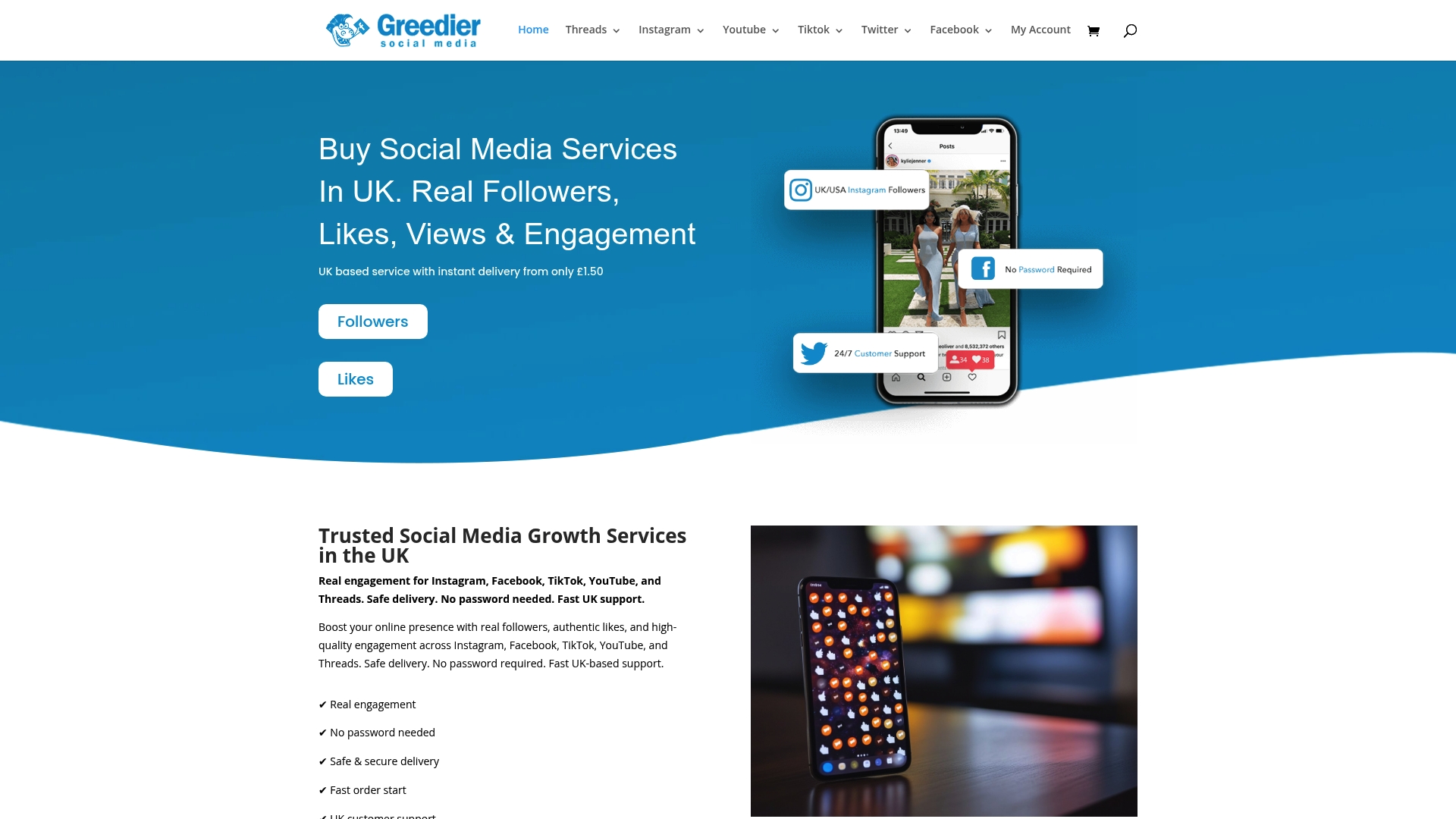
Greedier Social Media offers packages for followers, likes and views across Instagram, Facebook, TikTok and YouTube, with UK-targeted delivery, no password needed and UK-based support. Instagram followers start at £1.99, Instagram likes at £0.99 and TikTok followers at £3.99, with larger packages priced up to £229.99, £189.95 and £399.99 respectively. These are one-off prices, and the full range is on our Instagram, TikTok, Facebook and YouTube pages.
A sensible way to combine the two: choose a smaller package, publish your niche content consistently around it, and watch which posts earn real comments and saves. Views packages also suit a specific post you want more people to see, such as a launch reel. If you are weighing the formats, our explainers on TikTok followers versus video views and YouTube subscribers versus video views help you choose.
Our perspective
We have worked with UK businesses and creators since 2013, and the pattern is consistent: the accounts that grow well are the ones with a clear idea of who they are talking to.
Most small businesses do not lack good content. They lack a first push. A new account with a few dozen followers asks every visitor to take a leap of faith, and that is where visible credibility matters. Our packages are built to give you that starting point, with UK-targeted delivery, no password needed and support from people in the UK who answer quickly.
We would never tell you that a number replaces a strategy. We would tell you that a stronger starting count and a sharply defined niche work better together than either one alone. Define your persona, post content that is useful to that person, and use a package to make sure the right people find an account that already looks alive.
That is how a local café, a one-person studio or a new creator starts to look like a serious player in a crowded feed.
Irwin Lee
Keep growth honest: labelling paid content
If you work with brands or are paid, gifted or given a commission to post, UK rules apply. The Advertising Standards Authority says paid-for content or endorsements must be clearly and prominently disclosed upfront with a label such as “Ad”, and that the disclosure should not be buried in hashtags or a bio. The same guidance covers gifts and affiliate links, and the label must appear before the viewer engages with the content.
If you run a business account, the same principle applies to your own promotional posts. For a practical look at how this works on a different platform, TK Marketing’s guide to labelling promotional posts as ads is a clear reference for UK trades.
The ASA’s own research report stresses that consumers should know when they are engaging with advertising. Clear labelling protects your credibility, and credibility is what a niche audience is built on.
Measure what matters
A follower count is a starting point, not the result. Research for the UK government on content creators found that creators judge success by engagement such as comments, likes and shares, which they see as better predictors of earning potential and impact than follower numbers.
Track a short list each month:
- Engagement rate: comments, saves and shares divided by reach.
- Reply quality: are people asking questions or tagging friends?
- Profile actions: link clicks, website visits, direction requests and messages.
- Follower fit: do the age bands and locations in your analytics match your persona?
- Business outcomes: enquiries, bookings and sales that mention social media.
Keep a simple spreadsheet. If engagement rises while your audience profile moves toward your persona, your niche strategy is working. If it does not, change the content, not the persona, before you change anything else.
Common mistakes to avoid
- Defining the niche too widely. “Small business owners” is not a niche. “Self-employed hairdressers in Scotland” is.
- Copying a big account’s style. Their audience arrived for reasons you do not share.
- Posting to please everyone. Mixed content confuses both people and platforms.
- Ignoring comments. Your best research tool is free and sitting under your posts.
- Chasing numbers alone. A bigger count with no replies hides a weak niche.
FAQ
What does “niche targeted followers” mean?
It means followers who share a specific interest or need that your account serves, rather than a general crowd. They tend to comment, share and buy because the content is relevant to them. A smaller count of these people usually does more for a business than a larger unfocused one.
How many followers do I need to be considered a niche creator?
There is no set number. Niche status comes from your specialism, not your size. Shopify describes nano-influencers as having roughly 500 to 10,000 followers, and many niche creators sit in that range because direct interaction is easier.
Which platform is best for reaching a niche audience in the UK?
It depends on where your audience spends time. Ofcom’s data shows Instagram and YouTube skewing towards 18 to 34-year-olds, with Facebook slightly older. Use polls and your analytics to confirm, then focus on one platform first.
Can I combine bought followers with organic niche growth?
Yes, many small accounts do. A package can give a new profile early visibility, while consistent niche content, replies and clear labelling of any paid partnerships build the loyal audience. Our packages are UK-targeted and need no password, so you can test a small one and review your engagement before going further.
Sources
- The rise of the niche influencer, WARC
- What is Niche Marketing? Benefits and Strategies, Sprout Social
- Nano Influencer: Benefits and Best Practices, Shopify
- UK Social Media: Content Creators Market Report 2026, Mintel
- How to create customer personas, nibusinessinfo.co.uk
- How to reach and engage with your niche audience, Bazaarvoice
- Choosing the right social media platform for your audience, Business Academy
- Online Nation report 2025, Ofcom
- Influencers’ guide to making clear that ads are ads, ASA
- Influencer Ad Disclosure on Social Media, ASA
- Research to understand Social Media Content Creators, GOV.UK
- Google Business Profile Posts for UK Trades, TK Marketing