

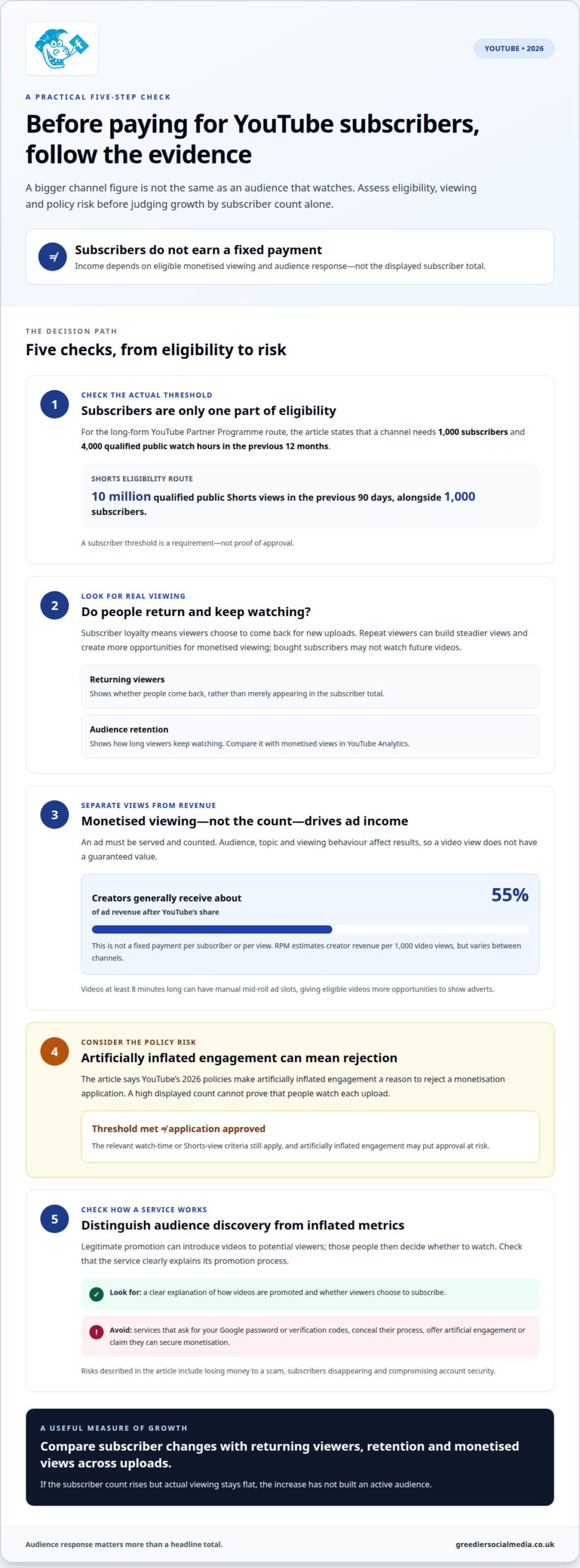
Whether buying YouTube subscribers is worth it in 2026? For most creators, no: a higher subscriber count alone doesn’t generate views or income. YouTube pays no fixed amount per subscriber, and its long-form Partner Programme route requires 1,000 subscribers and 4,000 qualified public watch hours in the previous 12 months.
It’s understandable to want a quicker way to build credibility, especially when your channel is new. But bought subscribers may not watch future uploads, and artificially inflated engagement can lead YouTube to reject a monetisation application. Your subscriber count and the audience you can actually reach are not the same thing.
This guide explains how buying subscribers can affect long-term views, income, monetisation decisions and realistic growth expectations. You’ll see why genuine watch time and audience response matter more than a headline subscriber count, and when growing that count may or may not support your wider channel goals.
Key Takeaways
- Judge subscriber growth by whether viewers return and watch, not by the channel total alone.
- For ad income, focus on monetised views and audience retention; subscribers do not earn a fixed payment.
- Artificially inflated engagement can put a YouTube Partner Programme application at risk, so understand the monetisation implications before acting.
- Set realistic growth expectations by prioritising engaging videos and giving your audience time to develop.
Long-term video views and income potential
A larger subscriber count does not automatically lead to more views or revenue. Over time, audience retention and monetised viewing matter more than the total displayed on your channel.
Engagement and viewer retention
Engagement describes how viewers respond to a video; retention shows how long they keep watching. Both matter because ad income comes from monetised views, not simply from subscribers or total video views. If viewers leave early, they may miss later adverts, and YouTube has less evidence that the video holds attention. Compare retention with monetised views in YouTube Analytics to see whether people stay.
YouTube creators generally receive about 55% of ad revenue after YouTube’s share. That does not mean every view earns the same amount: an ad must be served and counted, and the audience, topic and viewing behaviour affect results. RPM estimates creator revenue per 1,000 video views, but it varies between channels. A video with 1,000 views is therefore not a fixed payment. Videos at least 8 minutes long can have manual mid-roll ad slots, giving eligible videos more opportunities to show adverts.
Subscriber loyalty and repeat viewing
Subscriber loyalty means people choose to return for new uploads, rather than merely appearing in the subscriber total. Those repeat viewers can build steady views across a channel’s videos and increase the chance of monetised viewing. A channel with 10,000 loyal subscribers who regularly watch may earn more than one with 100,000 casual followers who rarely return. Track returning viewers alongside retention, not subscriber growth alone.
YouTube videos can continue receiving views for months or years, so a loyal audience can support a longer earning window. Shorts may help attract subscribers, but the Shorts eligibility route still requires 10 million qualified public Shorts views in the previous 90 days, alongside 1,000 subscribers. For long-form creators, the route requires 4,000 qualified public watch hours in the previous 12 months and 1,000 subscribers. Bought subscribers cannot supply the repeat viewing or watch time those figures represent.
How subscribers can affect revenue indirectly
Subscribers affect revenue indirectly: they may help a channel build repeat viewing, but YouTube pays no fixed amount per subscriber. Buying subscribers is different from legitimate growth services or advertising. Your count can rise without adding actual viewers, while promotion can introduce videos to people who then choose whether to watch.
YouTube creators generally receive 55% of ad revenue after YouTube’s share. This applies to advertising revenue, not a guaranteed return for each upload or subscriber. Payment relates to eligible monetised viewing, not the subscriber total. A viewer who leaves before an advert contributes differently from someone watching monetised content. Separate the audience figure from the viewing that produces ad revenue.
A subscriber can have commercial value when they return to watch. Someone who watches one cooking video, then comes back for another recipe, creates another opportunity for monetised viewing. Repeat viewing also helps creators identify which topics hold attention. Subscribers without genuine interest don’t create the same path. Track returning viewers and monetised views to see whether growth leads to actual viewing.
Advertising isn’t the only potential income source. YouTube Premium revenue share can also contribute, alongside other creator income. Each depends on an audience engaging with the channel. A high subscriber total may create social proof, but it doesn’t show whether viewers trust the creator or return. A channel might gain subscribers after one popular upload, then see few views on its next videos. Future revenue depends on continued interest.
Legitimate growth services and advertising can introduce content to potential viewers; those people still decide whether to watch. Treat promotion as discovery, not proof of future income. Compare subscriber changes with returning viewers and monetised views across uploads. Explore channel growth options with actual viewing, rather than a larger number alone, in mind.
Artificially inflated engagement and rejection
YouTube’s 2026 policies make artificially inflated engagement a reason to reject a monetisation application. Buying subscribers to inflate a channel figure can therefore create a policy risk, especially when the new accounts bring no genuine viewing or interaction. A million displayed subscribers cannot prove that people watch each upload.
Purchased subscribers may raise your visible subscriber count, but that alone does not establish eligibility for the YouTube Partner Programme. Your channel still needs to meet the relevant watch-time or Shorts-view criteria, and YouTube may reject an application for artificially inflated engagement. Treat the subscriber threshold as one requirement, not proof of approval.
Risks include losing money to a scam, receiving subscribers who disappear, or compromising account security. Never share your Google password or verification codes with a growth service. A service asking for account access creates an avoidable security risk. A sudden subscriber increase without matching views can also make your channel’s audience signals look inconsistent.
Check how a growth service works before paying. Look for a clear explanation of how it promotes YouTube videos, whether viewers choose to subscribe, and whether it offers artificial engagement or guaranteed results. Avoid services that ask for account credentials, conceal their process, or claim they can secure monetisation. These checks help distinguish audience discovery from inflated metrics.
For example, compare subscriber growth with views, comments and returning viewers after each upload. If your subscriber count climbs but actual viewing stays flat for months, the increase hasn’t built an active audience. Genuine promotion can put content in front of potential viewers, but their decision to watch is separate from a paid subscriber count. YouTube’s rejection risk matters most when your aim is monetisation, because a short-term rise cannot replace authentic viewing activity. Focus on the quality and source of engagement, not whether a service can add a million names to your channel. That distinction helps protect your application and the audience data used to assess future videos.
Time commitment and growth expectations
Effective organic growth starts with videos that serve a clear audience need. Choose topics viewers care about, make the opening engaging, and deliver what the title promises. Use YouTube Shorts to introduce your subject, then direct interested viewers to related long-form videos. Clear titles and thumbnails help people decide what to watch. These habits attract viewers through your content, rather than relying on subscriber numbers alone.
Expect progress to take time. One creator’s rain-sounds channel received about 30 views on its first video after seven days. That example shows how modest early viewing can be; it isn’t a growth forecast. Allow 30-90 days for momentum to develop, while reviewing which subjects attract clicks and hold attention. Channel growth depends more on content quality and audience retention than on how long the creator has been on YouTube.
Build a repeatable process around each upload. Check whether the title matches the video, whether the opening gets to the point quickly, and where viewers stop watching. Use those signals to adjust your next video. Its length should suit the subject and hold attention; adding minutes without a reason won’t create stronger viewing. Advertising can support discovery, but paid exposure cannot replace a useful video or a reason to return.
More numbers of uploads don’t guarantee a larger audience. Even 100 videos can fail to grow if viewers don’t click or watch. Look for patterns across your uploads instead: topics that earn attention, openings that retain viewers, and formats people revisit. Use those findings to shape the next video, whether it’s a Short or long-form content. If you’re considering a subscriber-count option alongside content-led growth, explore YouTube subscriber options and weigh them against the viewing behaviour you want to build.
Greedier Social Media: Instagram Followers
Greedier Social Media offers Instagram followers for creators who also want to build their presence on Instagram. This is a separate goal from growing YouTube views or qualifying for YouTube monetisation, so choose it when Instagram audience growth supports your wider social presence.
Depending on your Instagram goals, options include Instagram likes, Auto Instagram Followers and Auto Instagram Likes. These services focus on Instagram engagement and follower counts; they don’t replace compelling YouTube videos, genuine watch time or an active YouTube audience. Keep each platform’s purpose clear when deciding where to focus.
If Instagram is part of your growth plans, visit greediersocialmedia.co.uk to explore the available options or contact Greedier Social Media.
Choose a growth plan built around your goal
Before committing to any growth tactic, define what you want to change: a stronger community, more relevant viewers or a clearer route to income. That gives each experiment a purpose and makes it easier to spot when a tactic improves a visible number without advancing the outcome that matters to you.
That is the useful test behind whether buying YouTube subscribers is worth it in 2026: does it support the audience behaviour your channel needs, or only alter its appearance? Set a review point before acting, compare results with your stated aim, and use what you learn to shape your next content decision. Progress is easier to manage when the goal is clear and the measurement matches it.
If you’re ready to discuss your social growth goals, contact Greedier Social Media. Keep your next move focused on the outcome you want, then build from there with confidence.
Frequently Asked Questions
So… Is It Still Worth It?
Usually not, if your main aim is lasting channel growth or income. A larger displayed total cannot show whether new viewers care about your videos or return for another upload. Before spending, decide what success would look like, such as more relevant comments or repeat viewing. If the number rises but those signs don’t change, the purchase hasn’t addressed the goal that matters.
Can YouTube detect and remove fake or purchased subscribers?
YouTube can reject monetisation applications for artificially inflated engagement. Don’t assume a sudden subscriber increase means every account will remain counted. After any growth campaign, compare your subscriber total with actual views and audience activity on new uploads. If the figures move in different directions, reassess the source and quality of the growth.
Can buying subscribers hurt a channel’s reach, engagement or monetisation?
It can distort decision-making and create monetisation risk, particularly if added subscribers don’t watch. For example, a creator might see a higher total but little response to a new upload, making it harder to judge whether the topic or presentation needs work. YouTube also identifies artificially inflated engagement as a reason to reject monetisation applications, so weigh that risk before buying.
Is buying YouTube subscribers worth it for UK creators in 2026?
For UK creators, whether buying YouTube subscribers is worth it in 2026 depends on the intended outcome. If you want genuine viewers, stronger audience feedback or a sustainable income, focus on content that gives people a reason to return. A purchased count alone can’t show that demand exists. Treat any subscriber increase as a surface metric, then assess whether real viewing behaviour supports your channel goals.