

A higher subscriber count doesn’t automatically earn a video more recommendations. Understanding how YouTube’s algorithm sees purchased subscribers starts with this: recommendations reflect viewers’ behaviour, including their watch and search history and the channels they subscribe to. A subscriber figure alone doesn’t show whether viewers will click a video or keep watching.
It’s easy to assume that more subscribers should mean more views. But recommendations are shaped by how people respond to individual videos, not just by the size of a channel’s audience.
This guide explains how recommendations, viewer history and subscriptions relate to purchased subscribers. It also covers why retention and engagement matter, and what a subscriber count can and can’t tell you about a video’s potential reach. You’ll be better equipped to judge how subscriber growth fits alongside the viewing signals YouTube uses to match videos with audiences.
Key Takeaways
- Separate subscriber totals from the signals that show whether a video is a good match for a viewer.
- Understand why inactive subscribers may not be shown every new upload.
- Use retention and engagement to assess how viewers respond after they start watching.
- Consider viewer history and subscriptions when making sense of who may see a recommendation.
Homepage, suggested videos and search recommendations
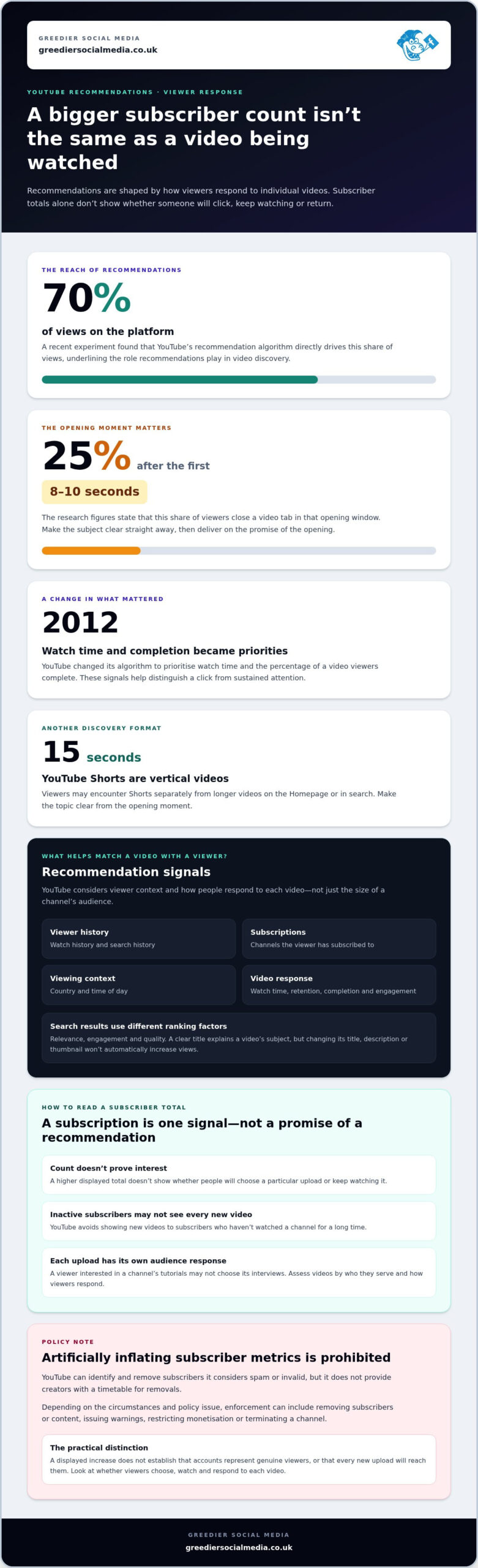
YouTube recommendations help viewers discover videos on the Homepage and alongside content they’re watching. The system considers viewers’ watch and search history, subscribed channels, country and time of day. These signals help match videos with viewers’ interests. A subscription is one part of that picture, not a promise that every upload will be recommended to every subscriber.
Suggested videos reflect viewing context. For example, someone watching a baking tutorial may see another video about the same recipe or technique. Their previous viewing and searches can shape those recommendations. YouTube search works differently: results are ranked using relevance, engagement and quality. A clear title can help explain what a video covers, but changing its title, description or thumbnail won’t automatically increase views. The result depends on how viewers respond.
With purchased subscribers, the key distinction is between a higher subscriber count and genuine viewer interest. A subscription may contribute to the subscribed-channels signal, but the number alone doesn’t tell YouTube whether someone will choose a specific video. A channel with a larger total can still attract different audiences for different uploads. Focus on how each video meets viewers’ interests, rather than treating subscriber growth as a direct route to recommendations.
YouTube Shorts offer another discovery route. Shorts are 15-second vertical videos, and viewers may encounter them separately from longer videos on the Homepage or in search. Make the subject clear from the opening moment. For example, a cooking channel could show the finished dish before demonstrating one preparation step. This gives viewers an immediate sense of the video’s topic.
Safer organic growth comes from publishing useful, relevant videos and making each topic clear through its title and thumbnail. Invite genuine viewers to respond, then use their reactions to guide future content. That builds an audience around real interest, rather than relying on a subscriber total alone.
A recent experiment found that YouTube’s recommendation algorithm directly drives 70% of views on the platform, highlighting the role recommendations play in video discovery.
What is the YouTube algorithm?
YouTube uses recommendation systems to match videos with viewers. It assesses each video individually, rather than treating a channel as one performance unit.
Video Relevance and Performance Signals
Video relevance and viewer response help YouTube assess how an individual upload performs with its audience. Understanding how YouTube’s algorithm sees purchased subscribers means distinguishing a channel’s displayed total from evidence that viewers actually want a particular video.
For example, a channel may publish both tutorials and interviews. Viewers interested in one format might not choose the other. YouTube also avoids showing new videos to subscribers who haven’t watched a channel for a long time. Inactive subscribers therefore don’t automatically determine how a fresh upload performs. Assess each video by its audience and response.
Detecting Purchased Subscribers
YouTube’s fake engagement policy prohibits artificially inflating metrics, including subscribers. YouTube can identify and remove subscribers it considers spam or invalid, but it doesn’t provide creators with a timetable for removals.
YouTube may assess account and engagement patterns to identify artificial activity. The precise signals aren’t a reliable checklist for creators. UK consumer and advertising rules may also matter when a channel uses subscriber totals in commercial claims. The key concern is whether the way those figures are presented could mislead an audience.
Enforcement can involve removing subscribers or content, issuing warnings, restricting monetisation, or terminating a channel. The action depends on the circumstances and policy issue. A displayed subscriber increase doesn’t establish that the accounts represent genuine viewers or that every new upload will reach them.
Recommendations and Video Reach
Buying subscribers can raise a displayed count, but it doesn’t ensure more recommendations or wider video reach. The practical answer to how YouTube’s algorithm sees purchased subscribers comes down to whether viewers choose and watch each individual upload.
If added accounts don’t watch, respond or return for future videos, they may offer little evidence of audience interest. A cooking channel, for instance, still needs each recipe video to appeal to viewers interested in that subject. Treat subscriber totals as one channel metric, not a substitute for video-by-video audience response.
Viewer retention and engagement
Subscriber totals don’t show whether people watch a video or find it useful. YouTube changed its algorithm in 2012 to prioritise watch time and the percentage of a video viewers complete. These signals help distinguish a click from sustained attention. For a creator, the practical question is whether viewers stay for the content they chose, not simply whether the channel has subscribers.
Retention describes how long people continue watching and where they leave. The opening matters: the research figures state that 25% of viewers close a video tab after its first 8-10 seconds. Use that early moment to make the subject clear. For a repair tutorial, show the fault or finished result before explaining the process. Then check where viewing drops and whether the video delivers on its opening promise.
Purchased subscribers don’t automatically create watch time. If an account subscribes but doesn’t watch an upload, it adds no viewing duration to that video. A higher subscriber count therefore shouldn’t be treated as evidence that viewers are staying, completing videos or returning for more. Compare the audience response to each upload instead of assuming every subscriber behaves alike.
Engagement adds context to viewing behaviour. A comment asking how to complete a step, for example, shows a different response from a quick exit. Likes and comments can indicate active reactions, but they don’t replace watch time or completion. Read these signals together: a cooking video with steady viewing and questions about the recipe suggests its subject and delivery are meeting viewers’ needs.
A YouTube view requires a video to be played for 30 seconds or more, according to the supplied platform fact. That threshold doesn’t explain how long viewers watched afterwards. Review retention alongside views and engagement to understand the difference. If a video attracts starts but loses viewers quickly, improve the opening or bring the promised answer forward. If viewers remain engaged, identify what made that particular video work.
The role of viewer history and subscriptions
YouTube uses viewer history to estimate what someone may want to watch next. Its recommendations consider previous views and searches, subscribed channels, country and time of day. For example, someone who watches gardening tutorials may be shown another video about pruning. A subscription helps describe that viewer’s interests, but doesn’t mean every upload will suit them.
The system’s approach has changed over time. From 2005 to 2011, recommendations focused on which videos received the most clicks. In 2015, YouTube began factoring in viewers’ personal preferences, using direct feedback and previous behaviour. That shift helps explain why a channel’s subscriber total cannot, by itself, predict which viewers will see a video. Recommendations respond to people, not just channel figures.
Purchased subscribers may increase the visible total without adding useful context about what those accounts watch. Imagine a channel covering both chess and cooking. A subscriber interested in chess may not watch a recipe video, even if they follow the channel. YouTube’s viewer-history signals can therefore make recommendations more specific than a broad subscriber count suggests. Each upload’s subject still matters to its potential audience.
Subscriptions also don’t guarantee that viewers see every new upload. Even subscribers with the bell enabled receive no more than three notifications. Notifications are one way to reach an upload, while a viewer’s searches and previous viewing help shape other recommendations. A large subscriber figure shouldn’t be mistaken for a direct measure of video exposure.
To interpret channel growth, compare the subjects of recent uploads with the viewing interests of the audience they attract. A chess channel seeing interest in strategy videos can use that response to plan related topics. Look for a connection between the video subject and viewers’ behaviour, rather than assuming every subscriber has the same history. Creators assessing paid growth can review subscriber growth choices alongside those audience signals.
Greedier Social Media: Instagram Followers
Greedier Social Media offers Instagram Followers for readers looking to build their Instagram presence alongside a YouTube channel. This is a separate platform choice, not a way to influence YouTube recommendations or video retention.
Choose an option that matches the Instagram metric you want to support. Greedier Social Media also offers Instagram Likes, Auto Instagram Followers and Auto Instagram Likes. These services are relevant when your focus is Instagram profile or post engagement, rather than YouTube watch behaviour.
Keep each platform’s goals distinct: assess YouTube videos through viewer response, and consider Instagram options for your Instagram account. To discuss Instagram engagement options, contact Greedier Social Media.
Choose your next growth step with purpose
Let your next decision follow the goal you want to achieve. For YouTube, focus on making videos that give viewers a clear reason to click, watch and return. For another platform, consider what kind of presence you want to build there, keeping that objective separate from YouTube performance.
Understanding how YouTube’s algorithm sees purchased subscribers can help you assess metrics more carefully, but your channel goals should guide what you do next. Consider which platform needs attention and what kind of support fits that aim. A considered choice is more useful than treating every engagement metric as interchangeable.
If you’re exploring Instagram growth options, contact Greedier Social Media to discuss a suitable next step. Keep your priorities clear, make each decision with purpose, and continue building your online presence with confidence.
Frequently Asked Questions
What signals does YouTube use to identify fake or inactive subscribers?
YouTube looks for artificial engagement and spam, but it doesn’t publish a complete checklist of detection signals. A sudden change in subscriber numbers alongside little viewing activity may prompt questions, but it doesn’t prove that subscribers are fake. Inactivity is different: someone may subscribe and later stop watching. Compare subscriber changes with views and returning viewers before drawing conclusions.
How do purchased subscribers affect subscriber count, watch time, and engagement rate?
Purchased subscribers can increase the displayed subscriber count, but that increase doesn’t itself add watch time or interactions. If those accounts don’t watch or engage, views and likes may not rise alongside the count. Engagement rate calculations also depend on the measure you choose, such as interactions divided by views or subscribers. Use the same formula consistently when comparing uploads.
How can creators check whether their subscribers are genuine in YouTube Analytics?
YouTube Analytics doesn’t provide a definitive authenticity label for each subscriber. In YouTube Studio, compare subscriber changes with views, returning viewers and watch time over the same period. For example, if the subscriber count rises but returning viewers and viewing activity remain flat, the figures may not represent an active audience. Treat this as a reason to investigate trends, not proof about individual accounts.