

A boost can create a visible lift, but steady growth depends on what follows. The practical answer to how to maintain growth after a boost is to establish a consistent routine, make gradual changes and judge progress by the metrics that matter to your account, not by one short-lived spike.
It’s natural to want to repeat a result quickly. But changing several things at once makes it harder to see what is helping, while focusing only on follower numbers can hide whether people are engaging with your content. Set a clear baseline and check in regularly for a more reliable view.
This article explains how to build a manageable routine, adjust your approach without overreacting and assess whether your efforts are sustaining growth. You’ll learn which signals to watch, when a change may be needed and how a boost can fit into a steadier social media strategy.
Key Takeaways
- Set a clear baseline after the boost so you can distinguish lasting progress from a temporary rise.
- Change one part of your approach at a time to see what supports steady account growth.
- Watch for process-focused mistakes that can undermine motivation and make results harder to assess.
- Plan ongoing spend around your priorities, then consider Instagram follower or like options when they fit your goals.
Making gradual changes
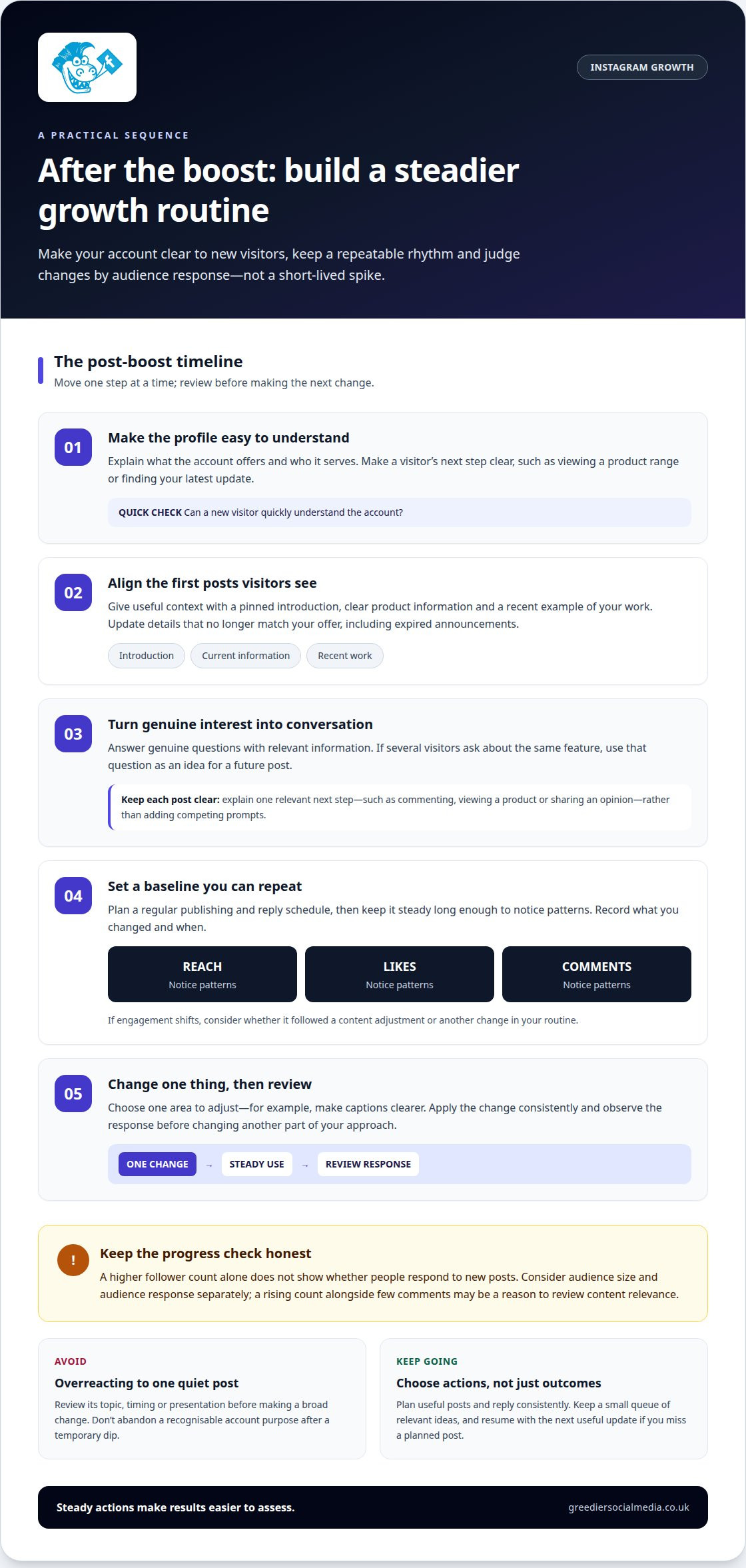
After an Instagram boost, avoid changing your posting routine, content style and engagement approach all at once. Choose one area to adjust, such as making captions clearer, then observe how people respond. This gives you a more useful comparison than a sudden overhaul, because you can connect the change with what happens next.
Set a repeatable baseline for your account’s everyday activity. For example, plan a regular publishing and reply schedule, then keep it steady long enough to notice patterns in reach, likes and comments. If engagement shifts, consider whether it followed a content adjustment or another change in your routine. Keep a simple record of what you changed and when.
Build gradually rather than treating a boost as a cue to increase every effort immediately. It also recommends breaking a 30-minute walk into three 10-minute sessions. The principle is to make a routine manageable before increasing its levels.
Fitness guidance for adults gives another example of structured progress: at least 150 minutes of moderate aerobic activity a week, alongside muscle-strengthening activity on at least 2 days a week. Strength exercises involve muscles working harder than usual. These figures concern health, not social media performance, but show how taking small, repeatable actions can build a routine. Vigorous activity is a different intensity, just as a sharper content push differs from steady posting.
Apply that measured approach to account growth. Make one adjustment, perform it consistently, and review the response before taking another step. Don’t confuse a temporary rise with evidence that every change worked. A post that attracts attention can offer useful direction, but sustained progress depends on whether your routine continues to involve relevant content and genuine interaction. Weight, disease and physical activity belong to health measures, not Instagram metrics, so keep your account review focused on audience behaviour.
What are the first steps to take after a growth boost ends?
If you’re deciding how to maintain growth after a boost, start by making your account welcoming to new visitors. Check that your profile description clearly explains what the account offers and who it serves. Make the next step obvious, such as viewing a product range or finding your latest update. Visitors who understand the account quickly have a clearer reason to stay.
Review the posts a new follower sees first. A pinned introduction, clear product information and a recent example of your work can provide useful context. Remove or update details that no longer match your current offer. For instance, an old launch announcement may confuse visitors if it promotes an expired offer. Keep your profile and its most visible content aligned.
Next, prepare a simple routine for welcoming new engagement. Respond to genuine questions with relevant answers, and direct people to useful posts when appropriate. If several visitors ask about the same feature, turn that question into a future post. This helps you build on audience interest rather than relying on the boost to create ongoing conversation.
A useful way to maintain growth after a boost is to make each new visitor’s next interaction straightforward. Check that your captions explain what people can do, whether that means commenting, viewing a product or sharing an opinion. Avoid adding several competing prompts to one post. A single, relevant invitation gives readers a clear way to respond.
Finally, choose a clear purpose for any further visibility support. If you want another option within your Instagram plan, consider Instagram profile growth options. Pair that decision with a profile that explains your offer and content that gives visitors a reason to engage. This creates a more considered next step after the boost ends.
What common mistakes cause growth to decline after a boost?
A common mistake is treating the follower total as the only sign of progress. A larger number can look encouraging, but it doesn’t show whether people respond to new posts. For example, a rising count alongside few comments may be a reason to review content relevance. Consider audience size and audience response separately when judging whether growth is holding.
Another trap is setting goals around outcomes alone. A target such as “gain more followers” doesn’t tell you what to do today. Goals focused on results rather than process can be demotivating. Replace a result-only target with a clear action, such as planning useful posts or replying to comments consistently. Then you can recognise your effort even when results fluctuate.
Changing direction after every quiet post can also disrupt a coherent account. A small business might switch from product demonstrations to unrelated trends after one post attracts fewer likes. That makes it harder for followers to understand what the account offers. Keep a recognisable purpose and test new formats without abandoning the subjects your audience expects.
Don’t treat a temporary dip as proof that your whole approach has failed. A post may receive less attention because its topic, timing or presentation differs. Review the content itself before making a broad change. For instance, if a clear demonstration earns questions but a vague announcement doesn’t, strengthen the next announcement instead of changing the account’s entire style.
Finally, avoid long gaps after a boost just because the initial excitement has passed. Posting only when there’s a launch can make the account feel inconsistent. Prepare a small queue of relevant ideas, such as product answers, customer-use examples or behind-the-scenes details. If you miss a planned post, resume with the next useful update rather than scrapping the routine. Steady actions provide a firmer basis for decisions than chasing each spike.
How much should you budget to sustain growth after a promotional boost?
There isn’t one budget that suits every Instagram account. Set a spending limit based on your goal, available resources and the kind of activity you want to sustain. For example, a small business prioritising regular product posts may need to reserve time for photography and captions. An account focused on visibility may allocate more towards promotion. Separate essential ongoing costs from optional experiments before committing.
Break the plan into clear categories: content creation, promotion, tools and paid engagement. Include staff time where it affects delivery, such as preparing product images or replying to comments. Keep the categories distinct. If you spend more on promotion, you can still see what remains for creating useful content. A simple budget sheet can record the purpose, amount and outcome of each expense.
Use your account’s post-boost performance to guide spending. If product demonstrations attract meaningful responses, prioritise similar content rather than funding a completely different format. If reach rises but interaction stays low, review the content and audience fit before increasing spend. This approach ties investment to a clear objective instead of treating a larger follower count as proof that every expense is working.
Set a review point before spending. Compare the budget with the outcomes you care about, such as profile visits, relevant enquiries or interaction on key posts. If a campaign aims to build awareness, assess visibility; if it aims to prompt enquiries, focus on those responses. Adjust the next allocation according to that evidence. Don’t commit money needed for essential business costs to an uncertain growth experiment.
For paid Instagram services, the price depends on the case and is given after a quote request; relevant factors include the selected service and order requirements. Keep any such spend within your agreed limit, and treat it as one part of a broader account plan. To discuss a suitable next step, request a quote for Instagram growth.
Greedier Social Media
Greedier Social Media offers Instagram engagement options for accounts planning their next growth step. Instagram Followers and Instagram Likes support goals centred on audience size or post engagement, while Auto Instagram Followers and Auto Instagram Likes offer automated options. These services can form one part of a wider plan alongside relevant content and consistent interaction with your audience.
Consider a paid engagement option when you have a clear objective and a defined budget. For example, decide whether your priority is follower growth or likes, then assess the account’s response alongside your usual activity. Keep expectations grounded: purchased engagement does not replace a consistent posting routine or show whether your content meets audience needs.
For a straightforward discussion about your Instagram growth needs, contact Greedier Social Media.
Make your next growth decision with confidence
A useful next step is to define progress for your account beyond a bigger follower total. Consider the audience you want to reach, the response you want your content to earn and the role social media plays in your wider business goals. Clear priorities make future decisions easier to assess.
Treat each boost as one input, not a verdict on your account’s potential. Keep building a recognisable presence and use audience behaviour to guide what you develop next. A practical way to maintain growth after a boost is to base each decision on evidence from your account, rather than pressure to repeat a spike.
If you’d like support with your Instagram growth goals, contact Greedier Social Media to discuss a suitable next step. Keep your focus on steady progress, and give your next decision a clear purpose.
Frequently Asked Questions
How can I tell if I’m doing enough?
You’re doing enough when your regular actions support a clear account goal and remain manageable. For instance, if your aim is to build a community around a product, consider whether your posts invite relevant questions and whether you respond to them. Set a process goal you can sustain, then assess whether it contributes to the outcome you value. If it doesn’t, refine the action rather than simply doing more.
How can you measure whether growth is sustained or temporary?
Look for continued audience response beyond the post or campaign that created the initial lift. Compare similar content, such as two product demonstrations, and check whether people keep visiting your profile, commenting or saving posts. A single post with a strong response may be an exception. Repeated interest across different updates gives a more useful indication that attention is continuing.
What strategies help maintain customer or audience growth long term?
Give people a reason to return. For example, an independent shop could share product-use ideas, answer common questions and feature customer feedback in separate posts. Make each update useful on its own while keeping it connected to the account’s purpose. Invite specific responses, such as asking which feature people want explained, then use those replies to shape future content.
How often should you review and adjust a growth strategy?
Review your approach at planned points in your content cycle and after a major change, such as a launch or campaign. Avoid adjusting the strategy in response to every post, because individual results can vary. If the same issue appears across several comparable updates, make one considered change and observe the response. This keeps decisions timely without turning your plan into a constant reaction.