
Short answer: buying YouTube subscribers is not a criminal offence in the UK, but the rules that actually govern your channel are YouTube’s own, and UK advertising and consumer law applies the moment money or incentives are involved in how you promote yourself. Knowing where each rulebook starts and stops is what lets a small business or creator decide with open eyes. If you decide to buy, our YouTube subscriber packages start at £11.99 and are delivered without needing your password.
TL;DR
- UK guidance on reviews and endorsements does not itself declare purchased subscriber counts unlawful; the legal focus is on hidden advertising and misleading consumers.
- YouTube’s terms and policies are the rules that matter most for a channel, and they cover artificial increases to subscribers, views and likes.
- Monetisation has fixed entry thresholds (1,000 subscribers plus watch hours or Shorts views for ad revenue), so any growth plan should be built around them.
- If you are a business or influencer working with brands, label paid content clearly as advertising, whatever your subscriber count.
- Our packages are designed to deliver real engagement, targeted at UK audiences, with no password needed.
Table of Contents
- What UK law says about buying subscribers
- What YouTube’s rules say
- What can happen to a channel
- Why subscriber numbers matter: the monetisation thresholds
- If you are a business or influencer: the advertising rules
- If you decide to buy: how to do it sensibly
- Growing a channel legitimately alongside paid growth
- Our offer for UK channels
- Our perspective
- FAQ
- Sources
What UK law says about buying subscribers
There is no UK statute that makes buying a YouTube subscriber a crime for the buyer. What UK law does regulate is how you present yourself to consumers and how you advertise.
Two bodies matter here. The Competition and Markets Authority (CMA) is the UK consumer-protection regulator. The Advertising Standards Authority (ASA) enforces the advertising rules. The CMA’s guidance for creators explains that hidden advertising can breach consumer protection law, while the ASA enforces industry advertising rules. That is a separate matter from subscriber counts, but it is the part of UK law that touches most channels.
The newer rules on fake reviews sit under the Digital Markets, Competition and Consumers (DMCC) Act. The CMA’s principles for platforms cover fake reviews, undisclosed incentivised reviews and misleading review information. That guidance is about reviews and does not itself declare purchased subscriber counts unlawful. In practice, the sensible reading for a business is simple: whatever you say about your audience, your results or your products should be true and not misleading to the people you are selling to.
What YouTube’s rules say
YouTube’s rulebook is stricter than UK law, and it is the one a channel lives under. The UK-facing YouTube Terms of Service prohibit causing inaccurate measurements of genuine engagement, including paying or incentivising people to increase a channel’s subscribers, views or likes.
The fake engagement policy spells out what that means. It prohibits artificial increases to metrics through automated systems, unsuspecting viewers, coercion, deception or engagement whose sole purpose is financial gain. It names sub-for-sub schemes and subscriber-inflation services as examples. The spam policy says the same about bots, coercion and rewards for likes, views or subscribers.
Two practical points follow:
- Responsibility sits with the channel owner. YouTube says a hired promoter’s decisions can affect your channel, so it does not matter who placed the order.
- Ordinary calls to action are fine. You can ask viewers to subscribe, like, share or comment. The line is drawn at artificial or incentivised manipulation, not at asking.
Because these are platform terms rather than legislation, the consequences are decided by YouTube, not by a court. That is why it pays to understand them before you spend a penny.
What can happen to a channel
YouTube describes the outcomes in its help pages, and they are worth knowing whichever route you take to growth.
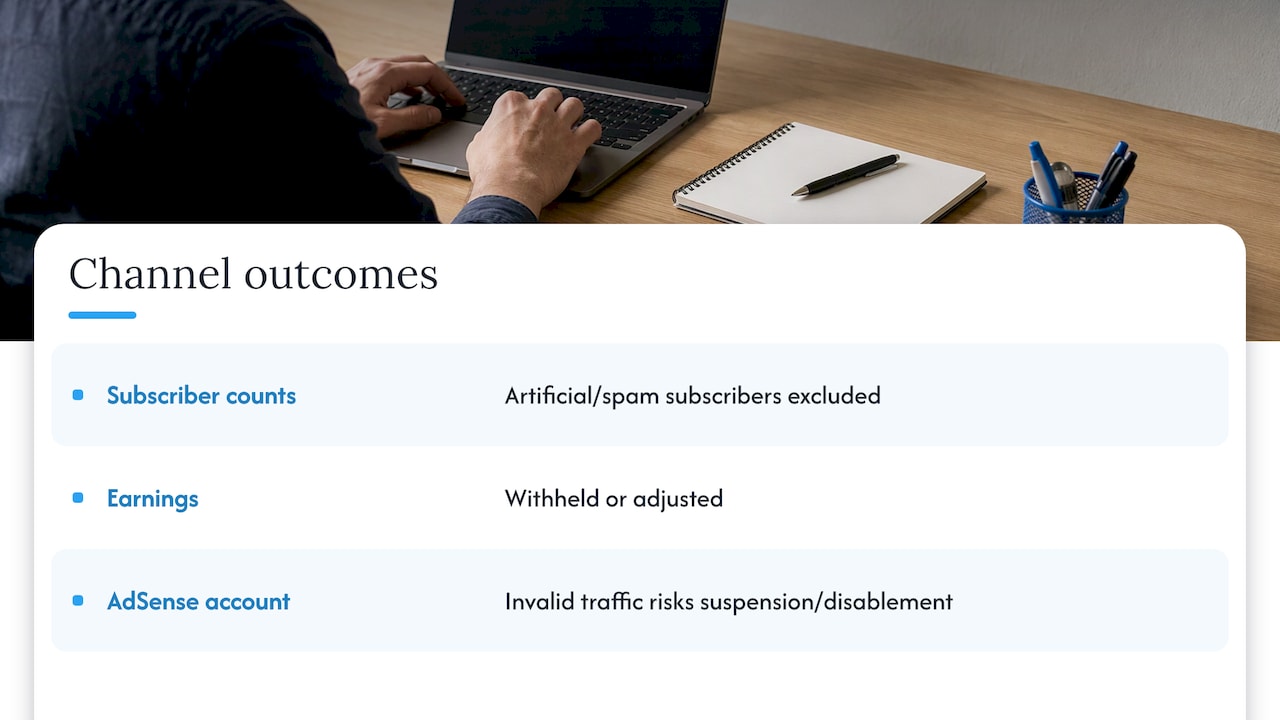
Counts can be adjusted. YouTube says identified artificial traffic is not counted, and subscribers identified as spam or from terminated accounts do not count toward channel totals. Subscriber numbers on any channel can therefore move up or down as YouTube cleans its data. This is one reason a buyer should look for engagement that comes from genuine-looking accounts rather than the cheapest possible number.
Earnings can be reviewed. YouTube’s monetisation policies allow it to withhold or adjust earnings, charge back unpaid AdSense for YouTube balances, or offset future earnings for violations, including fake engagement and invalid traffic. It also says an investigation can delay payment by up to 90 days.
Invalid traffic is defined broadly. YouTube’s invalid traffic guidance describes it as activity not coming from a real user or a user with genuine interest, and lists automated or incentivised third-party traffic among the examples. It says significant invalid activity can lead to suspension or permanent disabling of the associated AdSense account, and that decisions on disabled accounts can be appealed.
The lesson for UK creators is that the quality and the realism of any audience you build matter far more than the headline number. A channel with engaged viewers is also simply easier to run, easier to pitch to brands and easier to grow.
Why subscriber numbers matter: the monetisation thresholds
Most people who search this question are really asking about money. YouTube’s earning guidance sets two tiers.
| Tier | Subscribers | Other requirement |
|---|---|---|
| Entry level (for features such as channel memberships) | 500 | Three public uploads in the past 90 days, plus 3,000 qualified long-form watch hours in 365 days or 3 million qualified Shorts views in 90 days |
| Ad revenue | 1,000 | 4,000 qualified long-form watch hours in the past 365 days or 10 million qualified Shorts views in the past 90 days |
There are further eligibility conditions on top of these. Subscribers alone never unlock earnings: watch hours or Shorts views are the second half of the equation. That is why a plan that pairs a credible subscriber base with content people actually watch is the one that gets a channel to the threshold. If you want to understand how the two numbers relate, our guide on YouTube subscribers vs video views walks through it.
If you are a business or influencer: the advertising rules
This is the part of UK law that most readers in our audience will meet in real life. If you receive free products, payment, commission or another incentive in connection with your account, the CMA’s creator guidance applies to you irrespective of follower count.
The key rules, in plain terms:
- Label ads as ads. Government guidance says commercial content must be clearly identifiable as advertising when an influencer is incentivised. Tagging a brand or using an affiliate link is not enough disclosure on its own.
- Reflect genuine experience. Your content should reflect what you really think and have really used.
- Brands share the responsibility. The CMA’s guidance for brands says businesses must make sure promotional posts are labelled as ads when they come from their marketing or are published on their behalf, including where payment, gifts or another incentive is involved.
For a small business, the practical checklist is short. Be accurate about who your audience is when you pitch to sponsors, label every paid partnership clearly, and keep your claims to customers truthful. Those habits protect you far more than any single tactic around subscriber numbers.
If you decide to buy: how to do it sensibly
A creator weighing up paid growth is making a business decision, and a good one is made on specifics. Here is what to look at, and what we do on each point.
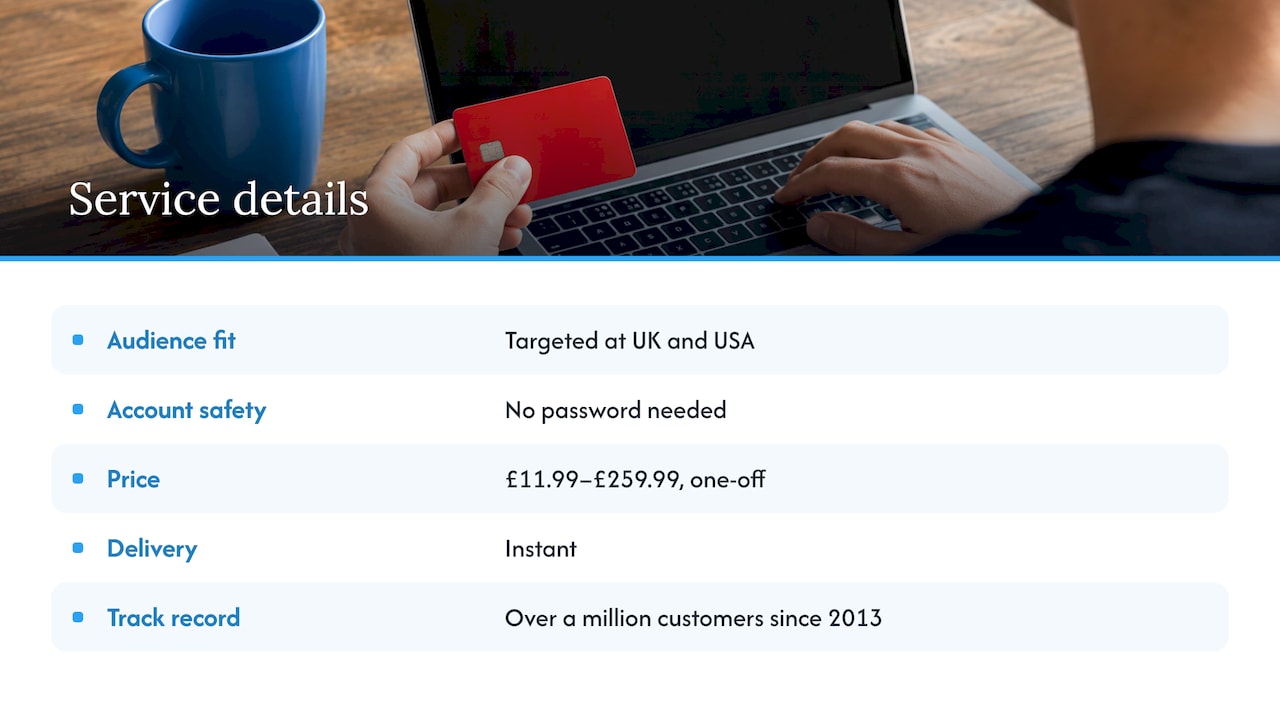
Audience fit. Subscribers matter most when they resemble the viewers you want. Our engagement is targeted at UK and USA audiences, which suits UK businesses and creators who want to look credible to local customers.
Account safety. Never hand over your YouTube login to anyone. Our services work without needing your password, so access to your channel stays with you.
Pace. Delivery is instant on our side, and you choose the package size, from small test orders to larger ones. Our YouTube subscriber packages are priced from £11.99 up to £259.99, one-off. There is no subscription and no recurring charge for subscribers.
Real engagement. Our approach is built around real, authentic engagement rather than bots, and we have served over a million customers since 2013.
Support. If something looks off after an order, UK-based support is there to answer quickly.
Whatever you choose, pair the subscribers with a genuine content plan: regular uploads, clear titles and a reason to come back. If you also want to work on video-level signals, our page on buying YouTube likes in the UK covers prices, payment and what to check.
Growing a channel legitimately alongside paid growth
YouTube’s own advice is useful here. The fake engagement policy confirms you may encourage viewers to subscribe, like, share or comment. Make the most of that.
- End every video with a specific ask. “Subscribe for next week’s tutorial” outperforms a vague request because it names a reason.
- Build series. Viewers subscribe when they can see more of the same coming.
- Use Shorts to widen reach. Shorts views count toward the monetisation thresholds above.
- Promote across your other channels. Your Instagram, Facebook and email list can send people to your videos. Our guide to YouTube subscriber growth collects practical tips for creators.
- Give your community a voice. Audience participation features such as polls and public votes are a proven way to keep people returning. Fan engagement through voting shows how predictions and votes can turn passive viewers into active ones, a model you can adapt for community posts and live streams.
YouTube also advises creators to avoid untrusted third parties claiming to increase views, likes or subscriptions, because purportedly real third-party traffic may still be artificial and invalid. That makes the choice of an established provider with a clear track record, UK support and a no-password process the sensible way to approach any paid growth.
Our offer for UK channels
If you want a head start on social proof, our YouTube range covers subscribers (£11.99 to £259.99, one-off), likes (£2.99 to £85.99, one-off) and views (£4.99 to £269.99, one-off). Everything is delivered instantly, with UK-targeted engagement and no password needed.
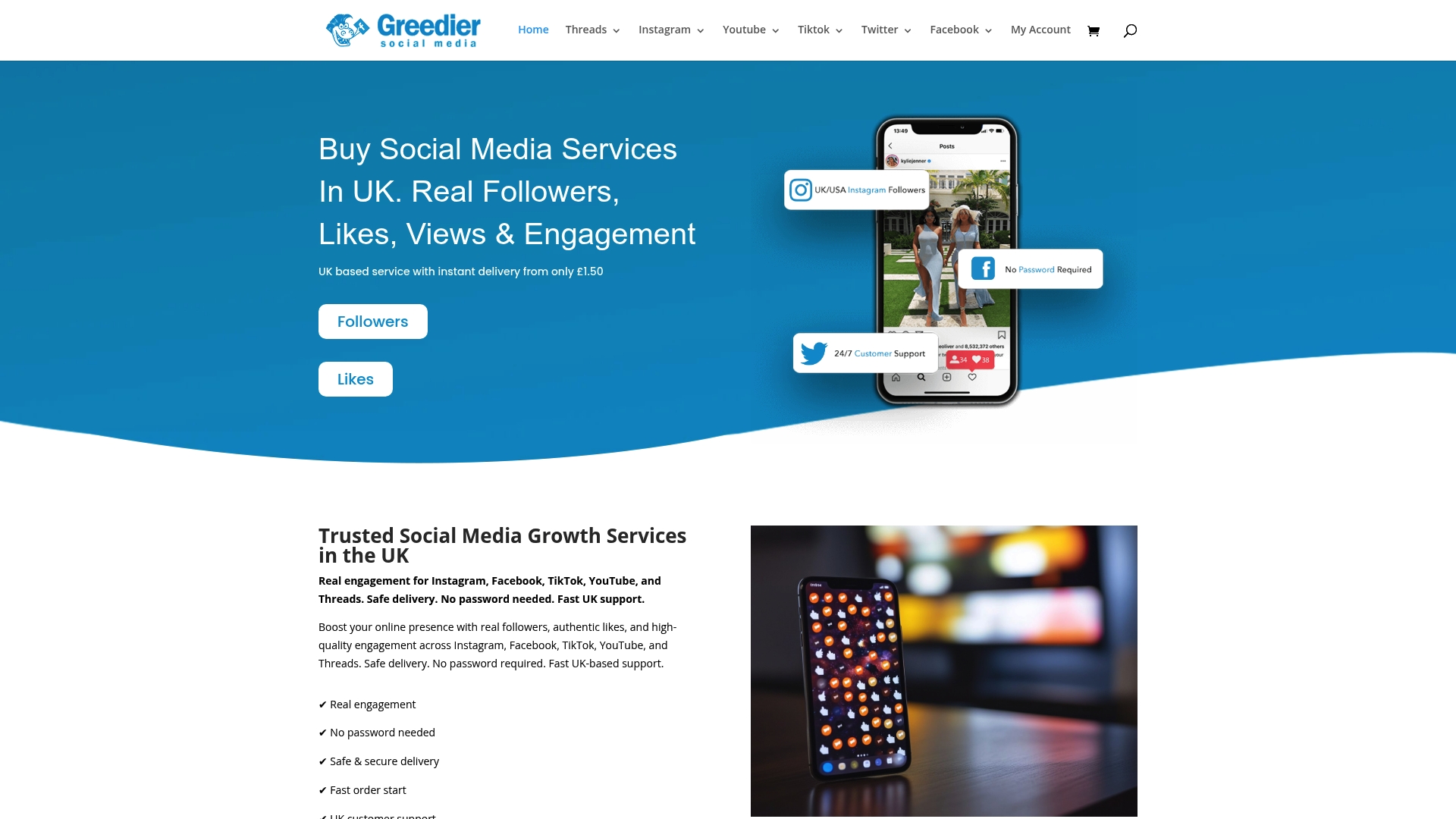
You can see every package on our YouTube services page and pick the size that fits your channel.
Our perspective
We have been working with creators and small businesses since 2013, and the same question comes up again and again: is this allowed? The honest answer has two parts. UK law cares about honesty with consumers and clear labelling of advertising. YouTube’s terms set the platform rules. Both are easier to follow when you know them.
What we have built is a service around real, authentic engagement, delivered without asking for your password, with UK-based support behind it. For a small business, a visible audience is often the first thing a potential customer or sponsor notices. A healthy subscriber base gives a new channel the credibility to be taken seriously while the content does the long-term work.
Our advice is to treat subscribers as the starting point, not the finish line. Pair them with videos worth watching, label your sponsored content properly and keep your claims truthful. That is how a small channel turns into a significant one.
Irwin Lee
FAQ
Is it illegal to buy YouTube subscribers in the UK?
Buying subscribers is not a criminal offence in the UK. UK guidance from the CMA focuses on hidden advertising and misleading reviews, and it does not itself declare purchased subscriber counts unlawful. YouTube’s own terms are the rules that apply to your channel directly.
Do I have to declare sponsored videos in the UK?
Yes. If you receive payment, free products, commission or another incentive, the CMA’s guidance says the content must be clearly identifiable as advertising. This applies whatever your follower count, and a brand tag or affiliate link alone is not enough.
How many subscribers do I need to earn money on YouTube?
For ad revenue, YouTube lists 1,000 subscribers plus either 4,000 qualified long-form watch hours in 365 days or 10 million qualified Shorts views in 90 days, along with other eligibility requirements. A lower entry tier of 500 subscribers unlocks features such as channel memberships. Check YouTube’s earning page for the current criteria.
Can I ask viewers to subscribe?
Yes. YouTube explicitly allows creators to ask viewers to subscribe, like, share or comment. What it prohibits is artificial or incentivised manipulation of those numbers.
Do you need my YouTube password?
No. Our services are delivered without needing your password, so you keep full control of your channel and login details.
Sources
- YouTube Terms of Service
- Fake engagement policy, YouTube Help
- Spam policy, YouTube Help
- YouTube Channel Monetisation Policies
- Invalid traffic on your videos, YouTube Help
- How to earn money on YouTube
- Social media endorsements: being transparent with your followers, GOV.UK
- Social media endorsements: guidance for content creators, GOV.UK
- Social media endorsements: guidance for brands, GOV.UK
- Hidden ads: principles for social media platforms, GOV.UK